Ontario's Plain-English Guide to Custom Home Building📞 705-533-1633 | ☎️ 1-866-868-6606 | ✉️ info@icfhome.ca

The Ultimate Check List For Buying a Fireplace
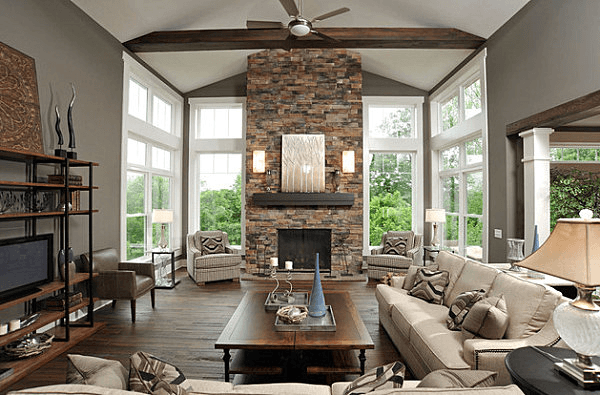
Choosing a Fireplace for a New Ontario House: the Fire Is the Easy Part, the Air Is the Hard Part
Almost everybody who builds a house wants a fire in it somewhere. I do too. But a fireplace in a modern house is not the same animal it was in your grandparents’ farmhouse. That house leaked so much air that the fire could take what it wanted. A new house is tight, and a fire that cannot find air will take it from wherever it can, including back down its own chimney.
So this page is about two things: which kind of fire suits which house, and how to give it air without wrecking the comfort you just paid for.
Short version: In a tight new house, choose a sealed unit that brings its own combustion air from outside: a direct-vent gas fireplace, or a certified wood stove or insert with an outside air connection. An open masonry fireplace is furniture, not heat. Size the unit to the room, because a well-insulated house needs far less heat than the showroom assumes. Wood needs a permit, a proper chimney and, for most insurers, a WETT inspection. Gas needs a TSSA-registered contractor. Everything that burns needs carbon monoxide alarms.
The Five Kinds of Fire, Compared
| Type | Heat it gives | What it needs | Best for |
|---|---|---|---|
| Open masonry fireplace | Very little. Most of the heat, and a lot of your warm house air, goes up the flue. | A masonry chimney, a footing, a lot of air | Looks and tradition. Not heating. |
| Certified wood stove or fireplace insert | A lot, and it works when the hydro is out | A listed chimney, clearances, dry wood, a permit | Rural houses, cottages, people who like splitting wood |
| Direct-vent gas fireplace | Steady and adjustable | Natural gas or propane, a vent through the wall or roof | Most new houses |
| Pellet stove | Steady, thermostat controlled | Bagged pellets, electricity, regular cleaning | People who want wood heat without the woodpile |
| Electric fireplace | About as much as a plug-in heater | A wall and an outlet | Atmosphere, condos, bedrooms, tight houses |
Why the Air Matters More Than the Fire
A fire needs air to burn. In an old house that air came in around the windows. In a new house the walls are sealed, the windows are tight, and the kitchen range hood, the dryer and the bathroom fans are all pushing air out. The house ends up at a slight suction. A chimney is just a hole in the house, and under suction the smoke comes down it instead of going up.
That is called backdrafting, and with a gas appliance or a smouldering wood fire it brings carbon monoxide with it. The fix is to choose a fire that does not depend on house air at all.
- Buy sealed combustion. A direct-vent gas fireplace draws its air from outside and sends its exhaust outside through a sealed glass front. The room air is not involved.
- Give a wood stove its own air. Choose a model with an outside combustion air connection, and keep the doors closed when it is burning.
- Mind the range hood. A big hood can pull a house into suction all by itself. Our page on range hood makeup air explains when the Code wants makeup air, and can a house be too airtight covers the rest of the argument.
Wood: Fireplaces, Stoves and Inserts
An open fireplace is the most beautiful way there is to cool a house. It pulls warm room air up the chimney by the roomful, and most of the heat from the fire goes with it. If you want one for the look, build it knowing that, close the damper when it is cold, and do not count it as heat.
A modern wood stove or a fireplace insert is a different thing. It is a steel or cast iron box with a gasketed door, and it burns the smoke as well as the wood, so far more of the heat stays in the room and far less goes up the flue as creosote. Look for the EPA or CSA B415.1 certification on the label.
What to look for
- A certification label, and the clearances to walls and floor printed on it. Those numbers are the law for that stove.
- An outside combustion air kit.
- A size that suits the room. In a well-insulated house, pick the small one. A big stove run choked down makes smoke and creosote.
- An insulated, listed chimney that runs up through the warm inside of the house where it can. A chimney on a cold outside wall drafts poorly. Where it comes through the roof, the flashing has to be right; see chimney and wall flashing leaks.
The paperwork for wood
Most Ontario municipalities want a building permit for a new wood-burning appliance and its chimney. Your insurer will want to know about it too, and most will ask for an inspection by a WETT-certified technician before they will cover the house. Tell the insurer before you buy the stove, not after the fire.
The honest advantage of wood is this: when an ice storm takes the hydro for three days, the wood stove does not notice. On a rural lot that is worth a great deal.
Gas and Propane
A direct-vent gas fireplace is what goes into most of the houses we build. It lights with a switch, it vents through the wall with no chimney to build, and because it is sealed from the room it suits a tight house.
What to look for
- Direct vent. Not a natural-draft unit that depends on room air. Unvented gas fireplaces are not approved for houses in Canada.
- A wide turndown. The ability to run at a low flame matters more than the big number on the brochure. Some units only turn down to about 70 percent of full output and some go down to about 20 percent.
- A real efficiency rating. Most direct-vent units land between about 60 and 80 percent.
- A fan you can turn off. You will want the flame without the noise sometimes.
The gas work must be done by a contractor registered with the TSSA, using a licensed gas technician. On propane the same rules apply, and the tank location has its own clearances. There is more on choosing a unit on our gas fireplaces page.

Pellet Stoves
A pellet stove burns compressed sawdust pellets fed by a small auger from a hopper, with a fan to move the air and a thermostat to run it. It is clean, steady and far less work than cordwood. The catch is that it needs electricity. No hydro, no auger, no fire, unless you have a battery backup or a generator. It also wants its ash emptied and its glass cleaned on a regular schedule, and it hums.
Electric
An electric fireplace is a heater with a light show. It turns every bit of the electricity into heat in the room, but a standard plug-in unit is about 1,500 watts, which is roughly 5,000 BTU an hour. That takes the chill off a bedroom and no more. What it does well is give you the flicker with no vent, no gas line, no permit and no hole in a very tight wall. In a super-insulated house that is sometimes exactly the right answer.
Size It to the House You Are Actually Building!
This is where people go wrong in a good house. A 2,000 sq ft ICF house built to our standard loses about 20,000 to 30,000 BTU an hour on the coldest night of the year, for the whole house. Put a 40,000 BTU fireplace in the great room and you have a choice between a fire you cannot stand to sit beside and a fire you never light.
Rules of thumb I give every customer:
- Decide whether the fire is for heat or for looking at. Be honest. In a house with radiant floors it is nearly always for looking at.
- If it is for looking at, buy the smallest output with the nicest flame and the widest turndown.
- If it is for backup heat in an outage, one certified wood stove in the middle of the house does more than three gas fireplaces around the edges.
- Put it on the drawings early. The vent, the gas line, the chimney chase and the floor framing under a heavy hearth all have to be planned before the walls are closed.
Carbon Monoxide Alarms Are Not Optional
Any house with a fuel-burning appliance, a fireplace or an attached garage needs carbon monoxide alarms under Ontario’s Fire Code, and the rules were tightened at the start of 2026. Our page on smoke and carbon monoxide alarm rules has the current list of where they go. They are the cheapest thing in the whole fireplace budget.
Where Homeowners Go Wrong
- Buying the biggest unit in the showroom for a house that hardly needs heat.
- Putting a natural-draft fireplace in a tight house with a big range hood.
- Building an open masonry fireplace and expecting it to lower the heating bill.
- Installing a wood stove without telling the insurer.
- Burning green wood, then blaming the stove for the smoke and the chimney fire.
- Leaving the fireplace off the drawings until the framing is up.
What It Costs
Fireplace prices are all over the map, because the unit is only part of the job. The vent or chimney, the gas line, the hearth, the surround and the mantel can each cost as much as the box. Dealers and installers quote widely different prices for what sounds like the same fireplace, so get two or three written quotes that list the unit by model number, the venting, the gas or chimney work, the finishing and the permit as separate lines. Then you can see what each one left out.
Questions People Ask
What is the best fireplace for a new, airtight house?
A direct-vent gas fireplace, or a certified wood stove with an outside air connection. Both are sealed from the room, so they do not depend on house air and are far less likely to backdraft.
Does an open fireplace heat a house?
No. An open masonry fireplace sends most of its heat up the chimney and pulls warm room air out with it. It is for atmosphere.
Do I need a permit and an inspection for a wood stove in Ontario?
Most municipalities require a building permit for a new wood-burning appliance and chimney, and most insurers ask for a WETT inspection before they will cover it. Ask both before you buy.
Who can install a gas fireplace?
A TSSA-registered contractor with a licensed gas technician. That applies to natural gas and to propane.
Will a fireplace work in a power failure?
A wood stove will. Many gas fireplaces will light and burn without hydro but their fans will not run; check the model. A pellet stove and an electric fireplace will not.
Planning a new house? Tell us where you want the fire and what you want it to do, and we will fit it into the heating design instead of fighting it later. We build ICF homes with radiant floors across Simcoe County and Georgian Bay.
Send Plans for Review
Book a Call
Home Heating Guide

looking for freestanding/contempary style/natural gas ventless stove
http://napoleonfireplaces.com/products_categories/vent-free-gas-stoves/
Just installed a Primo Heat and Glo gas fireplace with the vents going out the back wall
However, these power vents make a loud noise which makes it uncomfortable to turn the fireplace on. Can the power vent be turned off or can it be installed on the roof through the prior chimney? What do you advise
To the best of my knowledge, Primo Heat and Glo gas fireplace do not require a power vent. It may be a blower you are hearing. You can see the schematics here: https://downloads.hearthnhome.com/installManuals/2310_970.pdf
thanks for sharing. we work on representing modern Bistoon fireplaces and we see that modern fireplace are getting popular day by day.
Once you’ve had a fireplace in your home, you won’t want to give it up. Whether you have a traditional fireplace or opt for a modern firebox or electric fireplace there are many benefits to having a fireplace in your home.
Natural gas is the fuel of choice for homeowners. It is a clean, affordable, safe and efficient energy choice. Some of the advantages of natural gas include lower energy bills and increased value when you sell your house, plus has many other benefits.
It helped when you said to ask about energy efficiency. My cousin was at my house last night for a visit, and she talked about how she wants to get a fireplace built in her living room before the end of November, and she was wondering what type would be best to choose. I’ll pass these tips along to her so she can know more about choosing the right type of fireplace.