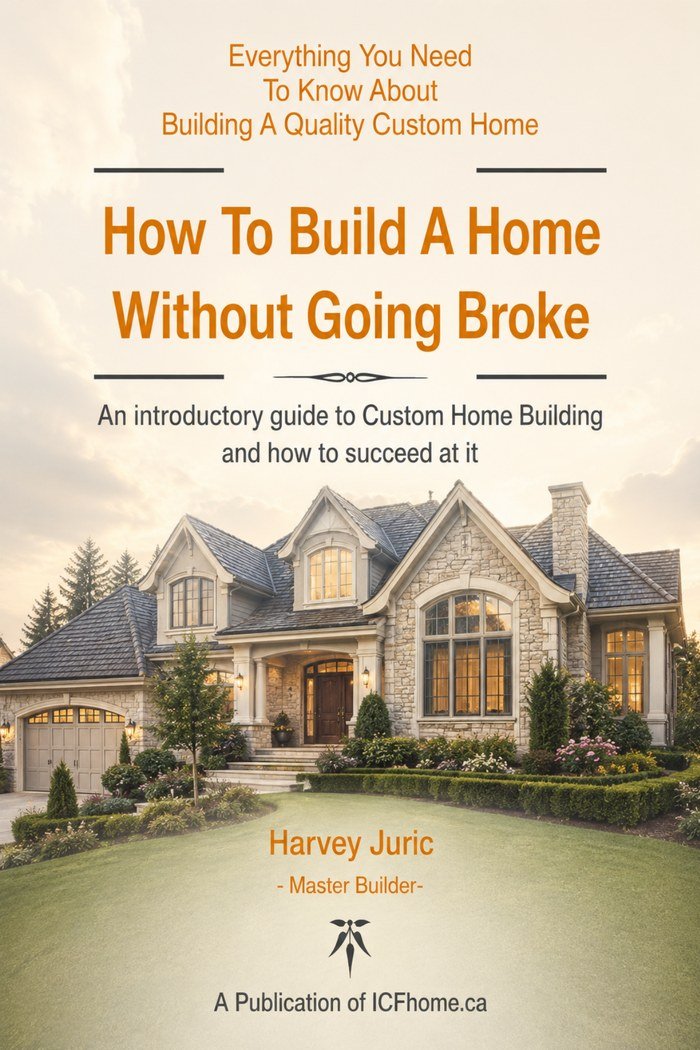
Ontario's Plain-English Guide to Custom Home Building📞 705-533-1633 | ☎️ 1-866-868-6606 | ✉️ info@icfhome.ca
Ontario home-building knowledge centre
Build in Ontario Without the Expensive Surprises.
Plain-English help with the cost to build a house in Ontario, buying land, building permits, the Ontario Building Code, septic systems, HST rebates, ICF construction and the problems that appear between an idea and a finished home.
45+Years building custom homes
300+Custom homes built
250+Homes built with ICF
Ontario-wideGuides, tools and solutions

Ontario building knowledge backed by real construction experience
About BuildersOntario
BuildersOntario.com teaches homeowners, owner-builders, renovators and construction professionals across the province. It was created by Harvey Juric, Master Builder—not by a general content company.
Popular Ontario building answers
Start with the subjects Ontario readers search most
These are the high-demand calculations, rules and cost questions that bring people to BuildersOntario every day.
Concrete Calculator Canada
Calculate concrete for slabs, footings, walls, columns and truck quantities.
Open concrete calculator →New Home HST Rebate Calculator
Estimate Ontario new-housing and owner-built rebate amounts from project details.
Calculate the HST rebate →Ontario Building Code Guide
Find plain-English explanations of the Code, permits, inspections and common requirements.
Read the Building Code guide →Deck Railing Height Ontario
Understand guard heights, openings, stairs and common deck inspection issues.
Check deck guard rules →Cost to Build a House in Ontario
See the construction, site, permit, servicing, design and contingency costs that shape a real budget.
See the complete cost breakdown →Stair Stringer Calculator
Calculate rise, run, tread layout and stringer cuts for an Ontario stair project.
Open stair calculator →Build in the right order
Choose where you are in the Ontario home-building process
A custom home becomes expensive when decisions happen in the wrong order. Start with the stage that matches your project today.
1
Buy or evaluate the lot
Check zoning, conservation, septic, well, survey, access, grading and development costs before removing conditions.
2
Build the complete budget
Separate the house price from land, site services, soft costs, permits, development charges, HST and financing.
3
Get permits and approvals
Coordinate zoning, drawings, sewage approvals, conservation review, municipal fees and the building-permit submission.
4
Choose structure and systems
Compare ICF, wood frame, insulation, windows, electrical service, heating and other decisions that affect comfort for decades.
5
Plan land and site services
Understand septic systems, wells, hydro connections, driveways, excavation, drainage and the hidden work outside the foundation.
6
Add, convert or rebuild
Check the different rules and budget risks for legal basements, garden suites, garages and major renovation decisions.
Ontario construction calculators
Get a useful number before you make an expensive decision
The calculators are free planning tools. Use them to pressure-test an assumption, compare options and identify what needs a proper quote or design.
Custom Home Building Calculator
Estimate the house, site, permits, professional fees, contingencies and other major Ontario building costs.
Calculate Home CostNew Home HST Rebate Calculator
Estimate the federal and provincial new-housing rebate from the information you enter.
Calculate HST RebateConcrete Calculator Canada
Calculate cubic metres, waste, ready-mix trucks and materials for common concrete work.
Calculate Concrete
Building Permit CostEstimate municipal permit fees.
Septic System CalculatorPlan system size and cost.
Stair Stringer CalculatorRise, run and cut layout.
Deck Building CalculatorMaterials, framing and cost.
Ontario Snow LoadsLocation-based planning values.
Heat Loss CalculatorEstimate heating requirements.
ICF Cost CalculatorWalls, concrete, steel and labour.
Roofing CalculatorArea, bundles, waste and materials.
Plumbing Cost EstimatorFixtures, rough-in and project scope.
Problems and solutions
Find the answer to the issue holding up your project
BuildersOntario covers the specific code, cost and construction questions that broad “how to build a house” articles usually skip.
Egress Window Requirements
Opening size, window wells and basement-bedroom rules.
Check Ontario egress rules →100 Amp vs 200 Amp Service
Capacity, panel choices, upgrade factors and future loads.
Compare electrical services →ICF Foundation Pros and Cons
Cost, comfort, moisture, structure and when ICF makes sense.
Read the ICF foundation guide →Attic Insulation Cost Ontario
Current scope, R-values, air sealing and realistic pricing factors.
Review attic insulation costs →Detached Garage Permit
Permit triggers, setbacks, drawings, foundations and inspections.
Open the garage permit guide →Detached Garage Cost
Foundation, framing, doors, electrical, finishes and site work.
See garage cost breakdown →Tarion Warranty Ontario
Coverage, deadlines, builder obligations and homeowner records.
Understand Tarion coverage →Septic System Cost Ontario
Conventional, raised, pressure, filter-bed and difficult-site costs.
See septic system costs →Paid planning tools
When a free article is not enough
Use practical software and builder-written guides to organize a real property, permit or septic decision.
Ontario Septic Designer
$99.99
Per project with 90-day access. Organize calculations, site information, setbacks, drawings and a printable planning package.
- Daily design flow and tank sizing
- Soil, T-time and setback checks
- Site-plan overlay and cross-section
- Material takeoff and printable package
Ontario Lot-Buying Bible
$29.99
A step-by-step guide for checking land, septic, well, zoning, access, hydro, site costs, financing and the real all-in decision.
- Pre-offer due-diligence sequence
- Site-cost and risk worksheets
- Go/no-go property scorecard
Ontario Building Permit Bible
$29.99
A builder’s roadmap for consultants, drawings, fees, complete applications, inspections and the order that keeps a file moving.
- Complete-application checklist
- Who to hire and in what order
- Permit and inspection planning
Both Ontario Bibles
$49.99
Use the Lot-Buying Bible before taking on the property and the Permit Bible when the project moves into drawings and approvals.
- Two complementary planning guides
- Land decision through permit submission
- One discounted bundle
Local construction company
BuildersOntario teaches across Ontario. ICFhome builds in Simcoe County and Georgian Bay.
For a custom home inside our construction area, Harvey Juric and the ICFhome team bring the same experience behind this website directly to your project—with ICF construction, radiant-floor expertise and coordinated site planning.
Service area: Simcoe County & Georgian Bay: Collingwood, Wasaga Beach, Blue Mountains, Stayner, Barrie, Springwater, Oro-Medonte, Midland, Penetanguishene, Tiny and Tay; occasionally beyond for challenging projects or where the client lacks a contractor.
1. Send Plans for ReviewShare existing plans and project information for an initial construction review.
2. Ballpark EstimateProvide the location, size and scope for an early working construction range.
3. Book a CallDiscuss the lot, budget, ICF, permits and the next practical step.
4. Visit ShowhomeExperience ICF walls and radiant-floor comfort before choosing how to build.