
The Ultimate Check List For Buying a Fireplace
A fireplace will probably be a consideration as you plan your new home. The decision to include a fireplace involves lifestyle, room appeal, and the expected value it will add. Fireplaces vary greatly in efficiency. Some wood and gas log fireplaces operate at very low efficiencies while a higher end direct-vent gas fireplace can be over 90% efficient.
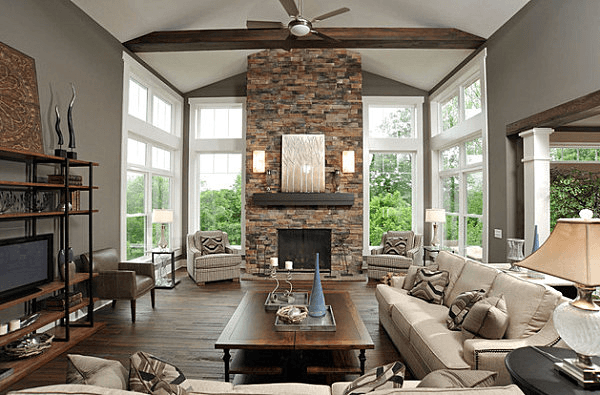
Wood-burning fireplaces
There are various types and efficiencies of wood-burning fireplaces and stoves. From open masonry hearth to the most effective wood stove, choose one that offers features such as safety, energy efficiency, and ambiance. In general, open hearth wood fireplaces waste 80% to 90% of the usable heat as exhaust and conventional wood stoves waste from 50% to 70%. These types of fireplaces are not recommended in a tightly constructed energy-efficient home because of the potential for back drafting to occur. The only wood-burning fireplace that should be installed is one that has fully gasketed doors and 100% outside combustion air.
Consider the availability, the cost, and the inconvenience of wood. Seasoned firewood can be expensive and difficult to obtain. Firewood also has to be stacked and stored in a dry location and can be messy when moved from the storage area to the fireplace.
Burning wood releases carcinogens and other pollutants into the air. The smog and pollution caused by wood-burning fires have become an issue in some parts of the country. The Environmental Protection Agency (EPA) sets emission standards for wood stoves. (Some municipalities have standards that are more stringent and even regulate when stoves can be used.) The EPA regulations apply to freestanding wood stoves and fireplace inserts that have air-supply controls and tight-fitting doors.
What to look for:
[udesign_icon_font name=”fa fa-check”] 100% outside combustion air.
This reduces drafts and the competition for air with other exhaust appliances.
[udesign_icon_font name=”fa fa-check”]Fully gasketed doors.
In tightly constructed homes, fireplaces with fully gasketed doors are less prone to back drafting when the doors are closed. If the doors are kept closed when the fireplace is not in use, cold outside air cannot be drawn back into your home via the chimney chaseway or through the outside combustion air duct.
Typical fireplace doors are not gasketed. While operating, the fireplace will draw up to 40% of the air needed for combustion from inside your home even if the outside combustion air duct is open.
[udesign_icon_font name=”fa fa-check”]Catalytic combustor.
These honeycomb C discs are made of glass or ceramic with a thin metal coating. They usually are located near the top of the stove, just above the main fire area. When hot exhaust gases rise from the firebox, they pass through the combustor and react with the catalytic metal coating.
As a result, the combustion temperature of the exhaust is lowered, which causes the gases to reignite. The wood burns once and the exhaust burns again. The combustor has to reach at least 600°F to operate efficiently. But it can be damaged by direct exposure to flame. That’s why modern combustor stoves include a flame deflector plate to protect the honeycomb disc. They decrease emissions by at least 30% and increase overall fuel efficiency at the same time by 30% or more. New models carry EPA approval, emit up to 90% less smoke than older models and produce overall fuel efficiencies that range from 60% to 75%.
Freestanding wood stove
Freestanding wood stoves are designed to radiate heat in all directions. A quality wood stove is equipped with a fully gasketed door, a catalytic converter, and outside combustion air.
Energy-efficient wood stove air and can be dampered to sustain longer burn times. Combustion of seasoned hardwoods in a wood-burning stove is virtually complete, resulting in very little ash. A wood stove installed in a central location in conjunction with an open floor plan will provide much greater heating potential than a typical fireplace built into an outside wall.
Natural gas fireplaces
Consider a natural gas fireplace as a clean and efficient alternative to wood-burning. Natural gas can be piped directly to the fireplace and is always ready when you want it. Also, it is safer for the environment and does not produce creosote to
clog chimneys or smoke that can back up into your home.
Direct-vent gas fireplaces
This type of fireplace is best suited for today’s tightly constructed energy-efficient homes. All openings are sealed with thermal or ceramic glass. No interior home heat can be lost through combustion in the direct-vent system. All oxygen
for combustion is drawn down into the fire chamber through the exterior pipe of a double wall-venting system. All by-products of combustion are exhausted through the interior pipe of the system.
Most direct-vent fireplaces will have efficiency ratings between 60% and 80%.
A new entry into the direct-vent gas fireplace market improves the efficiency to over 90%.
What to look for:
Ask about energy efficiency first. Most of today’s gas fireplaces have an AFUE rating which takes into account all the energy used (gas and electricity) as the fireplace cycles on and off. This rating allows for a more accurate estimate of yearly operation. Another rating is the Steady State Efficiency rating, which measures their efficiency at maintaining a steady temperature in the area they are heating. As a rule, the Steady State Efficiency figures will always be higher than their AFUE figures and are not intended to estimate yearly cost of operation.
Direct-vent design. Uses 100% outside air for combustion and can be vented directly through a sidewall. You avoid the added cost to run a chimney up through the roof.
Electronic ignition system. Consider a gas fireplace that does not have a continuous pilot.
Radiation-transparent ceramic glass front. Efficiently transfers radiant heat into the room.
Variable setting control or turndown. Allows you to adjust the heat output by regulating the rate of gas consumption. Look for a model that has a wide turndown range. Turndown ranges can vary from only about 70% of full load to about 20% of full load.
Automatic thermostat control. Helps keep room temperature constant by automatically adjusting the firing rate. Reduces energy consumption while maintaining comfort and continuous viewing pleasure.
Secondary heat exchanger. Many units have a primary heat exchanger through which room air will naturally circulate by convection. Some units have a secondary heat exchanger that extracts more heat from the combustion gasses and transfers it to the room.
Quiet variable speed circulating fan. Blows heat from the heat exchanger into the room.
Insulated outer casing. Prevents heat loss through the walls to the outside if located on an exterior wall.
Sizing
Sizing is determined by input and output ratings. The input rating is the amount of gas the fireplace can consume in one hour (Btu/h). The output rating is the amount of heat delivered to the house in one hour. For example, a 20,000 Btu/h input fireplace operating at 70% efficiency will provide the same amount of heat as a 40,000 Btu/h input unit operating at 35% efficiency and it will use only half the fuel.
High-efficiency direct-vent gas fireplaces are widely available. These fireplaces offer a means to significantly reduce energy use and CO2 emissions while maintaining a comfortable home with an attractive fire.
Pellet stoves, corn stoves, and multi-fuel stoves
Pellet stoves look similar to wood stoves or fireplace inserts, but instead of burning wood, they burn small pellets typically made from recycled wood shavings or sawdust. Although you can use pellets to run a whole house heating system, the fuel is more commonly used to feed fireplace inserts and freestanding stoves serving as supplemental heating appliances.
All pellet stoves have a hopper which typically holds one 40-pound bag of pellets. One bag should last about a day under normal operating conditions. A feeder device, like a large screw, drops a few pellets at a time into the combustion chamber for burning. How quickly pellets are fed to the burner determines the heat output. More advanced models have a small computer and thermostat to govern the pellet feed rate.

Like a modern gas appliance, pellet stoves use a draft-inducing fan to supply combustion air and vent combustion gases. The exhaust gasses can be vented horizontally through an outside wall, up through the roof or into a chimney with an approved chimney liner.
Regular maintenance includes daily hopper filling and checking/cleaning the burn pot to keep air inlets open and weekly or monthly ash removal depending on the type of unit and the fuel burned. Also, the flue vent should be cleaned seasonally to prevent soot building up, and unused pellets should be removed from the stove hopper and feed system at the end of the heating season.
It will be necessary to purchase the pellets in large amounts at a time to get the cheapest price. This means you’ll need a place to store 2 to 3 tons of pellets (100 to 150 40-pound bags), which hopefully won’t be too far away from the stove.
These stoves, under normal usage, consume about 100 kilowatt-hours (kWh) of electricity per month to run fans, controls, and the fuel feeders.
Corn stoves
Corn stoves are designed for the whole kernel, shelled corn combustion. Functionality and maintenance required are similar to that of a pellet stove. The chief difference between a pellet stove and a dedicated corn stove is the addition of metal stirring rod within the burn pot or an active ash removal system.
An active ash removal system consists of augers at the bottom of the burn pot that evacuate the ash and clinkers. During a typical burn cycle, the sugar content of corn (and other similar biofuels) will cause the ashes to stick together, forming a hard mass. The metal stirring rod, which is usually connected to a motor by a simple chain system, will break apart these masses, causing a much more consistent burn.
Multi-fuel stoves can burn corn and pellets and can be adapted to burn other fuels, such as soy beans, olive pits, cherry pits, bio mass fuel grains, and processed silage. While there is a push to create stoves that are able to burn multiple fuels with minimal adjustments, some pellet stoves are not designed to stir fuel and will not burn corn or other fuels.
Some of these stoves/fireplaces may save energy dollars when heating your home, but, do some calculations to see if staying with a natural gas home-heating system is more cost effective. You may be surprised to find out that a 90%+ efficient gas furnace will probably save you more money.
For these heating appliances to work as part of a system in a tightly constructed home, outside combustion air needs to be installed. It is wise first to identify a reliable supplier of the fuel to be used before making a purchase. These heating appliances require time and attention to run properly.
If you are someone who likes to “set it and forget it,” then these are not for you.
Fireplace recommendations for a tightly constructed home
- In a tightly constructed home, a direct vented natural gas fireplace is your best option.
- Safety. You eliminate any possibility of back drafting combustion gases into the living space.
- Energy efficient. Efficiencies range from 60% to over 90%. Outside air is used for combustion, so air heated by your furnace is not escaping up the chimney.
How To Explain Radiant Floor Heating To Your Mom
You know that look your mom gives you when you say something like, “We’re putting hydronic radiant in the slab with a mixing valve and outdoor reset”? It’s the same look she gave you when you tried to explain Wi-Fi in 2008.
So here’s the clean, mom-proof version: radiant floor heating is like turning your whole floor into a gentle, low-temperature heating pad. Not “hot lava floor.” Not “sauna.” Just warm, even comfort — the kind that makes you walk around in socks like you own the place.
The 20-Second “Mom Explanation” (Use This First)
“Mom, instead of blowing hot air around, we warm the floor gently. Warm water runs through tubing under the floor, the floor radiates heat upward, and the whole room stays evenly comfortable. It’s like a sunbeam on a cool day — not a hair dryer in your face.”
That’s it. Don’t add “delta-T” or “manifolds” yet. Save that for later… or never.
How It Works (Without Turning It Into a Science Class)
Radiant floor heating usually means hydronic radiant in Ontario: warm water circulates through plastic tubing (Pex) installed under (or in) the floor. That warm surface then heats the room mainly by radiation and a bit by natural convection. You’re heating the “mass” and surfaces — not just the air.
The best part? Radiant heat is a low-temperature system. Instead of making one spot really hot and hoping the heat drifts around, it spreads warmth gently across a big area. That’s why it feels so good.
A boiler, water heater, or heat pump creates warm water (not boiling, not scary).
The water circulates through tubing in a slab, under subfloor, or in panels designed for radiant.
The floor surface warms slightly, then radiates comfort upward — even heat, fewer drafts.
Why Radiant Feels “Different” (And Why Moms Notice It Immediately)
Most forced-air systems heat by pushing warm air. That can work fine, but it tends to create hot/cold swings: the furnace kicks on, you get a blast, then it shuts off and the room slowly cools until the next blast. Radiant works more like a slow, steady “background warmth.”
That’s why people say things like:
- “It feels warmer at a lower thermostat setting.”
- “No drafts.”
- “My feet are happy.”
- “The house is quiet.”
If you’ve ever stood near a sunny window on a cold day, you’ve experienced the idea: radiant warmth feels comfortable without needing the air to be roasted. Natural Resources Canada also talks about “keeping the heat” in the home as a whole-envelope idea — comfort is about more than just a furnace size. NRCan: Keeping the Heat.
“Is It Safe?” (Yes. And Your Mom Will Ask This.)
Hydronic radiant isn’t an exposed electric element. It’s warm water in tubing, under the floor. Floor temperatures are controlled and the system is designed to run at reasonable, comfortable temperatures. You’re not trying to cook the dog.
In Ontario, the building-code world is basically saying: systems must be installed properly, meet requirements, and be inspected where applicable. If you want the official rabbit hole: Ontario Building Code. (You don’t need to read it to enjoy warm floors… but it’s nice to know it exists.)
Where Radiant Floor Heating Works Best in Ontario
Radiant shines in places where comfort matters and where the floor assembly makes sense:
- Basement slabs: Basements can feel chilly. Radiant makes them feel like “real living space.”
- Main-floor slabs (slab-on-grade): Radiant and slab-on-grade can be an unreal comfort combo when insulated properly.
- Bathrooms: Because stepping onto a warm floor at 6:30 AM is a small luxury that feels huge.
- Garages/workshops: Radiant makes a garage usable without blasting hot air and stirring dust.
We’ve also found radiant pairs beautifully with high-performance envelopes. If you want the “why does this house feel so nice?” side of it: Why ICF Homes Feel Different: Comfort & Quiet.
The Two Types Your Mom Will Mix Up
There are two radiant floor conversations that get mashed together:
- Hydronic radiant: warm water in tubing (most common in whole-home Ontario builds).
- Electric radiant: cables/mats (often used for smaller areas like bathrooms).
If you’re doing a full home, hydronic is usually the workhorse because it can be powered by different heat sources and is typically more practical at scale. Electric radiant can be great for targeted comfort zones — but whole-home electric radiant is a different cost conversation.
“Does It Cost More?” (The Honest Answer)
Radiant floor heating usually costs more up front than a basic forced-air setup. You’re paying for tubing, manifolds, controls, and labour — plus whatever heat source you choose. But cost isn’t just “equipment”; it’s also how the system fits your house: insulation levels, airtightness, glazing, and heat-loss design.
If you want Ontario numbers and what drives them, this breakdown is the most useful starting point: Cost of Hydronic Radiant Floor Heating in Ontario .
And if you want to understand why two quotes can look completely different, the “heat loss” conversation explains a lot: Heat Loss Calculation for a New Home .
Mom version: “Yes, it can cost more to install, but it’s very comfortable, efficient when designed properly, and it’s one of those things you feel every day.”
The Big Misconceptions (A.K.A. “Stuff People Say At Family Dinners”)
Myth 1: “Radiant is slow and you’ll freeze until it catches up.”
Radiant in concrete has thermal mass, so it’s not meant to swing fast like forced air. But a properly designed system doesn’t “lag” — it maintains comfort steadily. The trick is good controls, good insulation, and not expecting it to behave like a furnace that goes from 0 to 100 instantly.
Myth 2: “It’s going to leak and ruin the house.”
Modern hydronic tubing is designed for this job. Leaks are not the normal expectation. Most “radiant problems” come from design mistakes, poor installation, or bad coordination — not from the concept of radiant itself.
Myth 3: “You can’t have wood floors.”
You can have wood floors. You just need the right approach: correct temperatures, proper subfloor, and materials that can handle the environment. (Your flooring manufacturer’s specs matter. Don’t skip that part.)
Myth 4: “Radiant means no air system at all.”
Radiant heats the home, but homes still need ventilation (and sometimes cooling). Many Ontario homes pair radiant with an HRV/ERV for ventilation, and add cooling in different ways depending on the project.
How To Explain the “Parts” Without Losing Her
If your mom asks what’s actually in the system, here’s the simplest way to describe the parts:
- Heat source: makes warm water (boiler, heat pump, or other system).
- Manifold: like a “water traffic director” that sends flow to different zones.
- Zones: rooms/areas controlled separately (so one part of the home isn’t overheating).
- Thermostats/controls: keep everything comfortable and steady.
Mom-friendly analogy: “It’s like the house has a few warm-water ‘loops’ under the floor, and the manifold is the knob board that decides where the warm water goes.”
Why Radiant Pairs So Well With ICF (The “Modern Ontario Home” Combo)
Radiant is fantastic in homes that are built tight and insulated well, because you’re not trying to fight constant heat loss and drafts. ICF construction often creates a quiet, stable indoor environment — and radiant complements that by delivering steady, even heat without noise.
If you want the “what is radiant floor heating?” overview from the ICF side (great to share with family), here: Radiant Floor Heating (ICFhome.ca).
Also, when you’re choosing heating approaches for high-performance homes, “what’s best” depends on the envelope, budget, and comfort goals. This guide helps compare options: Best Heating System for an ICF Home in Ontario .
The “Ask Your Mom” Test (If She Gets This, You Nailed It)
Here are the questions that tell you whether you’ve explained it clearly:
- “So it warms the floor gently, and the room feels even?” (Yes.)
- “It’s not blasting hot air?” (Correct.)
- “It’s safe and controlled?” (Yes.)
- “It might cost more, but it feels better?” (Also yes.)
If she says, “Ohhhh… that actually makes sense,” you win. If she says, “So it’s like a toaster oven under the house,” you have more work to do.
Bottom Line
Radiant floor heating is one of those features that’s hard to appreciate until you live with it — and then it becomes the thing you brag about to visitors. It’s quiet, comfortable, and steady. And in Ontario, where winter has a long attention span, that kind of comfort is worth real consideration.
If you want to go deeper on cost and design (the parts that actually move the budget), start with: Radiant Floor Heating Cost in Ontario and Heat Loss Planning. And if you want a simple, shareable overview from the ICF side: Radiant Floor Heating (ICFhome.ca).
looking for freestanding/contempary style/natural gas ventless stove
http://napoleonfireplaces.com/products_categories/vent-free-gas-stoves/
Just installed a Primo Heat and Glo gas fireplace with the vents going out the back wall
However, these power vents make a loud noise which makes it uncomfortable to turn the fireplace on. Can the power vent be turned off or can it be installed on the roof through the prior chimney? What do you advise
To the best of my knowledge, Primo Heat and Glo gas fireplace do not require a power vent. It may be a blower you are hearing. You can see the schematics here: https://downloads.hearthnhome.com/installManuals/2310_970.pdf
thanks for sharing. we work on representing modern Bistoon fireplaces and we see that modern fireplace are getting popular day by day.
Once you’ve had a fireplace in your home, you won’t want to give it up. Whether you have a traditional fireplace or opt for a modern firebox or electric fireplace there are many benefits to having a fireplace in your home.
Natural gas is the fuel of choice for homeowners. It is a clean, affordable, safe and efficient energy choice. Some of the advantages of natural gas include lower energy bills and increased value when you sell your house, plus has many other benefits.
It helped when you said to ask about energy efficiency. My cousin was at my house last night for a visit, and she talked about how she wants to get a fireplace built in her living room before the end of November, and she was wondering what type would be best to choose. I’ll pass these tips along to her so she can know more about choosing the right type of fireplace.