Ontario's Plain-English Guide to Custom Home Building📞 705-533-1633 | ☎️ 1-866-868-6606 | ✉️ info@icfhome.ca
How to Find Land to Build a House in Ontario (2026 Guide)
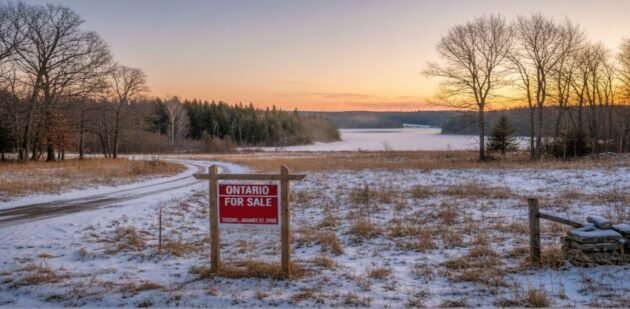
Ontario lots
Builder checklist
Zoning, septic, access
How to Find Land for Sale to Build a House in Ontario (Without Buying a Problem Lot)
If you are searching for land to build a house in Ontario, you are not just shopping – you are trying to dodge the classic trap: a lot that looks perfect right up until you learn you cannot build what you want, where you want, or when you want. This is the builder’s system for finding buildable land, screening it fast, and avoiding the biggest Ontario gotchas. The short version to remember: the lot controls the house far more than the house controls the lot.
1Where to look
2The 10-minute screen
3Pre-offer questions
4Price the site first
Straight answer: online listings are great at finding land and equally great at hiding a lot’s “personality.” Before you fall for the photos, run a quick screen for the four things that sink most Ontario lots – setbacks, conservation regulation, frontage or driveway access, and septic limits. If you screen properly, you can reject 80% of “nice but no” lots in under ten minutes. Do not fall in love with the listing; fall in love with the answers. Start with the is this lot buildable checklist.
“Buildable” means more than zoning. It also means legal access, adequate frontage, a buildable envelope that fits setbacks, and – on a rural lot – real feasibility for a septic system and a well, plus workable grading and drainage. A lot can be zoned residential and still be a bad candidate once you apply those constraints. Two Ontario rules worth knowing early: creating new lots (severances or consents) is its own approval process, and building in or near a regulated natural-hazard area can require a conservation-authority permit.
Where to look for land in Ontario
Most people look in the same place, at the same time, for the same “perfect lot.” That works, but you will need patience and fast reflexes. The better strategy pairs the obvious sources with a few quiet ones.
High competition
The obvious sources
MLS vacant-land listings, teardown properties, and estate sales; realtors who genuinely specialize in land (not every agent does, so ask); and builder networks, which sometimes know of lots before they are publicly listed. Good volume, but you are competing with everyone.
Lower competition
The quiet sources
Drive the areas you want and watch for private “for sale” signs – old-school still works. Talk to local surveyors, excavators, and well drillers, who often hear about land first. Call the municipal planning desk and ask where new-home applications are happening. And ask about surplus or small parcels that need a smart approach.
Builder truth: if a lot is “amazing” and “cheap” and “ready to build,” it is usually missing one detail – and that detail is why it is still available. For rural lots, get a septic-and-well reality check before you get attached: see septic and well checks.
The 10-minute lot screening checklist
Use this fast filter before you book a showing. You are not approving the lot in ten minutes – you are deciding whether it is worth another ten hours.
1Road access and frontage. Is there legal access? Public road, private road, or a shared right-of-way?
2Obvious red flags. Floodplain hints, swampy ground, steep ravines, big wet areas, or “seasonal access only.”
3Services. Hydro nearby? Municipal water and sewer, or private well and septic? If it is well and septic, assume more due diligence.
4Setbacks and buildable area. Is there enough clear space to fit the house, septic, and well with all setbacks?
5Conservation authority triggers. Wetlands, valleys, watercourses, shoreline, or hazard land nearby?
6Slope and drainage. Flat is easy, steep is expensive, low is wet. All three can be buildable, just not equally.
7Existing structures. If it is a teardown, budget time for demolition rules, service disconnects, and possible site constraints.
8Foundation reality. Soil, water, and grading decide basement vs crawlspace vs slab – and that shapes the whole design.
If a lot “needs fill,” “needs drainage,” or “needs blasting,” do not panic – just budget for proper due diligence. The panic comes from finding out after you buy. Estimate the site side with the land development cost calculator.
Questions to ask before you make an offer
Once a lot passes the quick screen, get answers in three buckets – planning and zoning, building feasibility, and cost drivers. This is where you separate “buildable” from “buildable without tears.”
Planning and zoning
- What is the zoning and what uses are permitted? Are there special provisions like shoreline overlays? The zoning decoder explains the language.
- Are there setback constraints, easements, or rights-of-way? These can shrink the buildable envelope fast.
- Is it a legal buildable lot? Especially important if it was newly created or looks split off from a larger parcel.
Septic, well, and services
- Is there room for a septic system – and a replacement area if required?
- Any known groundwater issues? A high water table changes everything: foundation, drainage, and system design.
- Hydro availability and cost? Distance to service can be a major driver on rural lots.
The “this will cost more than you think” signals
- A long driveway, culvert, or entrance upgrade.
- Rock, steep slopes, heavy clearing, or nearby wetlands.
- Limited staging and parking area for trades – yes, it matters.
Quick rule: before you price the house, price the site. The lot is where budgets get quietly ambushed. When you are ready to move from land shopping to permit-ready planning, see how to get a building permit in Ontario, and for regulated areas, conservation authority approvals.
Next step: shortlist your top three and validate each
The most effective move is simple: shortlist your top three lots and run the same validation on each. You will quickly see which lot has clean answers and which one is a pile of “we will figure it out later” – and later is both expensive and the moment you are already emotionally invested. For each lot, start with a rough concept (house size, basement vs slab, driveway location), confirm septic and well feasibility and zoning constraints early, then move into preliminary design and budgeting.
A common Ontario scenario: a lot checks every box on paper, then the first site walk shows the only practical driveway location crosses a wet area that would trigger extra approvals and real cost. The fix is almost always to reposition the house footprint and access on paper first – which can turn a “beautiful headache” into a genuinely buildable lot. The win is not luck; it is asking the right questions early. That is exactly the kind of feasibility read we do before anyone spends on design.
Found a lot and want to know if it is really buildable?
Book a lot review
Before you make an offer, we will walk the lot with you and pressure-test zoning, access, grading, and septic – the things that decide whether your build is straightforward or a fight. We design and build custom ICF homes and handle site work and permits through Georgian Bay Siteworks. Call 705-533-1633 or reach info@icfhome.ca.
Finding land to build in Ontario: FAQ
What is the best way to find buildable land in Ontario?
Use a two-part approach: search public listings (MLS vacant land, teardowns, estate sales), and build a local lead network of land-focused realtors, surveyors, excavators, well drillers, and builders. The best lots often sell quietly or quickly. But finding land is only half the job – the other half is screening whether you can actually build your house there without major approvals, delays, or site costs.
How do I know if a lot is actually buildable?
Buildable depends on more than zoning. You need legal access, adequate frontage, a buildable envelope that fits setbacks, and – on a rural lot – feasibility for septic and a well. Lots can look perfect online but fail when you apply real constraints like septic area requirements, high groundwater, conservation regulation, or easements that shrink the usable area. A quick screening checklist saves a lot of wasted time.
Is it cheaper to buy rural land in Ontario for a custom home?
The land price can be lower, but rural lots often carry higher site-development costs: driveway length, tree clearing, hydro service distance, well drilling, septic design and installation, grading, and drainage. Rural can absolutely be a great choice – just do not compare land price to land price. Compare the full “lot plus services plus access plus approvals” reality before deciding what is cheaper.
What due diligence should I do before making an offer on land?
Confirm zoning and setbacks with the municipality, verify access and frontage, and identify any easements or rights-of-way. If it is rural, investigate septic feasibility and well considerations early and be realistic about hydro availability. Watch for clues that trigger extra approvals, like wetlands, valleys, shorelines, or hazard land. Good due diligence is boring, and that is exactly why it works.
Do conservation authorities affect building lots in Ontario?
They can. If a property is in or near a regulated natural-hazard area such as a floodplain, wetland, watercourse, steep slope, or shoreline, you may need approval before certain development can proceed. It does not automatically mean you cannot build, but it can affect where and how you build, your timelines, and your costs. Identify it early so it is not a surprise after you buy.
Can I buy land in Ontario and sever it later?
Sometimes, but do not assume. Severances (consents) are an approval process, and approval depends on the municipality’s policies, zoning, frontage, servicing, and broader planning considerations. Some lots can be severed, others cannot. If you are buying with a future severance in mind, treat that as a separate due-diligence project and make your offer conditions and planning inquiries reflect that severance is not automatic.
How much land do I need to build a house in Ontario?
There is no single answer, because the minimum is set by zoning and servicing (municipal services versus well and septic), plus your house footprint and required setbacks. A small urban lot can work on municipal water and sewer, while rural lots usually need more room because wells and septic systems require separation distances and enough suitable area. The real question is how much buildable area you have after constraints.
Is a teardown a good way to find land to build on?
It can be, especially in established areas where vacant lots are rare. But teardowns bring their own considerations: demolition rules, disconnecting services, possible limits from existing conditions, and sometimes neighbourhood constraints. The upside is often location and existing services; the downside is you may inherit site constraints that would not appear in a typical vacant-land listing. Screen it the same careful way.
Note: this is general guidance, not legal or planning advice, and lot rules are highly local. Confirm zoning, setbacks, severance, servicing, and conservation-authority requirements with your municipality and qualified professionals before you buy.
Related lot & building guides
More on land and site
Sources and further reading
Reviewed and updated October 2026. Costs on this site are Ontario ranges, not quotes; code references are to the Ontario Building Code in force at the date above.
Latest posts
Fresh guides, calculators & real-world advice
More from BuildersOntario – scroll to explore.
Loading latest posts…
Tip: shift + mousewheel works great