Ontario's Plain-English Guide to Custom Home Building📞 705-533-1633 | ☎️ 1-866-868-6606 | ✉️ info@icfhome.ca

All About Gas Fireplaces
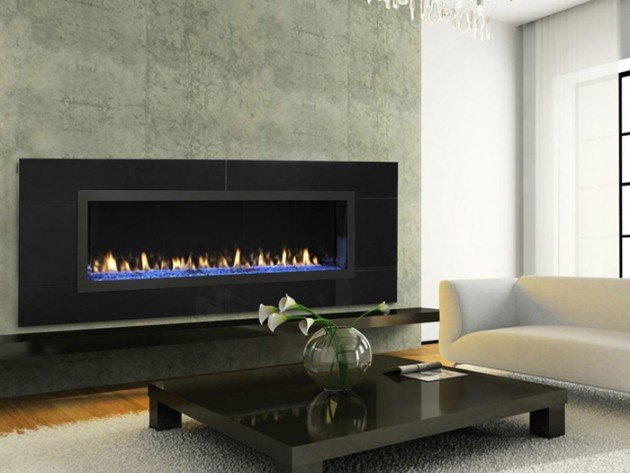
Ontario – gas fireplaces
2026 costs
New CO alarm rules
Gas Fireplace Guide for Ontario Homes: Costs, Safety, Efficiency, and Venting
A gas fireplace can be a fantastic upgrade in an Ontario home – real warmth, instant ambiance, and none of the mess of a wood fire. But it is a fuel-burning appliance, which means the rules genuinely matter. This is a builder-style, homeowner-friendly deep dive: the types, venting, realistic 2026 cost ranges, what “efficient” actually means, and the safety checklist that keeps your family comfortable and your inspection painless – including Ontario’s new carbon-monoxide alarm rules that took effect January 1, 2026.
1Types & venting
2Real 2026 costs
3Efficiency, not marketing
4CO alarm rules
First: what are you actually buying?
“Gas fireplace” is like saying “truck” – it covers very different machines. The type you choose changes heat output, venting, install complexity, and cost. Here are the four you will run into most.
Best all-round
Direct-vent (sealed combustion)
The modern standard. Combustion air comes from outside, exhaust goes outside, and the firebox is sealed from your room air behind glass. Safe, predictable, and the right call for tighter, newer Ontario homes.
Upgrade path
Gas fireplace insert
Slides into an existing wood-burning masonry fireplace. A great way to turn a drafty, inefficient wood opening into real, usable heat if you already have a chimney.
Freestanding
Gas stove
A standalone unit, often with strong perceived heat output. Easy to fit into cottage and open layouts, and it can be a genuine room heater.
Older style
Natural draft / B-vent
Uses indoor air for combustion and vents up a chimney. Often more decorative than heating, and it can pull warm air out of the house if it is not designed and installed carefully.
Builder reality: if your goal is reliable heat and good indoor-air comfort, sealed combustion (direct vent) is usually where you land – especially in the tight, well-built homes we make. One more note for Ontario: vent-free (ventless) gas appliances are heavily restricted by the TSSA and prohibited in many locations like bedrooms and small rooms, so confirm with a licensed gas technician before you even shop for one.
Costs in Ontario for 2026: the real range
Pricing swings widely because a fireplace is really several jobs at once: the appliance, the venting, gas-line work, electrical, finishing, and inspection or commissioning. Here are current Ontario planning ranges for an installed unit.
| What you are pricing | Typical 2026 range (CAD, installed) |
|---|---|
| Gas fireplace insert (into existing masonry) | $2,300 to $8,000 |
| New direct-vent fireplace, professional install | $4,500 to $10,000+ |
| Higher-end unit + long/complex venting + custom surround | $10,000 to $16,000+ |
| Add: new gas piping to the location | $200 to $600+ (more for long runs) |
Ontario planning ranges for comparison, not a quote – site conditions and venting details change everything. The install price typically includes the unit, venting, and certified labour; a fancy stone-and-mantel feature wall or TV wall can cost more than the fireplace itself. If this is part of a bigger renovation, coordinate it with permits early so you are not opening finished walls twice – see how to get a building permit in Ontario.
The biggest cost drivers, in plain English
- Venting complexity: a short straight run through an outside wall is far cheaper than a long, boxed-in run with multiple offsets.
- Gas piping distance: if the nearest gas manifold is across the house or the basement is finished, expect more labour and patching.
- Electrical needs: blower kits, controls, or power venting may require an electrician and a clean wiring plan.
- Finish carpentry and surrounds: stone, tile, mantels, and built-ins add up fast.
- Chimney work (inserts and older homes): liner requirements, chimney condition, and clearances can add real money.
Efficiency: the part marketing loves to interpret
Some gas fireplaces are serious heaters; others are essentially pretty flames that happen to burn fuel. The difference comes down to how the unit is designed and how it vents. Direct-vent units typically land in a 70% to 85% efficiency range, and they do not pull your heated indoor air up a chimney the way an old natural-draft unit can.
- Sealed combustion helps: a direct-vent unit is not exhausting your warm room air outside.
- Decorative units can disappoint: if the design’s main job is flame appearance, usable heat is often secondary.
- A blower is not a gimmick: it moves heat off the unit and into the room faster, which matters in larger spaces.
- Zone heat wins: a gas fireplace shines when it warms the rooms you are actually using instead of overheating the whole house.
Builder tip: decide what you want first – ambiance, backup heat, or true room heating – then pick a unit built for that job. Do not buy the sports car when what you needed was the work van.
Venting: where Ontario installs succeed or fail
Venting is not a dealer accessory – it is the safety system. It controls combustion-air supply and exhaust removal, and in a tight house it protects you from depressurization problems.
Direct vent (sealed combustion): usually the safest bet
A direct-vent unit typically uses a coaxial vent – intake and exhaust in one system – so combustion air comes from outside, exhaust leaves through an approved vent, and the firebox stays sealed behind glass with minimal interaction with your indoor air.
B-vent / natural draft: when details matter a lot
Older natural-draft designs rely on indoor air and buoyancy to vent. In a modern airtight home – especially one with a big range hood, an HRV, a dryer, and bath fans – depressurization can become a real concern that back-drafts the appliance. That is where correct design, clearances, and the manufacturer’s certified instructions become non-negotiable.
Rule of thumb: venting and gas connection must follow the appliance’s certified installation instructions and Ontario’s gas installation code (CSA B149.1), and the work must be done by a TSSA-registered gas technician. If an installer ever says “we usually just…”, that is your cue to ask for the documentation. Have a code question mid-project? The OBC Code Navigator answers Ontario code questions in plain English.
Safety: the part nobody wants to learn the hard way
Two safety topics come up every single time: carbon monoxide and burn risk, especially with young kids.
Carbon monoxide alarms: Ontario’s new rules (effective January 1, 2026)
As of January 1, 2026, updated Ontario Fire Code rules require carbon-monoxide alarms in existing homes that have a fuel-burning appliance (furnace, water heater, stove, or a fireplace), an attached garage, or heating air drawn from a fuel-burning appliance. If any of those apply to you – and a gas fireplace absolutely counts – you must have CO alarms:
- Adjacent to each sleeping area (for example, in the hallway outside the bedrooms).
- On every storey of the home, including levels without bedrooms such as the basement and upper floors.
This is not just for new construction. It applies to existing homes that meet the conditions above, and the alarms can be hardwired, plug-in, or battery-operated as long as they meet the recognized safety standard. Do not guess placement – read the official summary from the TSSA at tssa.org and set up your plan.
Burn risk: the glass gets genuinely hot
Modern sealed units are excellent, but the glass front can be dangerously hot during operation and for a good while after shutdown. If you have young kids – or a dog that treats everything as a pillow – plan for a safety screen or guard and a layout that keeps traffic away from the front.
Sizing: more BTUs is not always better
Homeowners love asking how many BTUs they need. The honest answer is enough, but not so much that you roast everyone, cycle the unit constantly, and create comfort problems.
- Room volume matters: an open-concept great room needs more output than a small den.
- The envelope matters: a tight, well-insulated home needs far less heat to feel warm – which is why the wall system and windows come first.
- Placement matters: a fireplace on an exterior wall can be perfect, provided it is a sealed-combustion unit designed for it.
- Modulation helps: units that can turn down low tend to feel more comfortable day to day.
Builder tip: the best fireplace is the one that runs steadily at a comfortable output – not one that blasts, shuts off, and repeats the cycle like a nervous squirrel.
What a good install looks like
A clean install is mostly about sequencing and documentation. Here is what “good” usually includes.
1
Plan the location and finishing first. Decide surround materials, mantel depth, and clearances before framing is final.
2
Confirm the vent route early. Short, straight, code-compliant venting is your friend; weird routes cost money and add risk.
3
Run the gas line properly. Correct sizing, pressure testing, and shut-off location all matter for safety and performance.
4
Handle electrical if required. Fans, controls, ignition, and power venting need clean wiring and service access.
5
Commission and verify. A proper install ends with setup, adjustment, and a safety check – it is not plug and play.
6
Place CO alarms correctly. Treat this as part of the fireplace project, not an afterthought – it is now the law.
Building or renovating? It helps to understand how Ontario’s code changes affect common residential details year to year – see Ontario Building Code changes.
Maintenance and comfort strategy
A gas fireplace is not high maintenance, but it is not zero maintenance either. The sweet spot is a quick annual check that covers burner and ignition operation, glass and gasket-seal condition, venting and termination clearances (nothing blocked or improvised), the fan or blower if equipped, and testing the CO alarms. And the obvious one: if you ever smell gas, get out, shut it down safely if you can, and call the right pros – “I will just see if it goes away” is not a strategy.
The bigger picture: in Ontario homes the best comfort comes from a system – envelope, ventilation, primary heating, and smart zone heating together. A gas fireplace makes a great zone heater, especially paired with steady whole-home comfort like hydronic radiant floor heating. Even the best fireplace feels better inside a properly built envelope, which is exactly how we design our ICF homes.
Planning a fireplace as part of a build or major reno?
Book a call
We design and build high-performance custom homes across Simcoe County and Georgian Bay, and we will help you fit a fireplace into the plan properly – venting, clearances, CO alarms, and comfort all coordinated from the start. Call 705-533-1633 or reach info@icfhome.ca.
Gas fireplace questions Ontario homeowners ask
Do I need a permit to install a gas fireplace in Ontario?
Often, yes – especially if you are running new gas piping, altering structure, or changing venting and clearances. The gas work itself must be done by a TSSA-registered gas technician to CSA B149.1, and a building permit may also be needed. The clean way to handle it is to coordinate early, before finishing, so you are not reopening walls later. Your municipality and a qualified installer will confirm the right route for your project.
What changed with CO alarms in Ontario in 2026?
As of January 1, 2026, updated Ontario Fire Code rules require carbon-monoxide alarms in existing homes that have a fuel-burning appliance, a fireplace, an attached garage, or heating air drawn from a fuel-burning appliance. In those homes, alarms must be installed adjacent to each sleeping area and on every storey, including basements and floors without bedrooms. They can be hardwired, plug-in, or battery-operated. A gas fireplace triggers these requirements, so plan the alarms as part of the project.
What is the best type of gas fireplace for a newer airtight home?
Most of the time a sealed-combustion (direct-vent) unit is the safest and most predictable choice, because it draws combustion air from outside and sends exhaust outside without using your indoor air. That avoids the depressurization and back-drafting concerns that older natural-draft and vent-free units can create in a tight, well-insulated home.
How much does a gas fireplace cost to install in Ontario in 2026?
A professional new direct-vent fireplace install typically runs $4,500 to $10,000 or more, including the unit, venting, and certified labour. Inserts into an existing masonry fireplace often run $2,300 to $8,000, while high-end units with long or complex venting and custom surrounds can reach $10,000 to $16,000 or more. Adding new gas piping to the location usually adds $200 to $600 or more depending on the run.
Can I put a TV above a gas fireplace?
Sometimes – only if the unit and the wall assembly are designed for it. Heat management is the whole game: mantel depth, clearances, and a planned heat-deflector and air-gap strategy all matter. Follow the manufacturer’s clearances to combustibles and electronics, and never improvise this detail, because sustained heat can damage a TV or create a hazard.
Are gas fireplaces expensive to run?
It depends how you use it. As zone heat – evenings, weekends, and the rooms you are actually in – a modern direct-vent unit can be quite practical. If you try to run it as a whole-home primary heater when it was not designed for that job, both cost and comfort suffer. Matching the unit to the job, and to a well-insulated home, is what keeps running costs sensible.
Note: costs are general Ontario planning ranges, not a quote, and safety and code requirements are situation-specific. Gas work must be performed by a TSSA-registered technician, and CO alarm placement should follow the current Ontario Fire Code. Confirm requirements with your municipality, a licensed installer, and the official TSSA guidance before you build.
Related guides
More on heating and efficiency
Reviewed and updated October 2026. Costs on this site are Ontario ranges, not quotes; code references are to the Ontario Building Code in force at the date above.
Latest posts
Fresh guides, calculators & real-world advice
More from BuildersOntario – scroll to explore.
Loading latest posts…
Tip: shift + mousewheel works great

I bought a house with a gas fireplace. At the bottom is sand and little black chunks that look like coal. Should I sweep it out or leave it in?
Leave it in. They suppose to look like a charcoal and are a part of the fireplace.
Renting a condo with a broken glass front of a gas fireplace; can the fireplace still be used? Is it safe to use?
NO!!!
Buying a condo townhome with a gas fireplace in master bedroom. Inspector said guidelines have changed and this is not approved; no approval sticker was found. Inspector also said fireplaces cannot be grandfathered in. What is the next step? Is this going to be a problem in the future?
I just had installed a insert for a gas fie place.. It is cold here and the glass on the front is frosting up and cold air is rushing in from the
top and bottom… Is this normal for a insert. Whats missing?? I have now
turned of the gas just incase…
Did you just cut a hole in your house and insert the fireplace in the hole? You should look at the outside wall and you will probably see inside your house and there is the issue. Call me 2893146339 and see can offer professional install
Outside vent sits below grade, should a drain have been installed to help with water drainage, etc.
I would really like to answer your question. However, it is not clear. The outside vent of what? Stove? What kind of vent is it? What kind of stove? Drain for what? What water drainage? Please be clear when asking a question.
I have a free standing gas fire place in a corner of my unfinished basement. I’m currently finishing it and I’m curious if there is a heat shield required behind the fire place or can I frame and drywall behind it?
I loved how you mentioned that it can eliminate chimney cleaning! My husband and I recently decided that we want to look into getting a fireplace installed for our home before cold weather starts, and we want to make sure that we choose the right kind. We’ll have to look into getting a gas fireplace installed for our home.
I appreciated it when you shared that do not operate your fireplace until the area is thoroughly cleaned if it is installed in a home during construction or renovation. My uncle just mentioned the other day that he is planning to have a fireplace in the living room since he is in the midst of remodeling his house. I will suggest to him getting a gas one and hire a reliable service that can help install it.
We have a gas fireplace in our home that we bought, the tiles are cracked around it and we’re redoing the floors, we’d like to know if we have to fix the tiles on the 5” raised step (hearth?) in front of it or if we can remove it all together, letting us floor to under the fireplace. We’d re-tile around the fireplace itself as I know we need 6” of non-combustible around the fireplace.
This gas fireplace has a box on the outer wall with little metal box for an exhaust. We plan to install cork under lay with vinyl flooring, I understand that neither cork or vinyl floors are considered combustible. The model of the fireplace is the Instaflame DV32RN, which I found the manual for and indicates it does not require a hearth. I want to confirm the Ontario building codes do not require one as well. Thanks.
Thank you for explaining how gas fireplaces are very clean because there are no ashes or other messes. My husband and I want to install a fireplace in our basement to make it cozier. We will definitely look into getting a gas fireplace so that maintenance and cleaning will be easy.
I have a new build home in Welland, Ontario with a sidewall-exhausting, direct-vent gas fireplace. We have a deck out back. Can you please tell me what height the vent should be from centre line of the vent to the top of the deck? Ours is 36”. I have burned my arm twice on this vent and just wondered as we have grandchildren running around and I don’t want them to get burned as well.
Regards,
Mark Kelln
Very useful discussion, especially around direct vent fireplaces. Clearances around exterior vents are easy to overlook, but they can matter a lot for decks, children, pets, and general safety.