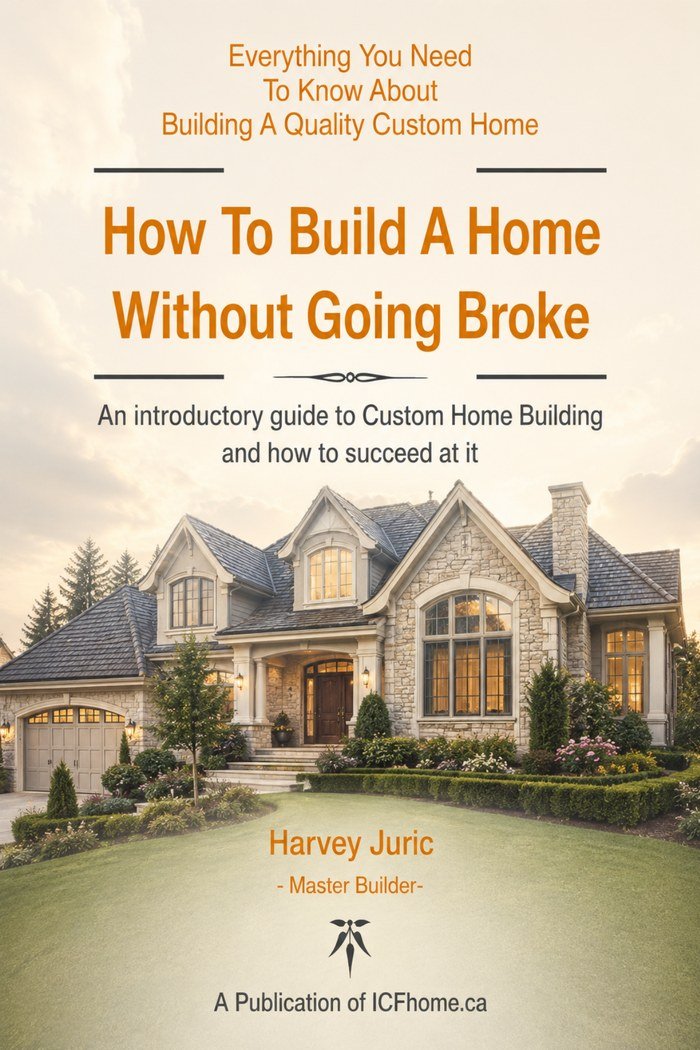
Ontario's Plain-English Guide to Custom Home Building📞 705-533-1633 | ☎️ 1-866-868-6606 | ✉️ info@icfhome.ca

The Ultimate Guide to Building a Custom Home in Ontario: Your Dream Home Starts Here
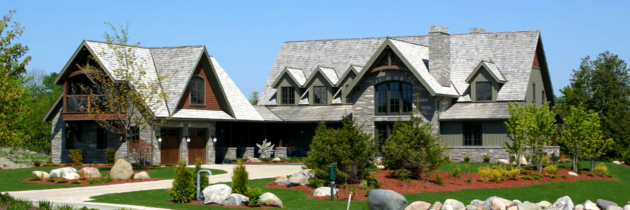
Ontario custom builds
Step-by-step
Budget & permit reality
The Ultimate Guide to Building a Custom Home in Ontario
Building a custom home in Ontario is exciting – and occasionally feels like assembling a 10,000-piece puzzle while someone keeps changing the picture on the box. The good news: there is a reliable step-by-step process. When you understand the sequence and the Ontario reality behind it, you protect your budget, your timeline, and your sanity. This guide is written for real homeowners, and it answers the three questions people actually care about: what happens next, what can go wrong in Ontario, and how do I prevent expensive surprises.
1Ontario-focused steps
2Budget + permit reality
3Practical builder fixes
4Timeline control
Fast answer: in Ontario, a successful custom build comes down to sequencing. Secure the lot and its constraints first (zoning, services, conservation authority, soil), then design around them, then apply for permits with a complete package, then lock scope and selections before you break ground. Most budget blowups are not mysterious – they are missing information (soil, servicing, engineering), late selections, or vague scopes that invite change orders.
Big Ontario win
Get the lot and constraints right early. It prevents expensive design-redo moments later.
Big Ontario mistake
Permits are not slow by default – incomplete submissions are. Completeness wins.
Big money leak
Late selections. “We will decide later” is a change-order generator with good marketing.
Below we walk through land, design, permits, pricing, construction, inspections, and close-out – flagging the mistakes that cause delays, change orders, and those “why is this suddenly $40,000 more?” moments. Builder truth: your budget does not get blown up by bad luck. It gets blown up by missing information and late decisions.
How the Ontario custom home process really works
1
Start with land and the constraints you cannot wish away
Before you fall in love with “a dream home in the trees,” confirm the tree-related facts: where you can build, what you can build, and what it costs to service the site. Two lots that look identical online can be wildly different once approvals and infrastructure are factored in.
- Zoning and setbacks: what is allowed, lot frontage, building envelope, height limits, accessory buildings.
- Services: municipal water and sewer versus well and septic – if septic, soil and room for a system matter a lot.
- Road access and entrance: municipalities and conservation authorities have rules for entrances, culverts, and drainage.
- Conservation authority and environmental overlays: wetlands, shorelines, floodplains, and slopes can trigger approvals and studies.
- Topography and soils: clay, sand, high groundwater, or bedrock each change excavation, foundation, and waterproofing.
Ontario reality check: the lot is the cheapest part of the project to buy wrong. If unsure, do a pre-purchase due-diligence review. See the “is this lot buildable” checklist and septic and well checks.
2
Pick your team and make sure everyone is designing the same house
A custom home is a long series of decisions, drawings, approvals, and construction steps. Your team may include a designer or architect, a structural engineer, a mechanical designer, your builder or GC, specialty trades, plus a surveyor and septic designer if applicable. The biggest coordination mistake is designing a pretty house first, then discovering it is expensive to build on your lot, under your municipality’s interpretation, with your services. The fix: involve the builder early and design to a budget and a site, not to a Pinterest board. For high-performance builds (ICF, radiant, heat pumps), get the mechanical strategy early – see heat loss calculation for a new home.
3
Design that is buildable, not just beautiful
Good design is structure, cost control, and future flexibility. The easiest way to control budget in Ontario is to keep the building form efficient: simpler footprints, stacked plumbing walls, reasonable spans, windows that make structural sense, and a roofline you can actually frame and ventilate. Builder analogy: every exterior corner is like ordering extra toppings – a few are great, too many and you pay gourmet prices for something that still bakes in the same oven. If you are considering ICF, foundations are a smart starting point for Ontario comfort; see ICF foundation cost.
4
Permits: avoid the incomplete-application boomerang
In Ontario, building permits are issued by your municipality, but the technical requirements come from the Ontario Building Code and local policies. The fastest way to slow a permit down is submitting a package missing items the plans examiner expects. A complete package often includes a site and grading plan, architectural drawings, structural drawings or engineer’s schedules, energy compliance (SB-12 path), septic design if not on municipal sewer, and the applicable forms. Toronto can have unique portal processes; smaller municipalities may move faster but are strict on completeness.
- Tactical walkthrough: how to obtain a building permit in Ontario.
- Have an Ontario Building Code question mid-application? The OBC Code Navigator answers code questions in plain English.
- Common rejections and fixes: avoid the usual stalls.
5
Budget the right way (so you do not learn math through pain)
The most common budgeting error is pricing a dream and calling it a quote. A real build budget has three layers – hard costs, soft costs, and contingency – and most Ontario blowups trace back to one being missing or underestimated. “Cost per square foot” is only useful once you define basement versus slab, complexity, finish level, site conditions, and mechanical strategy. Use the custom home building calculator and the estimate spreadsheet to pressure-test your number.
6
Lock scope early – selections are schedule
The most expensive words in an Ontario construction project are “we will decide later.” Late decisions cause rework, ordering delays, and change orders that cost more than planned work. Finalize early: window sizes and locations, exterior cladding, plumbing fixture tiers, flooring, kitchen layout, appliance sizes, and your HVAC strategy. Your build is a restaurant – if the menu keeps changing mid-service, the kitchen slows, the food gets cold, and everyone gets cranky.
7
Construction sequence – the boring, beautiful order
The typical Ontario sequence: mobilization and layout; excavation and footing prep; footings, foundation, waterproofing, weeping tile, backfill; basement slab with under-slab prep, vapour barrier, and planned radon rough-in; structure (floors, walls, roof, sheathing); dry-in (windows, roofing, wrap); rough-ins for plumbing, electrical, and HVAC with inspections; insulation and air sealing, then drywall; finishes; exterior and grading; commissioning and close-out. Inspector reality: inspections are checkpoints, not gotchas. Coordinate them and you keep momentum; cover something too early and you can lose days reopening work.
8
Paperwork that matters – rebates and warranty
Ontario’s enhanced new-home HST rebate is a big one in 2026 (details below), so build it into your budget properly. On warranty, treat close-out like a commissioning exercise: document equipment, settings, shut-offs, manuals, and as-built notes. Future-you will thank present-you, and future-you is picky.
The 2026 HST rebate: up to $130,000 back on a new home
This is the biggest budget change in years, so get it right. Ontario’s enhanced new-home HST rebate can return up to $130,000 – the full 13% HST – on a qualifying new or owner-built home priced up to $1 million. From $1 million to $1.5 million the rebate holds near the cap and then phases down, reaching zero at $1.5 million.
The eligibility window matters. For the enhanced rebate, the agreement with a builder must be signed – or, for an owner-built home, construction must begin – between April 1, 2026 and March 31, 2027, and the home must be your primary residence or a qualifying long-term rental. For this one-year window it is open to all buyers, not just first-time buyers, and even includes investors building rentals. The rebate is made up of roughly $80,000 in provincial relief and $50,000 in federal relief. Construction generally has to be substantially complete before January 1, 2032.
As of mid-2026 the federal forms and regulations were still being finalized, so in many cases the rebate is claimed from the CRA after closing rather than credited by the builder. Rules are detailed and situation-specific – confirm your eligibility with your accountant and current CRA guidance before you rely on it. Estimate your number with the new-home HST rebate calculator.
Ontario custom home budget: a planning reality check
This is not a quote – it is a reality check to help you ask better questions. Shares vary widely with your site, design, and finish level.
| Budget category | Typical share | What moves it up or down |
|---|---|---|
| Site work + excavation | 8 to 15% | Rock, high groundwater, long driveway, poor access, imported fill |
| Foundation (incl. waterproofing) | 8 to 14% | Basement vs slab, height, soil drainage, walkout complexity |
| Structure (floors, walls, roof) | 18 to 28% | Spans, roof complexity, steel beams, vaulted ceilings |
| Windows + exterior | 10 to 18% | Large glazing, premium brands, cladding, custom colours |
| Mechanical (HVAC, plumbing, vent) | 12 to 20% | Radiant vs forced air, heat pump sizing, well/septic, water treatment |
| Electrical + low voltage | 6 to 12% | Service size, EV charger, generator, lighting, smart home |
| Interior finishes | 18 to 30% | Kitchens, flooring, tile, trim, built-ins, fireplaces |
| Soft costs + contingency | 8 to 15% | Engineering, permits, financing, and the unknown unknowns |
For a big-ticket item ballpark, see the cost of hydronic radiant floor heating in Ontario, or the full cost to build a house in Ontario.
Want to feel what a high-performance Ontario home is actually like?
Visit the showhome
Our demonstration showhome is super-insulated with radiant in-floor heat, and it costs about $100 a month to heat even in the coldest part of an Ontario winter. Come stand in it and ask us the hard questions about budget, timeline, and ICF versus conventional. No charge, no pressure.
Common Ontario mistakes (and how to dodge them)
- Buying a lot before confirming septic and well feasibility – fix it with early due diligence and qualified design.
- Designing first, budgeting later – fix it by designing to a budget range and value-engineering on paper.
- Underestimating permit timelines – fix it with a complete submission and a realistic review window.
- Choosing finishes after construction starts – fix it with a selections schedule and early ordering.
- Not planning mechanical routes – fix it with early coordination so your basement is not a game of Tetris.
- Treating drainage as “later” – fix it now. Water always wins when you argue with it.
Builder-level tips that save money without looking cheap
This is where the best Ontario builds quietly succeed – not through secret materials, but through small, boring decisions that prevent big, expensive problems. Design for daylight without overspending on glass. Keep plumbing logical by stacking bathrooms and shortening runs. Plan storage and mechanical space so equipment does not steal your best basement corners. Pick a finish tier and stay in that lane. Ask for a written selections schedule – your schedule is only as fast as the slowest long-lead item. Document decisions, because if it is not written down it will be remembered three different ways. And do not ignore ventilation: Ontario homes are getting tighter, and comfort depends on ventilation as much as insulation.
Ontario custom home FAQ
How long does it take to build a custom home in Ontario?
Timelines vary by municipality, design complexity, and when you start. A common pattern is several months for design, engineering, and selections, then permit review (weeks to months), then construction often landing in the 8 to 14 month range once you break ground. The biggest timeline killers are incomplete permit submissions, late window orders, and changing the design mid-build. Ask your builder for a milestone plan tied to inspections, ordering lead times, and your municipality’s review pace.
How does the 2026 Ontario HST rebate on a new home work?
Ontario’s enhanced rebate can return up to $130,000 – the full 13% HST – on a qualifying new or owner-built home priced up to $1 million, phasing down to zero at $1.5 million. To qualify under the enhanced rules, the agreement with a builder must be signed, or owner-built construction must begin, between April 1, 2026 and March 31, 2027, and the home must be a primary residence or qualifying long-term rental. For this one-year window it is open to all buyers. Confirm eligibility with your accountant and current CRA guidance.
When should I hire a builder during the design process?
Earlier than most people think. A good Ontario builder helps you design to a budget, avoid structural inefficiencies, and spot site issues that do not show up in pretty drawings. If you wait until plans are “done,” you can end up value-engineering a finished design – like buying a suit and then deciding you only want to pay for a shirt. Bringing a builder in during schematic design usually saves both money and time.
Do I need an architect to build a custom home in Ontario?
Not always. Many homes are designed by qualified designers, architectural technologists, or design-build teams, with structural engineering added where needed. What matters is that the drawings meet Ontario Building Code requirements and your municipality’s submission standards. For complex homes – unique architecture, big spans, challenging sites, or high-performance targets – an architect can be a great fit. The key is capability, coordination, and accountability across structural, mechanical, and energy compliance.
What is the biggest cost surprise in Ontario custom builds?
Site work and servicing, especially when early assumptions are wrong. Rock, groundwater management, long driveways, entrance requirements, importing fill, or septic constraints can move budgets quickly. The second surprise is finish creep – small upgrades to tile, plumbing, lighting, and trim that feel harmless individually but add up fast. The cure is early due diligence on soils, grading, and servicing, plus a written selections schedule that locks major cost drivers before construction starts.
Should I build a basement or slab-on-grade in Ontario?
Both can work; the right choice depends on the site, budget, and lifestyle. Basements often make sense where frost depth, storage, and future finished space matter. Slab-on-grade can be excellent for accessibility and pairs well with radiant heating, but it demands thoughtful insulation and moisture management plus a plan for mechanical and storage space. Base the decision on drainage conditions, space needs, and a cost comparison that includes excavation, foundation, and usable square footage.
How do I keep change orders under control?
You control change orders by controlling decisions. Lock scope, drawings, and key selections before you start, and keep changes rare and intentional. Understand your allowances – what is included, what is an estimate, and what is excluded – and keep communication tight with written confirmations. Most change-order pain comes from “we assumed” statements. Replacing assumptions with written scope and early selections is the simplest, cheapest fix.
Are high-performance homes worth it in Ontario?
Often, yes – especially where upgrades improve comfort and reduce operating costs in a climate with real heating seasons. High-performance does not need to be extreme: better insulation, improved air sealing, good windows, and right-sized equipment make a home quieter, more comfortable, and cheaper to run. The trick is designing the system as a whole – envelope plus ventilation plus heating and cooling. Oversize equipment or ignore ventilation and you can spend more for less comfort.
Can I act as my own general contractor in Ontario?
Some homeowners do, but it is not for the faint of heart or the faint of calendar. You become responsible for scheduling trades, coordinating inspections, managing safety, and solving problems as they appear, and you carry more risk if documentation is incomplete or a trade will not warrant work because of coordination issues. With strong construction knowledge and time it can work. With a day job and a life, hiring a builder or construction manager is often cheaper once you price the delays and mistakes.
Note: this guide is general planning information for Ontario homeowners, not legal, engineering, financial, or tax advice. Costs, code requirements, and rebate rules change and are situation-specific – confirm details with your municipality, a licensed engineer, your accountant, and current CRA and Ontario Building Code guidance before relying on them.
Related guides & tools
Latest posts
Fresh guides, calculators & real-world advice
More from BuildersOntario – scroll to explore.
Loading latest posts…
Tip: shift + mousewheel works great