Ontario's Plain-English Guide to Custom Home Building📞 705-533-1633 | ☎️ 1-866-868-6606 | ✉️ info@icfhome.ca

Ontario New Construction Plumbing Cost Estimator
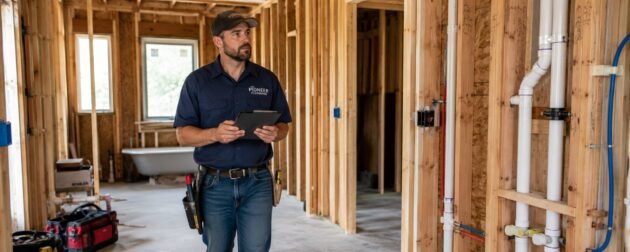
Ontario new builds | 2026
Rough-in + finish
Budget before you pour
New Construction Plumbing Cost Estimator for Ontario (2026)
Plumbing is the nervous system of your house – you do not see most of it, but you absolutely notice when it is done wrong. If you are planning a new build in Ontario and you want a number you can budget around, you need two things: an estimator that does not pretend your house is a perfect rectangle, and a checklist of the hidden items that show up later. This page gives you both, grounded in real 2026 Ontario costs.
Building in Simcoe County or Georgian Bay? Start with the full budget picture in our cost to build a house in Ontario guide.
12026 cost ranges
2Instant estimator
3What drives the price
4What’s excluded
The short answer: 2026 plumbing costs for a new Ontario build
New-construction plumbing in Ontario generally runs $4 to $10 per square foot, or roughly $800 to $1,200 per fixture at rough-in (when access is open and there is no demolition). For a typical 2,000 sq ft home, that lands around $8,000 to $20,000 depending on bathroom count, layout, and finish level. Labour alone is usually 40 to 60% of the total. Those per-fixture numbers line up with what Ontario plumbers publish in October 2026: $800 to $1,200 a fixture from a Toronto plumber and about $950 from an Ottawa plumber for new-construction rough-in, plus $250 to $350 a fixture to set the fixtures. The per-square-foot range is our planning number, not a published rate.
$4-$10
Per sq ft (new build)
$800-$1,200
Per fixture at rough-in
$8K-$20K
Typical 2,000 sq ft home
The reason the range is wide: plumbing is priced by fixture count and layout distance, not really by floor area. The reliable way to estimate is to split it into three buckets – underground/service, inside rough-in, and trim-out/fixtures – and add a small contingency so your budget survives inspections and schedule changes. The estimator below does exactly that.
Ontario plumbing cost estimator
This is a planning ballpark with 13% HST included. For an accurate number, upload your plans and we will price the real scope.
Ontario Plumbing Cost Estimator
Instant ballpark for new-construction plumbing in Ontario. For a real quote, upload your plans below.
Your Plumbing Estimate
13% HST included in the total aboveWhat’s included
- PEX supply rough-in (OBC-compliant installation practice)
- ABS DWV rough-in (typical residential scope)
- Pressure / rough-in testing time
- Fixture trim-out labour (typical)
- Water heater installation labour (if selected)
- Basement rough-in (if selected)
What’s excluded
- Municipal development / connection fees (vary by municipality)
- Customer-supplied fixtures (toilets, sinks, faucets, etc.)
- Water heater unit (tank or tankless)
- Gas piping (often a separate TSSA-certified gas contractor)
- Well / septic systems
- Repairs to finishes (drywall, tile, flooring)
Request a Detailed Quote
* Plans required for accurate pricing.
Service area: Georgian Bay region including Collingwood, Wasaga Beach, Blue Mountains, Stayner, Barrie, Springwater, Oro-Medonte, Midland, Penetanguishene, Tiny, Tay, and nearby communities.
Disclaimer: This calculator is a preliminary estimate only. Final pricing requires plan review, site conditions, and local requirements. Not a binding quote.
Plumbing rules live inside Ontario's Building Code regulation - O. Reg. 163/24: Building Code (the 2024 Code, in force since January 1, 2025), where plumbing is Division B, Part 7.
More in the Plumbing & Water section: what plumbing a new house costs, worked out, plumbing an ICF house, how to compare plumbing quotes and plumbing permits in Ontario. On a rural lot, price the water side with the rural water system calculator.
Why plumbing is hard to "price per square foot"
People love a single number, and so do builders - right up until that number meets a kitchen island, a wet bar, a basement suite, and an ensuite two postal codes from the mechanical room. Square footage matters, but plumbing is mainly driven by fixture density and distance. That is why two homes of the same size can have very different plumbing quotes. Every fixture needs a supply (hot and cold) and a drain/vent path, and the inspector cares that it is installed and tested properly. A "cheap" number often skips the real work: shutoffs, cleanouts, supports, testing time, and the second visit when framing moved half an inch.
Builder truth: the plumbing quote does not go up because you bought a fancy faucet. It goes up because that faucet needs a specific valve, a specific rough-in, and an installer who is not rushed.
The three buckets that make an estimate accurate
If you remember one thing from this page, remember this split - it is the difference between a useful estimate and a guess:
- 1. Underground + service - under-slab or basement drains, sleeves, cleanouts, sump and discharge routing, and the main service entry (municipal connection or well equipment tie-in).
- 2. Inside rough-in - all DWV stacks and branches plus hot/cold distribution to every fixture, including venting through the roof.
- 3. Trim-out / finish - setting fixtures and connecting everything: toilets, faucets, shower valves, tubs, dishwasher hookups, and final testing.
When you collect quotes, ask each plumber to break pricing into these three buckets. If one quote is "all-in" and the other is broken out, you are not comparing apples to apples - you are comparing apples to a fruit salad with half the ingredients missing.
Municipal vs well/septic changes the scope
In much of Ontario you are either on municipal services or on a private system (well and septic). The plumbing inside the house can look similar, but the project scope and coordination are not the same. On septic, tie your plumbing layout to how the home is designed and used, because daily flow assumptions matter - read our septic system cost guide before drawings are final. On a well, also budget treatment-equipment rough-ins (softener, iron filter, UV) and mechanical-room layout; those are not always in the plumber's inside rough-in number but are still part of the plumbing reality.
Basement vs slab-on-grade: coordination matters more than you think
In a basement build you usually have more access and more routing options as the build goes. In a slab-on-grade build, under-slab plumbing is locked in early - change your mind later and you are not "adjusting plumbing," you are making friends with a concrete saw, which is an expensive friendship. If you are weighing the two, read foundation types in Ontario before you lock your layout.
Cost drivers you can actually control
A homeowner we worked with had bathrooms spread out like a luxury hotel. Beautiful plan, but the plumbing runs were long and the hot-water delivery needed more planning. We did not downgrade anything - we tightened the wet areas closer to a sensible plumbing spine, and the quotes dropped while comfort improved. Here is what moves the number:
| Driver | Why it changes cost | Smart fix |
|---|---|---|
| Fixture count | Labour and fittings climb fast with every fixture group | Decide must-have vs nice-to-have early; add future rough-ins instead of full finish |
| Distance to mechanical room | More material, more labour, possible hot-water delay | Size and place the mechanical room logically; group wet rooms near each other |
| Custom showers and valves | Special valves and trims, more time to install and test | Pick fixtures early; confirm rough-in specs before framing closes |
| Winter build | Scheduling friction, protection, extra-visit risk | Plan rough-ins tightly; avoid last-minute layout changes |
Builder truth #2: the most expensive plumbing change is the one you make after drywall. The second most expensive is the one after tile. Plan first, cut later.
The "it's only a small item" trap
The fastest way to blow a plumbing budget is to underestimate the small stuff. One hose bibb is cheap. Three hose bibbs, a fridge line, a future bar sink, a basement bath rough-in, and a recirculation loop - now you are building a real system with extra testing points, shutoffs, and labour. Budget for:
- Hose bibbs (front, back, garage) plus freeze-protection planning.
- Future rough-ins for a basement bath, bar, or kitchenette.
- Water-treatment rough-ins for well builds (space, bypasses, drain routing).
- Backwater valve / sump routing when the site or municipality requires it.
- Testing and re-inspections - time is real money.
Building new? Don't forget the HST rebate on the whole project
Plumbing is one line on a much bigger new-build budget - and the whole build qualifies for Ontario's enhanced HST rebate, up to $130,000. It is the easiest six figures to leave on the table, and the window is closing.
Ontario HST Rebate | Deadline April 1, 2027
You Could Lose Up To $106,000 If You Don't Start Before April 2027
Ontario's enhanced HST rebate puts up to $130,000 back in a new-home builder's pocket - but only if your build contract is signed before April 1, 2027. Miss that window and you fall back to the standard $24,000 rebate. On a typical new build, that's a six-figure swing - so it belongs in your budget from day one.
$0
Contract signed before Apr 1, 2027
$24,000
Signed after the deadline
$900,000
Miss the deadline and you forfeit
$0
Estimate based on Ontario's 2026 enhanced HST rebate (Bill 114). Final eligibility for a custom / owner-built home is confirmed by a licensed rebate specialist - that's what the free check is for. Full HST rebate details
The enhanced HST rebate applies to new home construction. Final eligibility is confirmed by a licensed rebate specialist - use the HST rebate calculator to check your number.
Permits, inspections, and warranty: budget for real life
New-construction plumbing is not "done" because a pipe is in the wall - it is done when it is installed, tested, and passes inspection. If you are unclear on the process, start with how to get a building permit in Ontario, and check specific Code requirements in plain English with the 2026 Ontario Building Code guide and OBC Code Navigator. For homes covered by Ontario's new home warranty, plumbing systems and water penetration fall under the two-year coverage period (Tarion: warranty coverage after you close; not legal advice). Also size your electrical loads early for pumps, treatment, tankless, and future EV charging with the electrical load and wire size calculator.
Want a tighter number than the estimator?
Send your plans and we will price the real plumbing scope - we build custom ICF homes across Simcoe County and Georgian Bay, mechanicals included. Call 705-533-1633.
Related building guides
- Cost to build a house in Ontario - the full 2026 budget picture.
- Septic system cost in Ontario - the rural plumbing reality.
- Foundation types in Ontario - basement vs slab and what it means for plumbing.
- Electrical load and wire size calculator - size the panel for your mechanicals.
- How to get a building permit in Ontario - the approval that starts the clock.
Frequently asked questions
How much does plumbing cost for a new house in Ontario in 2026?
Generally $4 to $10 per square foot, or about $800 to $1,200 per fixture at rough-in. A typical 2,000 sq ft home lands around $8,000 to $20,000 depending on bathroom count, layout, and finish. Labour is usually 40 to 60% of the total. Use the estimator above for your specific size and options.
Is the calculator price accurate, or just a guess?
It is a planning estimate, not a quote. Plumbing pricing changes with layout, fixture count, and whether you are on municipal services or well and septic. The calculator stops you from under-budgeting and helps you compare design choices. For accuracy, a plumber needs plans showing fixture and stack locations, the mechanical room, and any special systems.
Why do two similar houses get different plumbing quotes?
Distance and complexity. Two homes can be the same size, but one has bathrooms stacked neatly near the mechanical room and the other has a long run to a far ensuite, an island sink, a bar, and a basement suite. That adds material, labour, penetrations, and testing time. Layout decisions drive cost more than square footage.
Does adding a basement rough-in save money later?
Usually, because it avoids demolition. A rough-in stubs drains and vents to sensible spots while access is easy, so finishing the basement later does not mean opening concrete or re-routing major lines. The savings depend on how much future work you would otherwise undo - place the rough-in near a stack with good clearances.
Should I budget differently for slab-on-grade plumbing?
Yes - mainly for coordination risk. Slab builds lock in under-slab drains early, so changes later are far more expensive than in a basement build. Slab is not "bad," but plan the wet areas early and keep them logical, because changing fixture locations after the slab is prepped means costly revisions.
Do plumbers price by square foot, by fixture, or by the job?
Many price by the job, but their internal math uses fixture counts, run lengths, and labour hours. Per-square-foot is a quick allowance, not the best predictor, because plumbing is fixture-driven. A good quote follows a scope: underground/service, rough-in, and trim-out. Ask for that breakdown so you can compare quotes fairly.
What items are commonly excluded from plumbing quotes?
Customer-supplied fixtures, municipal development and connection fees, the water heater unit, gas piping (often a separate certified gas contractor), well and septic systems, and repairs to finishes. Exclusions are not bad - they just need to be clear, because those items still hit your overall budget.
How do luxury fixtures change cost beyond their purchase price?
They can require specific valves, rough-in depths, mounting details, and longer install time. Custom showers with multiple outlets or thermostatic controls add labour and coordination, and some brands need proprietary rough-in kits with lead times that affect scheduling. Select fixtures early so the plumber roughs in to the real specs, not generic assumptions.
How do well and water-treatment systems affect plumbing cost?
They affect scope and space. Treatment systems need bypasses, drains, power, and clear mechanical-room access; a well may add a pressure tank and controls. Not every plumber includes those in a standard inside rough-in quote, but they belong in your total budget. If you are rural, coordinate plumbing, electrical, and mechanical early.
What is the single best way to reduce plumbing cost without lowering quality?
Design a sensible wet core - group bathrooms, kitchen, and laundry so runs are shorter and stacks align. That cuts material and labour and usually improves comfort because hot water arrives faster. The second-best move is selecting fixtures early so rough-ins match the real hardware. Good plumbing is about cutting distance and rework, not cutting corners.
Disclaimer: Figures are 2026 planning ranges and vary by design, fixtures, site, and region. The estimator is a ballpark, not a binding quote. Plumbing must comply with the Ontario Building Code and pass inspection. This is educational, not professional advice.
More on costs and financing
Reviewed and updated October 2026. Costs on this site are Ontario ranges, not quotes; code references are to the Ontario Building Code in force at the date above.
Latest posts
Fresh guides, calculators & real-world advice
More from BuildersOntario - scroll to explore.
Loading latest posts...
Tip: shift + mousewheel works great