Ontario's Plain-English Guide to Custom Home Building📞 705-533-1633 | ☎️ 1-866-868-6606 | ✉️ info@icfhome.ca

How Better Site Presentation Improves Ontario Lot Planning
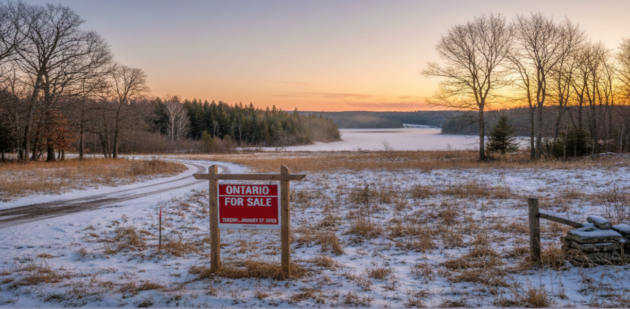
Ontario Lot Planning
How Better Site Presentation Helps Ontario Builders and Landowners Explain Development Potential
A vacant lot can look simple on paper. Then the site visit happens. Grade, drainage, septic setbacks, access, conservation authority limits, and servicing can quickly turn “nice lot” into “we should have checked that earlier.”
📍 Building Envelope
🚜 Site Access
💧 Drainage & Septic
📋 Permit Planning
A vacant lot looks straightforward on paper. You get a legal description, a survey showing boundaries, maybe some zoning notes. It is 1.2 acres, or 80 by 200 feet, or 10 hectares in a township north of Barrie. It sounds like a clean opportunity until the site visit happens and the actual conditions become clear.
Maybe there is a drainage swale cutting through what seemed like the logical building envelope. Maybe the road access is on a steep grade that will complicate driveway approval. Maybe there is a 30-metre setback from a tributary that was not obvious from the plan. Maybe the lot is viable, but only if the house goes in a specific corner, which means understanding the topography, septic setback requirements, and conservation authority notes before the lot can be honestly evaluated.
These realities are normal in Ontario lot planning. They are also the details that get glossed over when a lot is presented with nothing more than dimensions and a zoning designation — and they are exactly what leads to expensive surprises mid-project when they have not been worked through early.
Why Lots Are Harder to Evaluate Than They First Appear
Ontario’s land is genuinely varied. A lot near the Greenbelt has different constraints from a waterfront parcel on Georgian Bay, which has different challenges from a rural township lot with no municipal services, which is different again from an infill lot in a mid-sized Ontario city where servicing exists but setbacks, lot coverage rules, and adjacent property considerations create their own complexity.
What all of these have in common is that the real feasibility of building on the lot — the actual answer to “where does the house go, what does it cost to prepare the site, and can I actually get a permit?” — cannot be determined from dimensions and zoning notes alone.
Topography and drainage
Grade changes, shallow water tables, seasonal wet areas, and drainage patterns affect excavation, foundation choices, septic design, and the total cost of preparing the site.
Access and driveway location
Rural Ontario lots often require driveway permits. Sight lines, road authority requirements, and winter usability can all limit where access can realistically be placed.
Septic and servicing
On lots without municipal sewage, septic setbacks from wells, lot lines, watercourses, and buildings can shrink the usable building envelope dramatically.
Conservation authority review
Land near streams, wetlands, rivers, and shorelines may require a separate conservation authority permit before a building permit can move forward.
Septic and service constraints determine where a house can and cannot go on any lot without municipal sewage connection — which covers a large proportion of Ontario’s residential land outside cities and major towns. A lot that appears spacious might have a usable building envelope of only a fraction of its total area once septic setbacks, road setbacks, and lot line setbacks are mapped against the actual buildable area.
Builder reality:
The lot is not really “buildable” until the house location, driveway access, septic area, grading, setbacks, and permit constraints all agree with each other. They do not always like to agree. Sometimes they need a little counselling.
Conservation authority jurisdiction affects a substantial portion of Ontario land near rivers, streams, wetlands, and the Great Lakes shoreline. Conservation authority permits are separate from municipal building permits and have their own timelines, information requirements, and technical review processes. A lot that falls partly within a regulated area may still be buildable, but only with a proper understanding of where the regulated boundary is, what setbacks apply, and what documentation the authority requires before it will issue a permit.
Getting the Site Understood Before Committing to It
The gap between what a lot looks like on paper and what it looks like as a real building project can be closed substantially before major money is spent on design or permit applications. The investment is in understanding the site clearly enough to make better decisions.
A thorough site assessment should address topographic information, ideally from a survey or at minimum from available GIS data, drainage patterns and any watercourse or wetland proximity, septic system suitability through percolation testing where applicable, driveway access feasibility, and conservation authority regulated area mapping if the lot is anywhere near a water feature.
1
Confirm the constraints
Review setbacks, zoning, lot coverage, water features, driveway access, and servicing limitations before assuming the house location.
2
Map the buildable area
Turn the legal lot into a practical building envelope that shows where a home can actually fit.
3
Communicate it clearly
Use better visuals, notes, and site information so buyers, builders, and reviewers understand the opportunity.
When a parcel includes grading, access, setbacks, drainage concerns, or unusual context, an aerial render can help builders and landowners understand the site more clearly before making costly decisions. Seeing the lot from above — with its actual topographic character, boundary relationships, adjacent context, and logical building envelope visible — gives a very different picture from a survey drawing or a satellite image.
It becomes possible to identify, visually, where the house can realistically sit given all the constraints that apply. Where the driveway approach makes sense. How staging and construction access might work during the build. How the site relates to neighbouring properties and to the road.
For custom home buyers who are not experienced at reading survey plans and planning documentation, this kind of spatial clarity is particularly valuable. The decision to purchase a lot is a major financial commitment, and it is being made based on what the buyer can understand about the site. The more clearly the lot can be communicated — not as an abstraction, but as a real three-dimensional place with specific constraints and specific opportunities — the more confident that decision can be.
Why Site Clarity Matters Before Permits and Pricing
Ontario’s permit process rewards preparedness. Municipal building departments and conservation authorities deal with a steady volume of applications, and applications that arrive with incomplete or unclear documentation take longer to process. Revisions requested mid-review add weeks or months.
Understanding site constraints clearly before an application is submitted — and documenting them accurately in the application package — is one of the most practical things a builder or homeowner can do to support a smoother approval process.
This applies to the site plan required with most Ontario building permit applications. A site plan that clearly shows the proposed building envelope relative to lot lines, setbacks, existing site features, proposed driveway access, well and septic locations where applicable, and any conservation authority regulated area boundaries gives the reviewer what they need to process the application efficiently. Ambiguity in any of these elements generates questions, which generate delays.
Good planning shows up in the budget.
Site costs are not small side items. Grading, driveway construction, excavation, well drilling, septic installation, utility connections, drainage work, and fill can move a project budget quickly.
Good site understanding also supports more realistic budget conversations early in a project. In Ontario custom home construction, site costs — including grading, driveway construction, foundation excavation, well drilling, septic system installation, and utility connections — can represent a very significant portion of total project cost, particularly on rural and semi-rural lots.
Builders Ontario has consistently noted that site surprises are among the most common sources of budget overruns in custom home projects. Understanding the site well enough to price site work accurately is not a luxury; it is basic project planning.
A builder who has reviewed a lot carefully — who understands the grading challenges, knows where the access constraints are, has identified the likely septic field location, and has assessed what the excavation is likely to involve — is in a much better position to give a client an accurate budget estimate than one working from dimensions and assumptions. And a homebuyer who understands the site clearly is better equipped to have that conversation with their builder from the start.
Turning a Parcel into a Clearer Opportunity
For landowners selling or marketing a lot, the challenge is slightly different but closely related. A parcel presented only as dimensions and a zoning designation asks every potential buyer to do their own feasibility work before they can assess whether the opportunity is real. Some buyers will do that work; many will not. The result is either a smaller pool of serious interest or offers based on assumptions that do not reflect the site’s actual potential.
Presenting a lot with genuine clarity — with the building envelope identified, site constraints documented, access addressed, and the likely development scenario explained — converts an abstract parcel into a legible opportunity. It makes the feasibility work visible to the buyer rather than requiring them to do it themselves. This is not about overstating what a lot can support; it is about communicating what it can actually support clearly enough that interested buyers can assess it accurately.
A large part of learning how to sell land successfully is presenting the lot as a buildable, understandable opportunity rather than an abstract parcel on paper. This means providing the practical information that a builder or buyer actually needs: what setbacks apply, where the building envelope sits, what the access situation is, what services are available or what would need to be provided, and what constraints exist that affect development.
This documentation does not need to be exhaustive, but it should be honest and complete enough to enable a realistic feasibility assessment.
A visual overview of the site — showing the lot in its actual setting, with its topographic character, surrounding context, and logical development zone identified — supports this communication in a way that documents and descriptions cannot match. A builder evaluating a rural lot who can see the grading relationship between the road and the proposed building area, the approximate location of the septic field relative to the well and the house, and how construction access might work during the project is in a position to give a much more accurate and confident assessment of what the project involves.
Where This Matters Most in Ontario
Rural and semi-rural lots without municipal services face the most complex site feasibility questions. Septic system design, well location, driveway permitting, and the absence of urban servicing infrastructure all add variables that need to be understood clearly before a lot can be treated as a realistic building opportunity.
Rural lots
These lots often depend on private septic, private wells, driveway permits, grading, drainage, and more detailed site planning before the building envelope is clear.
Shoreline parcels
Properties near lakes, rivers, wetlands, and shorelines may involve regulated areas, flood lines, erosion hazards, and conservation authority review.
Steep or awkward sites
Lots with major grade changes, poor drainage, or difficult access can carry higher excavation, driveway, and foundation costs.
Infill lots
Urban lots may be constrained by lot coverage, angular planes, parking, neighbour proximity, servicing, and existing structures.
Shoreline and conservation-sensitive parcels require an especially careful approach. Ontario’s conservation authorities regulate land near watercourses, wetlands, and the Great Lakes shoreline under a framework that is separate from municipal zoning. Regulated setbacks, fill and grade restrictions, and the conservation authority permit requirement add a layer of review that many buyers are not familiar with until they are already engaged with a lot.
Presenting a shoreline or near-water lot with the regulated area clearly identified, and the buildable envelope mapped within those constraints, is straightforward information that significantly reduces the risk of disappointed expectations later.
Lots with access or grading complexity — steep road approaches, significant topographic variation, poor drainage conditions, or unusual surrounding context — are exactly the lots that benefit most from being understood visually before decisions are made. These are also the lots where site costs are most variable and where assumptions made without proper site assessment are most likely to prove inaccurate.
Infill lots in established Ontario communities present a different set of challenges: lot coverage limits, angular plane requirements, required parking, neighbour proximity, and the relationship to existing servicing infrastructure. Urban infill is often more constrained than it first appears, and presenting the development potential of an infill lot clearly — what can actually be built, at what scale, in what configuration — supports better early decision-making.
Site Understanding Is Not a Substitute for Due Diligence
It is worth being clear about what better site presentation does and does not do. It does not replace a survey. It does not replace a conservation authority pre-consultation or a municipal planning inquiry. It does not replace percolation testing for septic design or a proper geotechnical assessment where subsurface conditions are uncertain.
What it does is make the site legible to the people who need to understand it — buyers, builders, investors, and decision-makers who are evaluating whether and how to proceed. It makes the constraints visible rather than requiring each party to independently discover them. It makes the opportunity concrete rather than abstract.
In Ontario custom home and land development, the most expensive mistakes tend to happen when assumptions made early in the process — about where the house goes, what the site work involves, what the approvals require — prove wrong later.
Better site understanding, communicated clearly from the start, is one of the most practical investments available before those decisions are locked in.
Related planning topics: How to Get a Building Permit in Ontario, Septic Systems Ontario, and Custom Home Builder in Tiny Township.
Planning to buy, sell, or build on an Ontario lot?
Get the site understood before the drawings, permit applications, and budget decisions start locking you into expensive assumptions.
Building in Georgian Bay or Simcoe County?
Talk to a builder who has done it 250+ times.
BuildersOntario.com is run by ICFHome.ca — ICF custom-home specialists since 1995. Straight answers on budget, permits, and ICF. No pressure.
Get a Ballpark Estimate →Book a 30-Min Call