Ontario's Plain-English Guide to Custom Home Building📞 705-533-1633 | ☎️ 1-866-868-6606 | ✉️ info@icfhome.ca

ICF Foundations & Walls
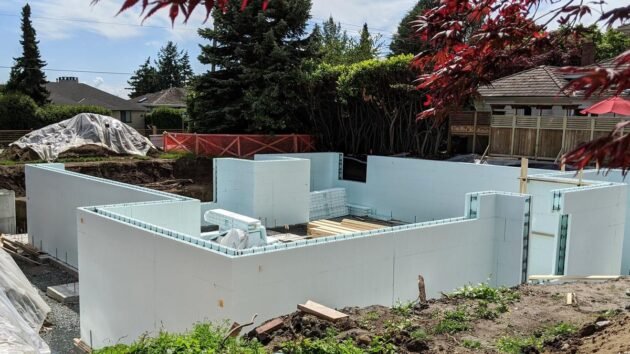
ICF Foundations & Walls: The Complete Guide to Building Stronger, Smarter Homes
When Sarah and Michael began planning their custom home in Minnesota, they knew they wanted something different. After enduring brutal winters in their old house with sky-high heating bills and drafty rooms, they were determined to build smarter. Their contractor introduced them to ICF foundations & walls—a decision that would transform not just their home, but their entire living experience.
If you’re researching building methods for your custom home, you’ve likely encountered the term ICF. But what exactly are ICF foundations & walls, and could they be the right choice for your project? This comprehensive guide will walk you through everything you need to know about this innovative building technology that’s revolutionizing residential construction.
What Are ICF Foundations & Walls?
ICF stands for Insulated Concrete Forms—a building system that combines the structural strength of reinforced concrete with the energy efficiency of foam insulation. Think of ICF foundations & walls as a permanent framework that stays in place after the concrete is poured, providing continuous insulation and a ready surface for both interior and exterior finishes.
The system uses hollow foam blocks or panels, typically made from expanded polystyrene (EPS), that interlock like oversized LEGO blocks. These forms are stacked to create the shape of your foundation or walls, reinforced with steel rebar, and then filled with concrete. Unlike traditional concrete construction where forms are removed after the concrete cures, ICF forms remain permanently in place, becoming an integral part of your home’s thermal envelope.
The Evolution of ICF Technology
While ICF foundations & walls might seem like a modern innovation, the concept has been around since the 1960s. However, the technology has evolved dramatically over the past two decades. Today’s ICF systems feature improved interlocking mechanisms, standardized dimensions, and specialized accessories that make installation faster and more precise than ever before.
Modern ICF foundations & walls have moved far beyond their experimental origins. They’re now backed by extensive testing, building code approvals, and decades of real-world performance data. Major manufacturers offer comprehensive training programs, and a growing network of experienced contractors specializes in ICF construction across North America.
The Compelling Benefits of ICF Foundations & Walls
Unmatched Energy Efficiency
The most significant advantage of ICF foundations & walls is their exceptional energy performance. The continuous foam insulation—typically ranging from R-22 to R-50 depending on the wall thickness and foam type—creates a thermal barrier that dramatically reduces heat transfer. Unlike traditional framed walls where insulation is interrupted by studs, ICF foundations & walls provide unbroken insulation from corner to corner.
Homeowners with ICF foundations & walls consistently report heating and cooling cost reductions of 40-60% compared to conventionally built homes. In Sarah and Michael’s case, their 2,800-square-foot Minnesota home costs less to heat than their previous 1,400-square-foot stick-built house. The foam insulation doesn’t just resist heat flow—it also creates an exceptionally airtight building envelope that prevents the drafts and cold spots common in traditional construction.
Superior Structural Strength
When you combine steel-reinforced concrete with ICF foundations & walls, you create a structure that’s virtually indestructible under normal conditions. ICF walls can withstand winds exceeding 200 mph—far beyond what wood-framed construction can handle. This makes ICF foundations & walls particularly attractive in hurricane-prone regions, tornado alley, and areas subject to severe storms.
The concrete core in ICF foundations & walls also provides excellent resistance to impact, fire, and rot. Unlike wood that can decay or be damaged by termites, concrete won’t deteriorate over time. Many ICF manufacturers offer warranties extending 50 years or more, and the actual lifespan of ICF foundations & walls can easily exceed 100 years with proper maintenance.
Exceptional Sound Insulation
If you’ve ever lived near a busy street or noisy neighbors, you’ll appreciate this benefit of ICF foundations & walls. The combination of dense concrete and foam insulation creates a sound barrier that reduces noise transmission by 50% or more compared to standard wood-framed walls. This makes ICF foundations & walls ideal for homes near airports, highways, or urban environments where noise pollution is a concern.
The sound-dampening properties of ICF foundations & walls also work within the home. Home theater rooms, music studios, and bedroom walls benefit tremendously from the acoustic isolation that ICF provides. You can watch movies at full volume without disturbing family members in adjacent rooms—something that’s nearly impossible with standard construction.
Disaster Resilience
In an era of increasing extreme weather events, the resilience of ICF foundations & walls offers peace of mind that goes beyond energy savings. ICF structures have survived Category 5 hurricanes, EF5 tornadoes, and catastrophic wildfires that destroyed surrounding conventionally built homes. FEMA and the Insurance Institute for Business & Home Safety both recognize ICF construction as a superior building method for disaster resistance.
The fire resistance of ICF foundations & walls is particularly noteworthy. ICF walls typically achieve a four-hour fire rating—meaning they can withstand direct flame exposure for four hours without structural failure. The foam insulation used in quality ICF systems is treated with fire retardants and will self-extinguish if exposed to flame, rather than fueling a fire like some building materials.
Understanding the ICF Construction Process
Foundation Preparation
Building with ICF foundations & walls begins much like conventional construction. The site must be excavated and prepared, footings poured, and a level base established. However, once you reach the foundation wall stage, the process diverges significantly from traditional methods.
For ICF foundations & walls, the forms are stacked directly on the footings, creating a wall cavity that will be filled with concrete. The interlocking design of modern ICF blocks makes this process remarkably straightforward. Experienced crews can stack ICF foundations & walls faster than they could build traditional wood forms—and without the need to strip forms later.
Wall Assembly
Above-grade ICF foundations & walls follow a similar process. Forms are stacked course by course, with each layer interlocking with the one below. Windows and door openings are created using special buck frames that integrate seamlessly with the ICF system. Throughout the assembly process, the forms are braced and aligned to ensure perfectly straight, plumb walls.
One of the advantages of ICF foundations & walls is the ability to make adjustments during assembly. Unlike poured concrete with temporary forms where mistakes are costly, ICF blocks can be easily cut, trimmed, or repositioned before the concrete pour. This flexibility allows for precise execution and last-minute design modifications if needed.
Reinforcement Installation
Before concrete is poured, steel reinforcing bars (rebar) are placed within the ICF foundations & walls according to structural engineering specifications. The rebar grid provides tensile strength to complement the compressive strength of concrete, creating a composite structure stronger than either material alone.
For ICF foundations & walls in high-stress areas—such as corners, around openings, or in regions with seismic activity—additional reinforcement may be specified. The beauty of ICF is that accommodating this extra steel is simple; you’re not trying to retrofit reinforcement into a cavity that’s already partially constructed.
The Concrete Pour
Pouring concrete into ICF foundations & walls requires careful attention to ensure complete cavity filling without form displacement. Concrete is typically pumped into the forms from the top, flowing down through the cavity. As the concrete is placed, workers use vibrators to eliminate air pockets and ensure the concrete bonds properly with the reinforcing steel.
The continuous insulation of ICF foundations & walls actually provides an advantage during the concrete cure. The foam acts as a blanket, maintaining optimal curing temperatures even in cold weather. This allows ICF construction to proceed year-round in climates where traditional concrete work might need to be delayed.
Finishing Work
Once the concrete in ICF foundations & walls has cured, the real magic becomes apparent. The exterior foam surface accepts a wide variety of finishes—stucco, brick, stone veneer, siding, or even special textured coatings designed specifically for ICF. Interior walls can be finished with drywall attached directly to the plastic webs that connect the foam panels, creating conventional-looking interior surfaces.
This finishing flexibility means ICF foundations & walls don’t limit your aesthetic choices. From traditional brick colonials to modern minimalist designs, ICF can accommodate any architectural style. The only thing that might reveal you have ICF foundations & walls is the exceptional comfort and quiet your guests experience.
ICF Foundations & Walls vs. Traditional Construction
Comparing Construction Speed
One common misconception about ICF foundations & walls is that they take longer to build than conventional methods. In reality, experienced ICF crews often complete projects faster than traditional construction. While stacking and pouring ICF foundations & walls might take slightly longer than framing, the time saved by eliminating separate insulation installation, vapor barriers, and form stripping often results in faster overall completion.
Additionally, ICF foundations & walls aren’t as weather-dependent as traditional framing. While wood framing must be protected from moisture and can’t proceed efficiently in extreme cold or wind, ICF construction can continue in nearly any weather condition. This reduces weather delays and keeps projects on schedule.
Initial Cost Considerations
The upfront cost of ICF foundations & walls typically runs 5-15% higher than conventional construction. For a 2,000-square-foot home, this might translate to an additional $10,000-$30,000 in construction costs. However, this premium must be viewed in context of long-term value rather than initial expense alone.
When you factor in the energy savings, reduced maintenance costs, lower insurance premiums (many insurers offer discounts for ICF construction), and increased resale value, ICF foundations & walls often break even within 5-7 years. Over the life of the home, ICF typically proves to be the more economical choice, not to mention the intangible benefits of superior comfort and resilience.
Long-Term Value Proposition
ICF foundations & walls represent an investment in your home’s future. While you can certainly build an adequate house with conventional methods for less money today, ICF offers advantages that compound over time. Energy codes continue to become more stringent, making the exceptional efficiency of ICF foundations & walls increasingly valuable.
The durability of ICF foundations & walls also means lower maintenance costs over the home’s lifetime. You won’t face the periodic paint, siding replacement, or structural repairs that wooden homes require. Termites, rot, and moisture damage—common issues in traditional homes—are virtually eliminated with ICF construction.
Common Questions and Concerns About ICF Foundations & Walls
Can I Hang Pictures and Shelves?
This is one of the most frequently asked questions about ICF foundations & walls. The answer is absolutely yes. The interior surface of ICF foundations & walls features plastic or metal webs connecting the foam panels. Drywall is attached to these webs, creating a conventional interior wall surface. You can hang pictures, shelves, and cabinets just as you would in any other home.
For heavier items like cabinets or large televisions, you may need longer screws that penetrate through the drywall and foam to anchor into the concrete core. Alternatively, many builders install blocking or furring strips at anticipated mounting locations during construction, providing solid attachment points for heavy fixtures.
What About Utilities and Wiring?
Running electrical, plumbing, and HVAC through ICF foundations & walls requires slightly different techniques than conventional framing, but experienced contractors handle this routinely. Electrical chases can be cut into the foam before or after the concrete pour, and special boxes designed for ICF installation make electrical work straightforward.
Plumbing in exterior ICF foundations & walls should generally be avoided, but interior ICF walls can accommodate plumbing with proper planning. Many ICF builders use interior framed walls for plumbing runs, reserving ICF for the building envelope where its superior insulation and structural properties provide the most value.
How Do ICF Foundations & Walls Perform in Different Climates?
ICF foundations & walls excel in virtually any climate. In cold regions, they prevent heat loss and eliminate the frozen pipe concerns that plague many traditionally built homes. In hot climates, ICF foundations & walls keep homes cool and reduce air conditioning loads dramatically. The thermal mass of the concrete helps moderate temperature swings, keeping homes comfortable year-round.
In humid climates, ICF foundations & walls resist moisture penetration and don’t support mold growth the way organic building materials can. The foam used in quality ICF systems is closed-cell or treated to resist moisture absorption, preventing the damp conditions that lead to mold and mildew problems.
Finding Qualified ICF Contractors
The growing popularity of ICF foundations & walls has created a network of skilled contractors across North America. However, not all contractors have equal ICF experience. When selecting a builder for your ICF project, look for contractors who have completed multiple ICF homes, can provide references, and ideally have manufacturer certifications.
Many ICF manufacturers offer training programs and maintain directories of certified installers. This can be an excellent starting point for finding qualified contractors in your area. Don’t hesitate to visit completed ICF projects and speak with homeowners about their experiences—most ICF homeowners are enthusiastic advocates happy to share their knowledge.
Design Considerations for ICF Foundations & Walls
Architectural Flexibility
ICF foundations & walls don’t limit your design options—they expand them. The structural strength of ICF allows for larger window openings, dramatic cantilevers, and open floor plans that would require extensive engineering with conventional construction. The thermal properties of ICF foundations & walls also make features like floor-to-ceiling windows more practical by minimizing heat loss or gain.
Curves, angles, and custom shapes are all achievable with ICF foundations & walls. Special radius forms allow for curved walls, and the forms can be cut and shaped to accommodate virtually any architectural detail. This makes ICF ideal for both traditional and contemporary designs.
Maximizing ICF Benefits
To get the most from ICF foundations & walls, consider designing your home to leverage their unique properties. Thermal mass works best when exposed to interior spaces, so consider interior finishes that showcase concrete rather than covering every surface. Large south-facing windows in cold climates can take advantage of passive solar heating, with ICF walls storing warmth during the day and releasing it at night.
In terms of mechanical systems, ICF foundations & walls allow for smaller, more efficient HVAC equipment. The exceptional air tightness and insulation mean your home’s heating and cooling loads will be dramatically lower than conventional construction. Work with your mechanical engineer to right-size equipment—over-sized systems waste money and perform poorly in high-performance homes.
The Future of ICF Foundations & Walls
As building codes evolve toward higher energy efficiency standards and climate concerns drive demand for more resilient construction, ICF foundations & walls are positioned to become increasingly mainstream. What was once considered an alternative building method is now recognized as a superior standard by many architects, builders, and homeowners.
Innovations in ICF technology continue to emerge. New foam formulations improve fire resistance and sustainability. Integrated systems combine ICF foundations & walls with advanced air and moisture barriers. Digital tools help designers optimize ICF layouts for maximum efficiency and minimal waste.
Making Your Decision
Choosing ICF foundations & walls for your custom home is a decision that will impact your comfort, costs, and security for decades to come. While the higher initial investment requires careful consideration, the long-term benefits—lower energy bills, exceptional durability, superior comfort, and disaster resilience—make ICF an increasingly logical choice for custom home builders.
Take time to visit ICF homes, talk with ICF homeowners, and understand the true value proposition. Like Sarah and Michael discovered, the benefits of ICF foundations & walls extend far beyond what statistics and specifications can convey. The quiet comfort of a home that maintains perfect temperatures regardless of outside conditions, the peace of mind during severe weather, and the satisfaction of lower utility bills month after month—these are the real-world advantages that make ICF foundations & walls worth serious consideration.
Whether you’re building in a challenging climate, prioritizing energy efficiency, seeking maximum structural integrity, or simply want the best possible home for your family, ICF foundations & walls deserve a place on your shortlist of building methods. As you continue planning your custom home, give serious thought to this proven technology that’s helping homeowners across the country build stronger, smarter, and more sustainable homes.
1. Insulating Concrete Forms Manufacturers Association (ICFMA)
https://icf-ma.org/ The official North American trade association for the ICF industry. Great for industry standards, technical resources, and manufacturer information.
2. American Cement Association – ICF Systems
https://www.cement.org/cement-concrete/paving/buildings-structures/concrete-homes/building-systems-for-every-need/insulating-concrete-forms-(ICFs) Comprehensive technical information from the industry’s leading cement organization, including design procedures and engineering resources.
3. Building America Solution Center (U.S. Department of Energy)
https://basc.pnnl.gov/resource-guides/insulated-concrete-forms-icfs Government-backed resource with case studies, energy efficiency data, and best practices for ICF construction.
4. ICF Builder Magazine
https://icfmag.com/ Leading industry publication with news, project showcases, technical articles, and the annual ICF Builder Awards.
5. Wikipedia – Insulating Concrete Form
https://en.wikipedia.org/wiki/Insulating_concrete_form Well-researched general reference with history, types of systems, benefits, and technical specifications.