
The Best Siding Options for ICF Homes in Georgian Bay
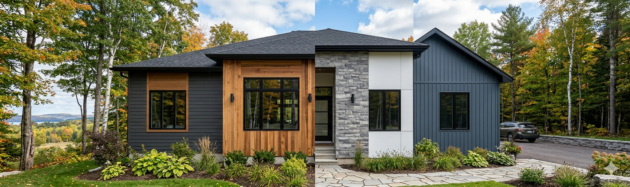
Choosing Exterior Finishes for Wind and Moisture Resistance
If you are asking what the best residential siding is for an ICF home in Georgian Bay, the honest answer is this: pick the finish that matches the exposure, then make sure it is attached the right way to the ICF webbing. A great cladding installed badly is just a prettier future repair bill.
ICF does not change physics
ICF gives you a very strong, efficient wall, but the cladding still has to shed water, dry out, and stay attached in bad weather.
Attachment matters as much as material
On an ICF wall, the fastener strategy is not an afterthought. You are fastening to embedded webs or to strapping fixed back to those webs.
Moisture wins if you ignore drainage
Near the bay, wet weather, snow, wind, and shoulder-season moisture can punish details that looked fine on paper.
What siding buyers usually get wrong
Most homeowners shop siding by colour, texture, and maintenance promises. That is understandable. The outside of the house is what people see first, and nobody falls in love with a fastener schedule. But for an ICF house, especially one facing Georgian Bay conditions, the right question is not just “Which siding looks best?” It is “Which siding will still look good after wind-driven rain, snow splash, sun, movement, and ten years of normal life?”
That is why I like to split siding decisions into two parts. First, choose the finish family: wood, fiber cement, metal, masonry, or a combination. Second, choose the attachment and drainage strategy: direct screw to the ICF fastening strips where allowed, or rainscreen strapping screwed back into the webbing. If you get the second part wrong, the first part will eventually complain.
ICF walls are excellent because they give you a straight, insulated, solid substrate with embedded fastening strips. Nudura, for example, uses continuous embedded fastening strips for finish materials. That means you have real options. It does not mean every siding can be treated the same way with the same screw gun setting and a prayer.
Why Georgian Bay changes the siding conversation
A sheltered subdivision lot and an exposed Georgian Bay property are not the same animal. On many bay-side or near-bay sites, cladding has to handle more wind, more driven moisture, more wetting and drying cycles, and more visual wear from weather. Even inland locations in the region still deal with snow, splash-back, long heating seasons, and a lot of seasonal moisture movement. That is why I usually lean toward assemblies that dry well and do not trap water where it can do damage.
This is one of the reasons rainscreen thinking matters so much. Maibec’s own installation guidance says exterior siding protects against water infiltration but is not waterproof, and it calls for drainage and ventilation behind the cladding. For foam insulation panels or insulating concrete forms, Maibec goes further and says double furring is strongly recommended so heat and moisture can evacuate more readily. That advice fits Georgian Bay well. Water has a nasty habit of showing you where your optimism lives.
Natural Resources Canada also emphasizes air and moisture control as core parts of a durable building envelope. So when we talk about siding on ICF, we are not just talking about curb appeal. We are talking about managing the outside layer of a wall assembly that already performs very well on the insulation side. The cladding should complement that wall, not sabotage it.
Builder rule: on an ICF house, the finish is only as good as the drainage space, the flashing, and the way it is tied back to the webbing. No finish material is smart enough to overcome lazy detailing.
How siding actually fastens to an ICF wall
This is the part many homeowners never get told clearly. With ICF, you do not just fire nails into foam and hope the house respects your confidence. The wall has embedded polypropylene or similar fastening strips, often called webs or fastening strips, and those are your attachment points for many finishes. Depending on the product, the finish can either be screwed directly to those strips or attached to wood or metal strapping that has been screwed back to them.
Nudura’s finish guidance is a good example. Cement board siding can be directly installed to the wall, but it should be screwed, not nailed, because nails will not provide adequate holding power and will not penetrate the fastening strips properly. Vinyl siding can be directly installed as well, again using screws rather than nails where directly attached to the wall system. Wood siding is more nuanced: horizontal wood may be possible with the right assembly, but vertical wood siding requires added strapping attached back to the fastening strips with screws.
That detail matters because many of the most attractive Georgian Bay looks use a board-and-batten or channel-style vertical presentation. If you want that look on ICF, the right answer is usually not “Can I?” but “How do I strap it correctly so it drains and ventilates?” With wood, that usually means a better rainscreen approach, not less.
Quick table: best siding options for ICF homes and how they attach
| Siding option | How it usually attaches to ICF | Why it works in Georgian Bay | Watch-outs |
|---|---|---|---|
| Fiber cement lap or panels | Often screwed directly to ICF fastening strips, or over strapping where required by design or manufacturer | Tough finish, good weather resistance, cleaner low-maintenance look | Respect manufacturer clearances, fastening schedules, and cut-edge handling |
| Maibec / wood siding | Best over vertical or double furring screwed back to the ICF webbing | Warm cottage and custom-home look that suits Georgian Bay beautifully | Needs drainage, ventilation, proper clearance, and maintenance discipline |
| Metal siding | Direct screw attachment or over strapping depending profile and orientation | Excellent for wind, moisture, and low-maintenance modern designs | Detail for movement, noise, and appearance at trims and penetrations |
| Thin stone veneer | WRB over foam, then lath or mesh mechanically fastened through EPS into strips with screws and washers | Great accent finish around entries, chimneys, and bases | Heavy look can become overdone; detailing and drainage are critical |
| Full masonry / brick veneer | Needs proper support ledge plus ties fastened back to the ICF fastening strips | Very durable, classic, and strong against weather when detailed right | Heavier, costlier, and not something you just “hang on the foam” |
On ICF, the material choice and the fastening method are a package deal. Do not choose one and improvise the other on site.
My take on the best siding materials for Georgian Bay ICF homes
1) Fiber cement: one of the safest all-round choices
If you want a strong blend of durability, lower maintenance, and a finish that fits both modern and traditional homes, fiber cement is usually near the top of the list. It is especially appealing on ICF because the wall behind it is already strong and stable, and the cladding can be fastened in a very straightforward way when the chosen manufacturer and ICF system allow it. For many clients, it lands in the sweet spot between “looks upscale” and “does not behave like a diva.”
On Georgian Bay projects, I like fiber cement when the owners want a finish that does not ask for a lot of seasonal attention. It pairs well with contemporary trims, black windows, and mixed-material façades. It also works nicely as a field material with stone accents. If the house is aiming for a cleaner architectural look, this is usually a very strong candidate.
2) Maibec and real wood siding: beautiful when detailed like you mean it
Wood siding still has a place, especially in Georgian Bay where clients often want that warmer custom-home or cottage expression. Maibec can look fantastic on an ICF home, but it has to be installed with full respect for water management. Maibec’s guide makes that crystal clear: the wall needs drainage and ventilation, the cladding needs clearances, and for foam or ICF walls double furring is strongly recommended to help heat and moisture escape.
That means I would not treat Maibec like a simple face-nailed afterthought. On ICF, I want that wood finish sitting over a proper rainscreen-style setup fixed back to the embedded webbing. Done right, the result is handsome, durable, and very regionally appropriate. Done lazily, it becomes an expensive reminder that wood is honest material and keeps score.
3) Metal siding: underrated for exposed sites
Metal is often overlooked by homeowners who think it only belongs on barns, shops, or ultra-modern boxes. That is outdated thinking. Good metal profiles can look sharp on modern or hybrid ICF designs, and they hold up very well where wind and moisture are serious considerations. Nudura notes that steel siding may require strapping depending on the manufacturer and orientation, and vertical installs require strapping attached to the fastening strips with screws.
If you are on a more exposed lot, metal deserves a look. It is clean, tough, and low-maintenance. You just need the trims, flashings, and movement details handled by someone who knows what they are doing.
4) Stone and masonry: strongest as accents, not always best as the whole story
Thin stone veneer works very well on ICF, but the assembly matters. Nudura’s instructions call for the weather-resistive barrier over the exterior face, then wire mesh or expanded metal lath mechanically fastened through the EPS into the fastening strips using specified screws and washers. That is not difficult for a competent crew, but it is different from simply slapping stone on and admiring your ambition.
Full-thickness brick or stone veneer is a different category. It needs support, usually from a brick ledge or other structural provision, and ties must be connected at the required spacing. It can be terrific on an ICF home, but it is heavier, more expensive, and more design-sensitive. I usually like it best as part of a mixed exterior rather than forcing the whole house to feel like a courthouse.
How each finish normally ties back to the ICF webbing
- Vinyl: direct screw attachment into fastening strips is common where allowed; avoid treating ICF like wood sheathing for aggressive pneumatic nailing.
- Fiber cement: usually screwed directly to the ICF fastening strips or to strapping fixed to them; follow both the siding manufacturer and ICF manufacturer requirements.
- Horizontal wood: may be installed over appropriate furring or rainscreen; follow the wood manufacturer’s drainage and warranty rules.
- Vertical Maibec / board-and-batten: use strapping, often double furring on ICF for better drainage and ventilation.
- Thin stone veneer: WRB, then lath or mesh fastened through the foam into the strips with screws and washers before the veneer build-up.
- Full brick or stone: structural support plus ties back to the fastening strips at the required spacing.
Common mistakes I see on ICF siding jobs
1) Treating ICF like wood framing
The attachment points are the embedded strips, not the foam. Fastener choice and spacing matter.
2) Skipping the rainscreen logic
Some finishes can go direct; many perform better with drainage and ventilation. Georgian Bay rewards that extra discipline.
3) Forgetting clearances
Wood and other sidings need ground, roof, deck, and flashing clearances. Splash-back is not a design feature.
4) Overusing heavy stone
A little stone can look great. Too much can make the house feel heavy and the budget lighter.
5) Mixing products without a detail plan
Transitions between Maibec, cement board, metal, and veneer need thought. “We’ll figure it out on site” is not a detail.
6) Letting warranty requirements slide
If the manufacturer requires furring, ventilation, WRB, or specific fasteners, do it. The warranty is not there for decoration.
What I would choose for most Georgian Bay custom homes
For a clean, durable custom build, my default thinking is usually a mix: fiber cement or high-quality wood-look cladding as the main body, then stone or masonry accents where the house wants visual weight. On a more cottage-inspired design, Maibec can be a beautiful call, but only when it sits over a well-planned drainage and fastening assembly. On a more exposed or lower-maintenance site, metal deserves more respect than it usually gets.
The finish should also match the overall house strategy. If the whole point of the ICF wall is comfort, resilience, and lower operating headaches, the exterior finish should continue that story. That is the same thinking we apply when we talk about ICF home comfort, picking the right wall system in the best ICF brands in Ontario, and coordinating the project from permits through finishes on how to obtain a building permit in Ontario.
If you are building in Georgian Bay, the prettiest answer is not always the best answer. The best answer is the one that still looks good after a few winters, a few storms, and a few years of normal life.
Choose the finish you want, then detail it like the climate is paying attention
On ICF homes, siding is not just decoration. It is the outside working layer of a wall that deserves the same serious thinking as the structure behind it. If you are planning a Georgian Bay custom home, decide early which cladding family suits the design, then confirm the fastening method, rainscreen strategy, clearances, flashings, and transition details before anyone orders material.
More ICF reading: benefits of ICF over traditional homes, ICFPro.ca, and certified Nudura installers near me.
Official references: 2024 Ontario Building Code and NRCan’s Keeping the Heat In.
Questions homeowners ask about residential siding on ICF homes
1) What is the best residential siding for an ICF home in Georgian Bay?
There is no single winner for every house, but the safest short list is usually fiber cement, properly detailed wood such as Maibec, quality metal, and selective use of stone or masonry accents. The best choice depends on exposure, design style, maintenance tolerance, and whether the siding is being installed direct to the ICF fastening strips or over a rainscreen setup. The wrong attachment method can ruin a good material.
2) Can siding be fastened directly to ICF?
Yes, many finishes can, but not all in the same way. The key is that you fasten to the embedded fastening strips or webbing in the ICF, not to the foam itself. Some products, like certain cement board or vinyl applications, can be directly screwed to those strips if the manufacturer and ICF system allow it. Others perform better over strapping that is screwed back to the webbing.
3) How does Maibec get installed on an ICF wall?
Maibec should be thought of as a drained and ventilated wood cladding system, not as something you simply tack onto foam. Maibec’s own guidance recommends furring to create a ventilated cavity, and for foam or ICF walls it strongly recommends double furring so heat and moisture can escape more effectively. On a Georgian Bay project, that is smart practice, not overkill.
4) Is fiber cement a better choice than wood near Georgian Bay?
In pure low-maintenance terms, fiber cement is often the easier choice. It handles exposure well and asks for less ongoing attention than real wood. But “better” depends on the design target. If you want the warm character of wood and are prepared to detail and maintain it properly, Maibec or similar wood siding can still be an excellent option. The climate does not automatically ban wood. It just punishes sloppy wood detailing faster.
5) Does ICF need a rainscreen behind the siding?
Not every finish requires the exact same assembly, but a rainscreen mindset is usually wise, especially in exposed or moisture-heavy regions. Maibec specifically calls for ventilation behind the siding and strongly recommends double furring over ICF. Even where direct attachment is allowed, good drainage, flashings, and drying potential still matter. A strong insulated wall is great, but trapped water is still trapped water.
6) Can you put stone on an ICF house?
Absolutely, but the stone type matters. Thin adhered stone veneer is usually built over a weather-resistive barrier and metal lath or mesh mechanically fastened through the foam into the fastening strips. Full-thickness masonry or brick veneer is heavier and needs proper support, such as a ledge, plus ties back to the wall. Stone works very well on ICF when the assembly is designed for it instead of improvised.
7) What siding holds up best to wind and moisture?
Metal and fiber cement are both very strong candidates when wind, moisture, and lower maintenance are priorities. Masonry is also very durable when supported and detailed correctly. Wood can absolutely perform, but it is less forgiving if the drainage, flashing, coating, and ventilation details are careless. The climate is hard enough on houses without asking the siding to perform miracles.
8) Is vinyl siding a good option on ICF homes?
It can be, especially on more budget-conscious builds, but it is usually not my first choice for a higher-end Georgian Bay ICF home unless the design really suits it. Technically, vinyl can be attached to ICF fastening strips using the proper fasteners and methods, but visually and performance-wise many clients in that region end up preferring a more substantial-looking finish.
9) Do I need special installers for siding on ICF?
You do not necessarily need a mystical secret society, but you do need installers who understand that ICF is not stick framing and not open foam board either. They need to know where the fastening strips are, what fasteners the system calls for, when strapping is required, and how to detail penetrations, flashings, and trim without creating weak spots. Experience matters here.
10) What is the biggest siding mistake on an ICF house?
The biggest mistake is assuming the material choice alone determines success. It does not. The assembly determines success. That means fastening to the right points, allowing drainage and drying, keeping proper clearances, and respecting manufacturer instructions. A great-looking siding package installed carelessly can fail faster than an ordinary-looking one detailed properly.