
Best Home Designs for 2026
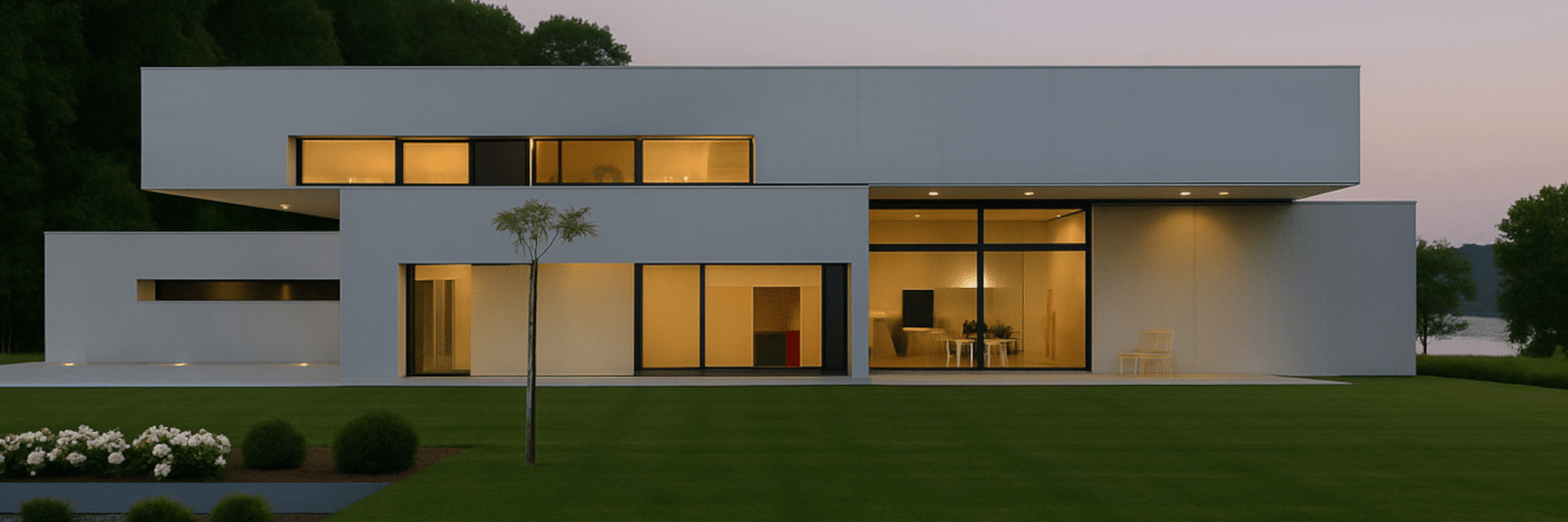
You’re not imagining it: we’re moving away from the sterile, ultra-minimalist “Instagram look” of the early 2020s and toward homes that feel grounded, tactile, and personal. People still like clean design — they just want it to feel like humans live there… not a showroom where you’re afraid to breathe.
In Canada, the big twist is climate resilience + wellness. We’re blending high-performance building ideas (durability, energy efficiency, comfort) with what I call “Modern Heritage” aesthetics: warm woods, real materials, softer exteriors, and spaces that feel collected instead of copy-pasted.
Design is moving from “wide open and photo-ready” to “thoughtfully zoned, durable, and built for real life,” with more emphasis on wellness spaces, personalization, and resilience.
- Floor plans: zoned open concept, multigen suites, ADUs
- Exterior style: warmer “modern heritage,” deeper facades
- Interiors: color-drenching, dark woods, texture
- Wellness + tech: home spa, human-centric lighting, invisible smart
- Canada-specific: climate resilience + low-carbon materials
- What’s in / what’s out: the 2026 cheat sheet
1) Floor plan trends: from “one big echo chamber” to “zoned open concept”
Your observation is dead-on: the era of one massive great room is fading. Open concept isn’t disappearing — it’s getting smarter. In 2026, the winning layouts are “broken-plan” homes: still bright and connected, but with subtle boundaries that make the space usable.
- Double-sided fireplaces, half-walls, built-in shelving “spines”
- Ceiling changes (beams, drops, wood slats) to define zones
- Glass partitions or pocket doors that close when life gets loud
- Sunken lounges / raised dining (small level changes = big zoning)
Zillow’s data-backed 2026 trends point toward “cozy” and dedicated escapes (like reading nooks) — which is basically zoning in miniature.
This one is not a “design trend,” it’s a math problem: housing costs are high, and families are adapting. Houzz highlights aging-in-place and multigenerational design as a major 2026 driver, pushing layouts with accessible routes, wider clearances, and private suites that still feel connected.
- Main-floor flex suite (or future bedroom) near a full bath
- Basement suite with better sound control + proper egress
- Garden suite / ADU planning for future independence
Another quiet shift: people want more purpose-built small spaces. A real mudroom. A pantry that isn’t a single sad shelf. A den that can be a zoom room, hobby room, or “hide from your teenagers” room depending on the day.
2) Architectural styles for 2026: warm modern, modern heritage, and “depth” on the outside
Exteriors are getting less stark. The black-and-white farmhouse look (white siding, black windows, harsh contrast) is hitting saturation. In its place: layered, warmer, more dimensional exteriors — and they’re being designed to feel like they belong in their setting.
- Softer whites and creams instead of bright “paper white”
- Natural stone and real wood accents (or wood-look done tastefully)
- Gables, porches, and traditional proportions — with modern windows
- Details that look “collected,” not stamped from a catalogue
Design commentary going into 2026 highlights facades with more depth — screens, slats, veils, and partially obscured sightlines — so homes feel richer and less flat. Translation: fewer “flat box with two windows,” more shadow lines and texture.
And yes — wraparound porches are back. Not the decorative “postage stamp porch,” but deep porches that act like outdoor living rooms. In Canada, the porch gets upgraded with heaters, wind screens, and smart lighting so it’s usable in shoulder seasons (and sometimes even when it technically shouldn’t be).
3) Interiors: warmth, weight, and “tactile realism”
2026 interiors are less about “perfect white everything” and more about comfort you can feel. Multiple major trend roundups point the same direction: warmer palettes, richer materials, and spaces that look lived-in (in a good way).
Zillow’s 2026 trend report calls out “color drenching” (walls, trim, even ceilings in one hue) surging in listings, and it fits perfectly with the 2026 mood: immersive, cozy, and character-driven. Think deep greens, terracotta, chocolate, ink navy — and yes, some brave souls will do plum.
If you love a calmer home, you can still do this trend in softer tones (warm putty, clay, muted olive). The move is “cohesive,” not “neon.”
- Limewash and mineral paints
- Reeded / ribbed glass, fluted stone
- Handmade tile looks (zellige-style, imperfect edges)
- Plaster and warmer wall textures
Oversized, rounded silhouettes are still hot. Comfort is king — and people are tired of furniture that looks great but feels like a dentist chair.
- Deep sectionals, softer edges, thicker arms
- Layered textiles (wool, boucle, linen blends)
- Bigger art (less “tiny print above a giant sofa”)
4) Kitchens in 2026: darker woods, “unfitted” looks, and smarter lighting
The all-white kitchen isn’t dead — it’s just no longer the default setting for every house flip on planet Earth. In 2026, kitchens are warmer, woodier, and more personal.
- Walnut / stained oak cabinetry, mixed with painted lowers
- Unfitted elements (furniture-style hutches, coffee stations)
- Islands that look like furniture, not a giant box
- Pantries with real function (appliance garages, plug strips)
2026 kitchen lighting trends emphasize layered, decorative lighting — sconces, integrated shelf lighting, and statement fixtures — because the “one overhead light that makes everyone look tired” is finally being put on trial.
- Ambient + task + accent lighting (with dimmers)
- Warmth and mood, not just brightness
- More wall lights and fewer “airport runway” potlights
5) Bathrooms & wellness: the home spa keeps expanding
You called it: in higher-end builds, cold plunges and infrared saunas are showing up more often. The bigger story is that bathrooms are being designed like daily reset zones, not strictly “get in, get out” rooms. Zillow specifically flags spa-inspired bathrooms rising in listings, and it aligns with what builders and designers are seeing across 2026 interiors.
- Heated floors (Canada: yes, forever)
- Steam showers or oversized showers with benches
- Better ventilation + quieter fans (the underrated hero)
- Layered lighting (no more “interrogation mirror” vibes)
Designers are already naming the usual suspects: overly stark black-and-white schemes, too-glossy finishes, and the copy-paste “farmhouse bathroom kit.” The shift is toward warmer, more personal, more textured bathrooms.
6) Smart tech: it’s going invisible (and human-centric)
In 2026, the trend isn’t “more screens.” It’s smarter systems that don’t look like gadgets. Think lighting that supports mood and sleep cycles, climate control that quietly does its job, and audio/automation that’s built in (not stuck on afterthought panels).
There’s increasing mainstream attention on lighting that adapts through the day — brighter/cooler when you need focus, warmer/dimmer when your body should wind down. It’s being discussed as part of “wellness at home,” and it fits Canada well because winter daylight is… how do I say this nicely… rude.
7) Sustainability: the Canadian edge is “performance meets aesthetics”
Sustainability is no longer just a badge — it’s a budget line item and a comfort decision. Zillow’s trend reporting highlights strong interest in efficient energy features and “future-ready” homes (EV chargers, batteries, etc.). But in Canada, sustainability and resilience are getting braided together: lower operating costs, better comfort, and better durability in harsher conditions.
Mass timber continues to scale in Canada, supported by industry roadmaps and government programs. Even if you’re not building a mass-timber home, the broader movement is influencing “wood-forward” design and carbon-aware material choices.
- More interest in wood structural systems and wood detailing
- More talk about embodied carbon (not just operating energy)
- Materials guides and catalogues making selections easier
Canada’s low-carbon building discussions increasingly recognize materials like hemp and wood fibre insulation for moisture regulation and reduced chemical content. These won’t replace everything overnight, but they’re moving from “weird niche” toward “serious option,” especially in custom builds.
8) Climate resilience: this is the “quiet giant” of 2026 design in Canada
Here’s what’s different in Canada: we’re not just choosing pretty finishes — we’re designing around climate risk. Federal housing/infrastructure guidance is increasingly focused on updating standards and codes using climate-informed data (not just the “climate of the 1960s”). That trickles down into how we think about sites, drainage, assemblies, backup power, and summer overheating.
- Better drainage and lot grading strategy (water is relentless)
- Backwater valves / sump strategies where needed
- Wildfire-aware detailing in higher-risk regions
- Heat resilience: shading, smarter glazing, ventilation
- Backup power readiness (panel capacity, batteries, generator hookup)
Canada’s Housing Design Catalogue offers standardized designs (including missing-middle housing and ADUs) and comes with guidance on climate resilience and materials. Even if you don’t use a design exactly, it’s a useful benchmark for layouts, accessibility, and performance-minded choices.
9) The 2026 cheat sheet: what’s IN vs what’s OUT
| Category | ✅ What’s IN (2026) | ❌ What’s OUT (or fading fast) |
|---|---|---|
| Layout | Broken-plan / zoned open concept, real mudrooms, reading nooks, flexible suites | One giant “echo room” great room with nowhere to work or hide |
| Style | Modern Heritage, warmer modern, layered facades, porches that function | Over-saturated black-and-white farmhouse and flat “box” exteriors |
| Color | Earthy/moody tones, color drenching (done tastefully) | Endless sterile white + millennial grey everything |
| Kitchens | Dark woods, unfitted looks, pantry function, layered lighting | All-white kitchens as the automatic default |
| Bathrooms | Spa-inspired, warmer finishes, better lighting, wellness add-ons | Harsh black-and-white, overly glossy “hotel” bathrooms, copy-paste farmhouse kits |
| Tech | Invisible smart tech, human-centric lighting, energy + EV readiness | Random tablets on walls and clunky “smart” add-ons with no plan |
| Canada-specific | Climate resilience + durability, low-carbon materials, comfort-first envelopes | Designing like extreme rain, heat waves, and outages “won’t happen here” |
10) How to use 2026 trends without regretting them in 2028
My builder rule: make the house timeless, and let the removable stuff be trendy. In other words:
- Great layout flow, good storage, and real-life zoning
- Durable envelope choices and drainage strategies
- Windows placed for daylight + privacy (not just symmetry)
- Good mechanical planning and ventilation
- Paint (including color drenching — brave but reversible)
- Lighting fixtures, hardware, rugs, textiles, and furniture
- Feature walls and tile (choose what you truly like, not what TikTok screams)
- Decor and art (go bigger, go personal)
If you’re building or designing for Canada, also remember the “invisible” trends that matter more than any tile choice: resilience, comfort, and operating cost. If a home is beautiful but uncomfortable, it’s basically a fancy jacket with no zipper.
Friendly disclaimer: Trends shift, municipalities vary, and your lot/site conditions matter. Use this as inspiration and planning guidance — and then design for your life, your region, and your budget.
Scroll sideways to see more. Cards stay the same height (no messy uneven rows).
This was super interesting! I like how the designs feel current without being too trendy or overdone. A home that feels timeless and practical is always the best combination.