
Best ICF Blocks for DIYers Ontario
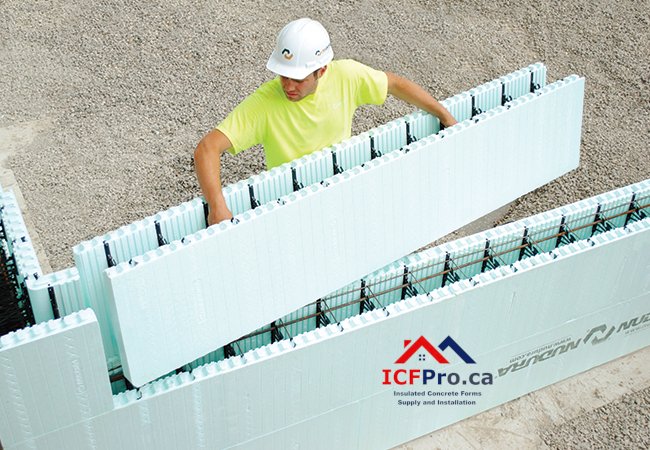
Best ICF Blocks for DIYers in Ontario: The Most Forgiving Systems (and the Mistakes That Wreck Pour Day)
If you’re the kind of person who looks at a project and thinks, “How hard can it be?”—welcome. You are the reason hardware stores exist. And you’re also the reason I’m writing this with both respect and a safety helmet. ICF can be DIY-friendly… but only if we’re honest about what “DIY” means in concrete world.
Quick reality check: Most DIYers can absolutely handle layout, stacking, openings, and prep. The part that needs serious discipline (and often experienced help) is the concrete placement plan: bracing, lift height, pour rate, consolidation, and coordination. Think of the pour like surgery: you don’t want to “learn as you go” while it’s happening.
Let’s define the goal: you want the best ICF blocks for DIYers in Ontario—meaning the system that’s the most forgiving, the easiest to keep straight, and the easiest to get support for when you hit the inevitable “Wait… how does this detail work?” moment.
The first mistake people make is picking a brand based on a single feature (one web shape, one tie strip design, one marketing claim). For DIY, the winner is usually the system with the best ecosystem: local supply, compatible bracing, clear manuals, and someone on the other end of the phone who can say, “Yes, do it that way,” before you lock it in.
If you want a broad Ontario overview of ICF brands first (before you narrow to DIY considerations), you can also read The Best ICF Brands in Ontario and then come back here with a shortlist.
What “Best for DIY” actually means (it’s not just “easy to stack”)
DIY-friendly ICF isn’t about how fast you can stack a wall on day one. It’s about how well the system behaves across the whole process: first course, openings, corners, bracing, rebar placement, service penetrations, concrete placement, and finishing attachments. A system can feel amazing at 10 a.m. and feel like a nightmare at 3 p.m. when you realize a corner detail is fighting your window layout.
Here’s my DIY scoring system (Ontario edition). If your ICF choice scores high on these, you’ll have a much better experience:
- Local availability: Can you get blocks, corners, accessories, and replacements fast—without waiting weeks?
- Documentation quality: The manual should cover sequencing, bracing, openings, fastening, and concrete placement guidance clearly.
- Accessory ecosystem: Corners, brick ledges (if needed), taper tops, lintel details, and buck options should be readily available.
- Bracing: Can you rent bracing locally? Does the system integrate cleanly with common bracing and alignment hardware?
- Forgiveness: If you’re slightly out, can you adjust with bracing and careful correction—or does the system punish small errors?
- Support: The best DIY system is the one where help is a phone call away, not a forum rabbit hole.
DIY Success Checklist (Ontario Edition)
-
Footings dead levelYour first course is either a joy… or a fight.
-
Openings planned earlyBucks are not “later.” Bucks are “now.”
-
Bracing installed before you need itNot after the wall starts wandering.
-
Pour plan written downRate, lifts, crew roles, consolidation method.
-
One person leads pour dayToo many “experts” mid-pour = trouble.
Mini FAQ (No Fluff)
Can ICF be a DIY project in Ontario?
Yes—parts of it. DIYers often do layout, stacking, openings, and bracing setup. The risky part is concrete placement: pour speed, lift height, and consolidation. That’s where mistakes get expensive fast.
Is the “best block” the one with the highest R-value?
Not for DIY. Your “best” is the system you can install straight, brace properly, and get support for locally. A perfect wall beats a theoretical spec every day.
What’s the #1 cause of ICF pour-day disasters?
Pouring too fast into under-braced walls (often combined with weak opening bucks). Slow and steady is not just a slogan—it’s a structural strategy.
Permit note: Your approved drawings and inspections are the boss. If you’re unsure how your ICF details fit your permit package, get guidance before you pour. Start here if you need the roadmap: How to get a building permit in Ontario.
The best ICF blocks for DIYers in Ontario (the practical shortlist)
Ontario has multiple ICF brands that can produce an excellent wall. The DIY question isn’t “Which brand is best on Earth?” It’s “Which system gives me the best odds of building straight walls with the least drama?” Here are the systems that tend to be most DIY-friendly—based on how forgiving they are, how common they are, and how easy it is to find help.
1) Nudura — a strong DIY pick if you want guidance and predictability
Nudura is widely used across Ontario, and for DIYers the big advantage is that you’re not guessing your way through the process. The system has a deep library of installation content (sections by topic, not just one giant document), which is exactly what you need at 9 p.m. when you’re standing in your boots asking, “How do I detail this opening properly?”
If you like having real documentation to follow, this kind of resource matters: Nudura installation manuals (by section). Even if you don’t choose Nudura, reading good manuals teaches you what “good ICF practice” looks like.
2) Amvic — popular Canadian system with a straightforward workflow
Amvic is common in Canada and often comes with good distribution support. For DIYers, the benefits are familiarity and predictability: concrete guys, bracing rental companies, and inspectors have usually seen it (or something very similar) before. That matters because the fastest way to lose time and money is to be the only person on the jobsite who’s never done that “exact” detail.
3) Fox Blocks — mainstream adoption and easy-to-understand logic
Fox Blocks is another recognizable name and sits in that “mainstream system” category: predictable parts, a known workflow, and fewer oddball surprises. For DIYers, that’s valuable. You want the wall to be boring (in a good way), so you can focus on doing it right rather than inventing solutions.
4) Quad-Lock — great for custom details, but rewards careful assembly
Quad-Lock is panel-based, which can be fantastic for certain designs and custom core thickness needs—but it’s less “grab-and-stack” and more “assemble correctly every time.” DIYers who are methodical love it. DIYers who improvise… should not improvise.
The big takeaway: panel systems can be very DIY-friendly if you’re disciplined, patient, and willing to follow a sequence. They’re not forgiving if you try to speed-run the process.
5) Other Ontario-available systems (IntegraSpec, SuperForm, etc.) — support usually decides the winner
There are other systems in Ontario that can build excellent walls. For DIY, I often tell people: pick the system with the best local support and accessories. If you can get corners, bucks, taper tops, and bracing guidance easily—your project will go smoother than choosing a “better” block that you can’t get parts for.
DIY truth: most ICF “brand debates” don’t matter nearly as much as footing level, bracing, opening bucks, rebar placement, and pour speed. The best system is the one you can execute cleanly.
How to choose the “right” ICF for you (a simple decision path)
If you’re standing in Ontario with a set of plans, here’s a decision path that actually works:
- Step 1 — Find local supply first. If a brand isn’t well supported near you, you’ll feel it later in delays and improvisation.
- Step 2 — Ask about bracing availability. If you can rent bracing locally, you’re already ahead.
- Step 3 — Read the manual before you buy. If the manual confuses you, the jobsite will confuse you more.
- Step 4 — Confirm your engineer/details match the system. Core thickness, rebar schedule, and openings should all align with the design.
- Step 5 — Decide what you’ll DIY and what you’ll hire. DIY the reversible work. Hire help for the irreversible work (concrete placement leadership).
Also remember: your ICF wall is part of a foundation system. Footings, drainage, waterproofing, and slab details are where many DIY builds go sideways. If you’re planning a foundation and you’re trying to budget properly, read: ICF foundation cost in Ontario.
The DIY approach that actually works: DIY the “reversible” parts, staff the “irreversible” parts
Here’s the cleanest way to do ICF as a DIYer without turning your project into a stress hobby:
- You DIY: layout, footing checks, first course setup, stacking, opening bucks, penetrations planning, bracing setup, pre-pour checklists.
- You get experienced help for: pour-day leadership, pump operation coordination, consolidation technique, and overall placement sequencing.
- You do not DIY: guessing rebar placement, winging the concrete plan, or “pouring faster to get it over with.” (That’s how walls learn to breathe.)
Why this split works is simple: you can fix a stacking problem. You cannot easily fix a pour-day problem. Concrete does not negotiate. It does not care that you watched three videos and feel confident. It applies pressure, it finds weak spots, and it turns tiny mistakes into permanent personality traits.
Pour Day Rules (Print These)
-
Go slow, place in liftsSpeed is the enemy of straight walls.
-
Openings are “high risk zones”Overbuild bucks and brace them like you mean it.
-
One leader calls the shotsPour day is not a democracy.
-
Don’t “fix” problems with speedFix them with bracing, sequencing, and patience.
DIY Sanity Savers
The most successful DIY ICF builds are the ones that treat ICF like formwork (because it is), not foam craft. If you want a deeper Ontario brand comparison (and what each system is best at), read ICF brand comparison in Ontario.
Ontario code context (official source) lives here: Ontario Building Code regulation (O. Reg. 88/19).
The mistakes DIYers make (and how to avoid them without becoming an engineer)
Most DIY ICF problems are not mysterious. They’re predictable. And because they’re predictable, you can prevent them. Here are the big ones I see over and over:
- Footings that aren’t level: You can’t “average it out.” A bad base creates a
Latest postsFresh guides, calculators, and “don’t-do-that” tips
Scroll sideways to see more. Cards stay the same height (no messy uneven rows).
Loading latest posts… Tip: shift + mousewheel works great