
The #1 Mistake to Avoid When Buying a Lot in Ontario
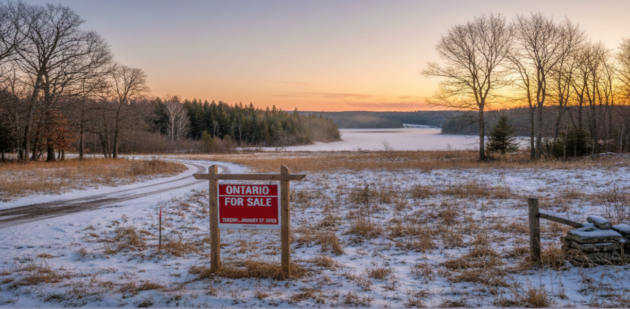
Ontario Lot Shopping: Don’t Buy a “Maybe”
Vacant land looks peaceful. Then you try to put a house on it, and suddenly you’re negotiating with setbacks, driveway approvals, septic feasibility, and that “minor easement” that isn’t minor at all.
What the #1 mistake actually is
Assuming “vacant” means “buildable.” A lot can be legally owned and beautifully marketed… while still being a headache to build on the way you imagined. The money pain usually isn’t one big “no.” It’s a stack of “yes, but…” details that show up after you’ve already committed.
The “three proofs” to get before you buy
- Proof #1: The plan fits. You can sketch a workable building area for your house size and shape.
- Proof #2: Access is realistic. You can identify a sensible driveway route and entrance location.
- Proof #3: Servicing is doable. You have a credible plan for water and wastewater (municipal or well/septic).
If you can’t draw it, you can’t price it. If you can’t price it, it will surprise you.
The most common “budget ambushes”
- Building envelope shrinkage: setbacks, buffers, and easements can turn a big lot into a tiny building area.
- Driveway math: long, steep, wet, or blind access can add cost (and paperwork) fast.
- Septic space: even when feasible, it can steal prime yard and push the home into an awkward spot.
- Seasonal water: “dry in July” doesn’t mean “dry in April.” Spring melt tells the truth.
Buy like a builder: the non-drama sequence
Here’s the order that keeps you out of trouble:
- Start with a rough footprint. A bungalow vs two-storey changes everything.
- Do a “rectangle test.” If a simple rectangle can’t fit, your dream plan won’t either.
- Place the driveway early. If access doesn’t work, nothing else matters.
- Think servicing early. Especially septic—because it influences where the house can go.
Pre-offer checklist (six questions that save a fortune)
If you’re guessing on half of these, keep conditions in place until you’re not.
What to ask before you sign (plain-English version)
If you’re standing on the lot with a phone in one hand and excitement in the other, here are the questions that separate “smart purchase” from “surprise hobby project”:
- What’s the zoning and permitted use? (And are there any special overlays or extra rules?)
- What are the key setbacks? Front, rear, sides—so you know your real building area.
- Where can the entrance/driveway be approved? Location matters for sightlines, ditches, and road authority requirements.
- How will water and wastewater be handled? Municipal, well, septic—what’s realistic on this specific lot.
- Are there easements or rights-of-way? One “utility corridor” can delete your best building spot.
- Any known seasonal water issues? If the answer is “not that I know of,” that’s not the same as “no.”
None of this is meant to ruin the dream. It’s meant to stop the dream from turning into a spreadsheet that keeps you awake at 2 a.m.
Use conditions the right way
For land, the smartest conditions aren’t just financing—they’re feasibility. You want the freedom to confirm the building area works, access is realistic, and servicing is possible before you’re stuck owning a scenic “maybe.”
Quick reality-check tools (ballpark your numbers)
These two pages help you estimate costs early and ask better questions:
Not a substitute for design/engineering—just a fast way to keep your budget honest.
And yes—ICF changes the conversation (a bit)
ICF doesn’t change zoning or setbacks, but it does reward good planning. Straight walls, clean layouts, and a lot that’s actually “ready” makes everything smoother. If you want ICF-focused info, start here: ICFPRO.ca.
The two-minute site walk I do
I’m checking five things that predict cost and headaches:
- High and low points: where water wants to go (it always goes somewhere).
- Ditches and culverts: clues about drainage and driveway complexity.
- Vegetation tells: cattails/reeds/soft ground—nature’s “I’m wet” sign.
- Neighbour context: are nearby homes on wells/septics, and do they sit high or low?
- Access reality: can a concrete truck get in without drama?
FAQ
Is a lot buildable just because nearby lots have houses?
It’s encouraging, not proof. Two lots on the same road can have different constraints. Your plan still needs its own “fit + access + servicing” check before you commit.
What’s the fastest red flag when viewing land?
If nobody can clearly point to where the house goes, where the driveway goes, and how servicing will work—slow down. Vague answers now usually become expensive answers later.
Why does the driveway matter so much?
Because it drives grading, drainage, safety, and cost. Long or tricky access can change the whole site budget. Builders look at access first because it’s hard to “wish away.”
Should I visit the lot in spring?
Yes, if you can. Spring exposes wet spots and drainage paths that summer hides. If spring isn’t possible, look for low areas, cattails, and obvious runoff channels.
What mindset prevents land-buying regret?
Assume nothing, confirm everything. Buy the lot that passes the boring checks first. The view will still be there; your budget will thank you.
What if I already bought the lot and I’m nervous now?
Don’t panic—switch into “prove it” mode. Confirm zoning, sketch a realistic building envelope, and get serious about access and servicing. Sometimes the fix is as simple as rotating the house, changing the footprint, or adjusting where the driveway enters. Paper changes are cheap; after-the-fact surprises aren’t.
Final builder note
Land is exciting. Paperwork is boring. Unfortunately, paperwork is also what keeps exciting from becoming expensive. Get the three proofs, keep smart conditions, and you’ll sleep a lot better.