
How to Chose Kitchen Cabinets in Ontario
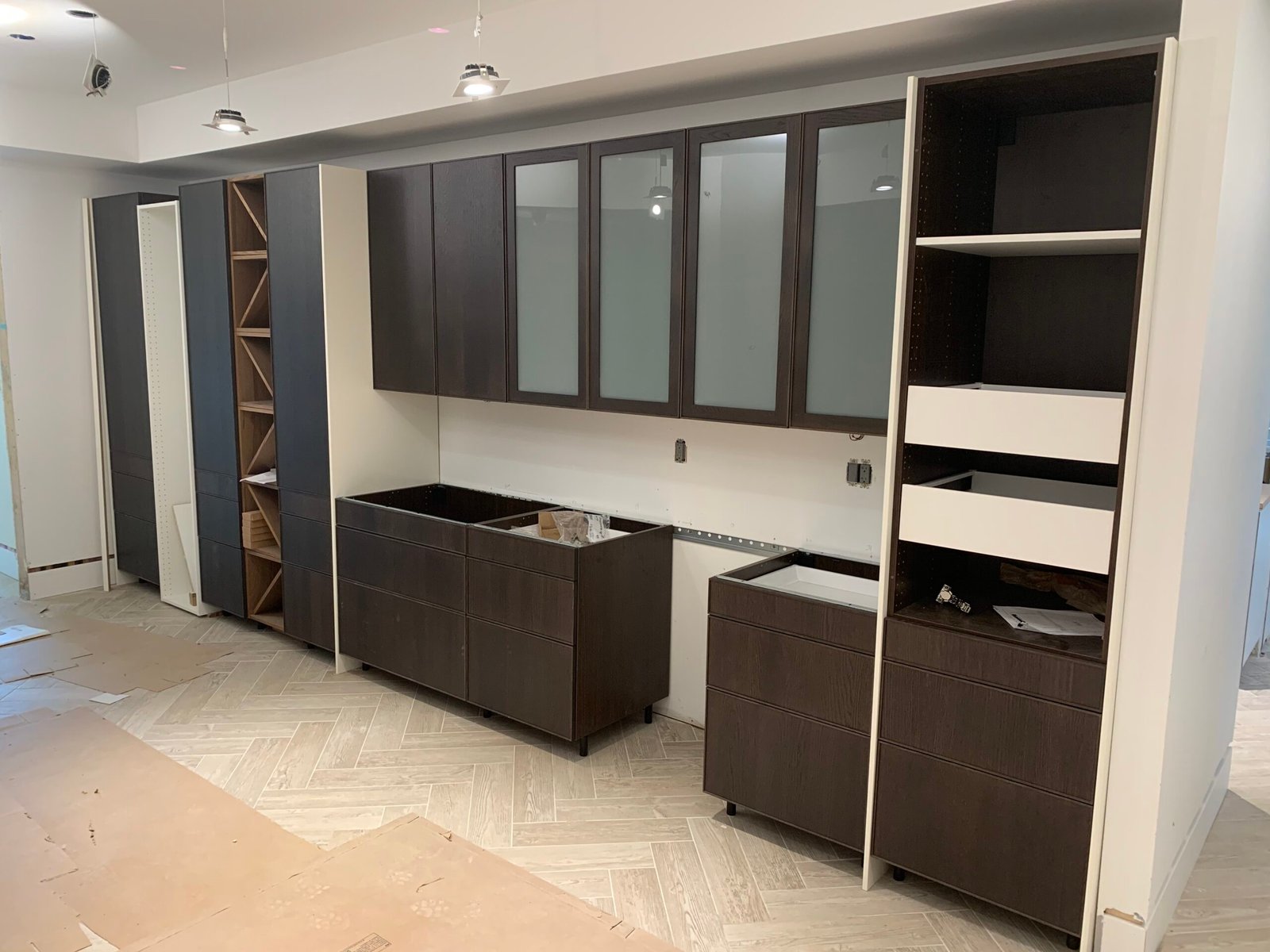
How to Chose Kitchen Cabinets: A Builder’s No-Fluff Guide to Materials, Hardware, Layout, and Not Getting Ripped Off
If you’re wondering how to chose kitchen cabinets, you’re already ahead of most people. The average homeowner picks cabinets like they’re choosing paint colour: “That one looks nice.” Then they live with sagging drawers, peeling finishes, and doors that close like a haunted house movie.
Cabinets are the most-used “moving part” in your house. You’ll touch them every day, often half-asleep, holding a coffee in one hand and trying to open a drawer with the other. So let’s pick cabinets that can survive real life — not just a showroom spotlight.
🧠Start with this: you’re not buying doors, you’re buying a box system
Cabinets are basically a fleet of wooden boxes that have to stay square, hold weight, handle moisture, and open/close thousands of times. The doors and drawer fronts are the “pretty face,” but the cabinet box is the backbone.
If you spend money on anything, spend it on the parts that actually do the work: box material, joinery, hardware, and finish quality. Everything else is decoration.
🪵Cabinet box materials (what lasts vs what swells)
The cabinet box is where cheap kitchens go to die. Here are the common materials, in real-world terms:
| Material | Pros | Cons | Best use |
|---|---|---|---|
| 3/4" plywood | Strong, holds screws well, tolerates moisture better, lighter than MDF/particle | Costs more, quality varies by grade | Most long-lasting choice for custom cabinetry |
| MDF | Very flat, paints beautifully, stable indoors | Heavy, hates water (swells if soaked), screw holding is weaker | Painted door panels, some interior components (dry areas) |
| Particle board / melamine | Cheap, consistent panels, common in production cabinets | Poor moisture tolerance, weaker over time, edge failures | Budget installs where cost is the priority |
| Furniture board hybrids | Varies — sometimes decent value | Hard to compare apples-to-apples between brands | Mid-tier cabinets if specs are strong and hardware is good |
Simple decision
If you want cabinets that feel solid for decades, choose plywood boxes (or at minimum plywood sides with solid build details) and don’t compromise on hardware.
🚪Door styles: the most common “expensive mistake”
Door style is where people overspend because it’s the most visible part. Here’s how to choose without wrecking your budget.
Shaker doors
Shaker is popular because it’s simple, timeless, and it doesn’t look dated every time the design trends do a cartwheel on TikTok. If you want a safe choice that sells well later, Shaker is hard to beat.
Slab / flat panel
Great for modern kitchens. They can look amazing — but your finish quality matters more because there’s nowhere for flaws to hide. Also, fingerprints become part of the design unless you choose the right finish.
Raised panel / ornate profiles
If you love it, do it — just know it can push you into a more expensive door program, and it often looks dated faster. (Not always. But often.)
🧲Hardware: hinges and drawer slides are where quality lives
Hardware is the “feel” of your kitchen. The soft close, the smooth glide, the drawers that don’t rack when loaded with pots — this is where you feel the difference between good cabinets and “why is this already annoying?”
What you want (in plain English)
- Soft-close hinges from a reputable brand (Blum is the common benchmark)
- Full-extension drawer slides (so you can actually reach the back of the drawer)
- Undermount slides for higher-end feel and better stability
- High load ratings if you use deep pot drawers (they get heavy fast)
What to avoid
- “Soft close” that isn’t adjustable or starts slamming after a year
- Cheap side-mount slides on big drawers full of dishes
- Any drawer that wobbles when it’s open (it only gets worse)
🎨Finishes: paint, stain, thermofoil, lacquer — what survives real kitchens?
Kitchens are hard on finishes: heat, steam, grease, cleaning chemicals, and the occasional kid who tests Sharpie “because science.” Here’s the quick guide:
Painted cabinets
Beautiful, very popular, but quality matters. Ask what coating system is used (conversion varnish / lacquer systems are common in quality shops). Painted cabinets show chips more than stained wood, so edge durability matters.
Stained wood
Great at hiding minor wear and it ages gracefully. Wood grain variation is natural — if you want perfectly uniform, stain might annoy you.
Thermofoil
Can be fine in budget installs, but it can peel or fail around heat sources if quality is poor. If you go this route, pay attention to edge bonding and warranty details.
Laminate / high-pressure laminate
Durable and practical. Great for modern looks and heavy use. Not always the “warmest” look, but it can be an excellent longevity play.
📏Layout: this is where “nice cabinets” still become a bad kitchen
A kitchen can have premium cabinetry and still function terribly if the layout is wrong. Focus on workflow first: fridge → prep → sink → cook → serve. The classic “work triangle” concept is still useful — just modernized for real life.
Must-have layout rules
- Landing space beside fridge, sink, and cooktop (you need places to put things down)
- Deep drawers for pots/pans (people love them for a reason)
- Trash and recycling near prep zone (not across the room)
- Filler panels where needed so doors don’t smash walls or appliances
- Clearances: don’t pinch aisles — it makes kitchens feel cramped fast
🧾Budget ranges: how to think about pricing without getting fooled
Kitchen cabinet pricing ranges wildly in Ontario because “kitchen cabinets” can mean anything from a basic stock set to fully custom, furniture-grade cabinetry with clever storage and premium finishes.
Here’s the best way to budget: decide what level you want (stock / semi-custom / custom), then allocate money to hardware + function first, and cosmetics second.
| Tier | What it usually means | Best for |
|---|---|---|
| Stock | Standard sizes, limited options, faster delivery | Budget builds, rentals, quick refreshes |
| Semi-custom | More sizes/options, better upgrades available | Most homeowners who want value + quality |
| Full custom | Built to exact dimensions, best layout efficiency | High-end kitchens, tricky layouts, maximum storage |
🧱Cabinets + building the house: don’t ignore the “structure costs” behind the kitchen
Cabinets are part of a bigger budget puzzle. For example, if you build with ICF or you’re doing radiant floors, that changes the overall cost structure of the house — and it changes what you should prioritize in finishes.
If you’re planning radiant floors, here’s a solid internal cost guide: Cost Of Radiant Floor Heating in Ontario. And if you’re comparing the foundation approach, start here: ICF Foundation Cost.
📑Permits and paperwork: yes, kitchens can trigger them
A straight cabinet swap usually doesn’t need a building permit — but kitchens often become a “while we’re at it” renovation: moving plumbing, changing electrical, changing a load-bearing wall, adding a new window, etc. That’s when permits enter the chat.
If you’re unsure, this internal guide is the best starting point: How to Get a Building Permit in Ontario.
🧰Questions to ask any cabinet supplier (this separates pros from pretenders)
- What are the boxes made of? (plywood, MDF, particle, hybrid?)
- What thickness are the box sides and backs?
- How are boxes joined? (dowel, dado, screws, staples, “hope and prayer”?)
- What hinge and slide brands/models are included?
- Are drawers dovetail? What’s the bottom material and thickness?
- What finish system is used and what’s the warranty?
- What’s included: fillers, panels, crown, light valance, toe kicks, installation?
- What is the lead time and what happens if something arrives damaged?
❓FAQ: How to chose kitchen cabinets
Should I choose plywood or MDF for cabinet boxes?
For cabinet boxes, plywood is usually the durability winner because it holds fasteners well and tolerates moisture better. MDF is excellent for painted doors and panels but is less forgiving if it gets wet or takes heavy screw loads repeatedly.
Are soft-close hinges and slides worth it?
Yes. They reduce wear, feel better daily, and they’re one of the best “quality upgrades” you can buy in a kitchen. Just make sure the hardware brand/model is reputable and adjustable.
What cabinet upgrades give the best everyday function?
Deep pot drawers, a good pantry layout, a trash/recycling pull-out near the prep zone, full-extension slides, and enough landing space beside the fridge/sink/cooktop.
Is custom cabinetry always better?
Not always — but custom can be better when the layout is tricky, when you want maximum storage efficiency, or when you care about exact sizing and premium construction details. Good semi-custom can be an excellent value.
Do I need a permit to replace kitchen cabinets in Ontario?
Usually not for a straight swap, but moving plumbing, electrical, changing structure, or adding windows can trigger permits. When in doubt, confirm with your municipality or review a permit guide.
Bottom line: choose cabinets from the inside out — box + hardware + finish system first — then pick the door style. That’s how you get a kitchen that still feels great after 10 years of real life.
Scroll sideways to see more. Cards stay the same height (no messy uneven rows).