
ICF Foundation Cost vs Poured Concrete Ontario
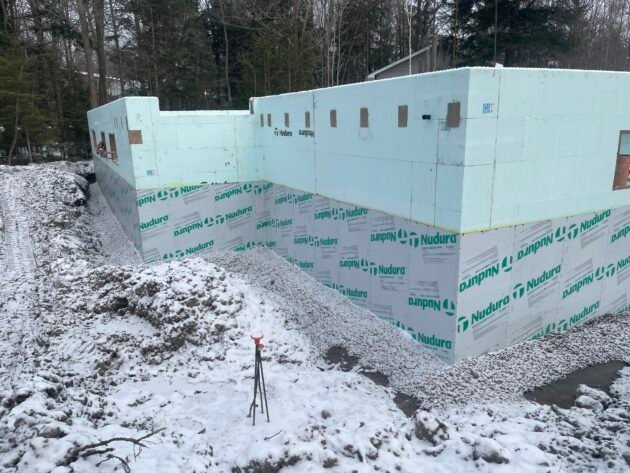
ICF Foundation Cost vs Poured Concrete in Ontario: A Quote-Comparison Worksheet (So You Don’t Get Played)
Most “ICF vs poured concrete” price arguments are basically two people comparing different scopes and yelling louder. One quote includes insulation and a finish-ready plan. The other is just a bare concrete wall and a prayer.
This BuildersOntario version is built as a practical worksheet. It helps you compare quotes the way a builder does: by lining up every line item that matters — concrete, forming or bracing, insulation strategy, waterproofing, drainage, pump time, and the little extras that quietly add thousands.
Start here: what are you actually buying?
A foundation isn’t “a wall.” It’s a system: footings, walls, reinforcement, openings, penetrations, waterproofing, drainage, backfill, and (in Ontario) a realistic plan for moisture and heat loss. The difference between ICF and poured concrete isn’t just materials — it’s what gets bundled into the assembly.
Rule: Compare assemblies, not walls. If one quote includes “ICF wall with insulation built in” and the other quote is “poured wall only,” you’re not comparing the same product.
The worksheet: the 12 items your quote should clearly show
Print this section (or copy it into your notes). If a quote won’t answer these items clearly, you’re walking into change-order country.
- Wall type & thickness: ICF model/thickness or poured wall thickness.
- Concrete spec: MPa, slump/placement notes, and whether a pump is included.
- Concrete volume: total m³ carried in the price (so you can sanity-check it).
- Rebar schedule: included as per drawings, or “allowance” (allowances are suspicious).
- Forming / bracing: for poured walls (forms) or for ICF (alignment bracing).
- Openings: window/door bucks, lintels, sleeves, penetrations and who supplies them.
- Waterproofing: dampproof vs membrane vs full system (spell it out).
- Drainage: weeping tile, gravel, filter fabric, sump detail, discharge plan.
- Insulation strategy: (critical for poured concrete): interior foam, framed wall, exterior foam, or hybrid.
- Finish-readiness: how will a basement be finished without creating moisture problems?
- Backfill timing: when can it be backfilled and what material is used?
- Schedule risk: what happens if weather delays the pour or inspections?
Three “real life” Ontario comparison scenarios
This is the part most online articles skip: your basement plan determines which option makes financial sense. Here are the three scenarios I see constantly in Ontario.
| Scenario | What homeowners want | What the scope must include | Who usually wins |
|---|---|---|---|
| A) Utility basement | Storage, mechanical room, maybe a workbench. Not a living space. | Solid water control, basic durability. Insulation can be modest if comfort isn’t a goal. | Poured concrete can be cost-effective if you keep scope honest. |
| B) “Future finished” basement | Not finishing now, but absolutely later. | You still need a proper insulation + moisture strategy, or you’ll pay twice later. | ICF often narrows the gap or wins once you price the future-proofing. |
| C) Finished lower level | Bedrooms, family room, office. Comfort matters. | Finish-ready insulation plan, minimized thermal bridging, good drainage, reliable waterproofing. | ICF frequently wins on “cost per comfort” and fewer finishing headaches. |
The quickest way to tell which scenario you’re in
Ask yourself one question: Will you ever want your basement to feel like the main floor?
- If “yes,” you’re in Scenario B or C, even if finishing is “later.”
- If “no,” Scenario A can work — but you still need solid water control.
Most budget surprises happen when homeowners think they’re in A, but they’re actually in B.
Internal links that help you price the whole picture
- ICF Foundation Cost (Ontario)
- Concrete Footings Cost Calculator
- How to Obtain a Building Permit in Ontario
For the ICF/home-performance angle, see ICFhome.ca.
How to sanity-check the concrete portion of a quote
Concrete pricing varies by region, season, and mix design. But you can still do a basic reasonableness check: if your quote shows the total m³ of concrete and the MPa, you can compare that against typical posted ready-mix price lists (and then add pumping, small-load fees, and jobsite realities).
The point isn’t to “price-shop” a builder with a calculator. It’s to make sure the quote has the right ingredients and doesn’t hide missing scope.
A simple example (the “napkin math” version)
If a foundation needs (say) 35–45 m³ of concrete across footings, walls, and slab, and the quote is wildly out of scale, you ask questions. The questions are what save you: “What MPa? What volume? Pump included? Winter handling included?”
Builder tip: If someone won’t state the m³ and MPa in writing, it’s usually because the quote is an allowance dressed up as a fixed price.
ICF vs poured concrete: where the money really shifts
In Ontario, the price difference is rarely “ICF costs more because foam is expensive.” The real shifts are: labour method, insulation scope, finishing strategy, and schedule risk.
1) Forming vs bracing (and what happens when the schedule slips)
Poured concrete needs forming, stripping, and cleanup. ICF needs bracing/alignment and careful pour sequencing. Both systems can be executed beautifully — or badly — depending on the crew.
Schedule slip matters because rentals and crews don’t sit around for free. If a job drifts, “one clean pour week” turns into “two weeks of rentals plus extra labour.” That’s true for either system; it just shows up differently.
2) Insulation isn’t optional if comfort is the goal
If you’re building a finished lower level, poured concrete typically needs added insulation and a plan that won’t trap moisture. If you’re researching basement insulation approaches, NRCan’s basement insulation section is a solid homeowner-friendly reference. NRCan: Basement insulation (floors, walls, crawl spaces)
3) Finish-ready details (this is where homeowners pay twice)
The cheapest way to build a wall is not always the cheapest way to build a living space. If your poured wall quote does not include a thoughtful finishing strategy (not just “we’ll frame later”), you’re likely comparing a “phase 1” quote against a “complete system” quote.
What “apples-to-apples” looks like in one table
This table is intentionally practical. It shows what should be included in your comparison depending on the basement outcome you want.
| Item | ICF foundation quote should show | Poured concrete quote should show |
|---|---|---|
| Wall assembly | ICF type/thickness, bracing, pour approach, openings/bucks. | Wall thickness, form method, stripping/patching, openings/bucks. |
| Insulation outcome | Clearly state intended R-value outcome and continuity at rim, corners, and penetrations. | Specify insulation type/placement (interior/exterior), continuity, and protection. |
| Moisture plan | Waterproofing + drainage + detailing at penetrations. | Same — plus how interior finishes won’t trap moisture in the wall. |
| Finish readiness | Attachment strategy, service runs, future finishing notes. | Framing/foam/vapour approach (or explicitly excluded if not part of scope). |
So which one is “cheaper” in Ontario?
The honest answer: it depends on what you want your basement to be. There are Ontario examples where the ICF foundation system price difference versus a conventional non-insulated foundation wall is only a few thousand dollars — which can evaporate quickly once you add insulation and finishing details to the poured wall scope.
If your basement will never be living space, poured concrete may be the budget-friendly choice. If it will be living space (now or later), ICF can be surprisingly competitive because the insulation and “finish-friendly” pathway are already baked in.
My boring-but-true advice: Don’t choose a foundation system by sticker price. Choose it by the space you want to live in.
Ontario code and permits: quick reality check
Your design still needs to meet Ontario requirements and local building department expectations. If you want the official starting point, use the Ontario Building Code hub: Ontario Building Code.
Also: permitting schedules and inspections can affect rental durations and sequencing. If you’re early in planning, this builder-focused guide can help: How to Obtain a Building Permit in Ontario.
Bottom line: use the worksheet and you’ll stop caring about “ICF vs poured” arguments
Once you compare complete assemblies and make your basement outcome clear (utility vs future-finish vs finished living space), the decision usually becomes obvious — and the quotes become easier to evaluate.
If you want deeper ICF-specific planning from a builder’s point of view, go to ICFhome.ca and work backwards from comfort goals and moisture strategy.
If you’d like, I can also convert this worksheet into a one-page “downloadable checklist” format for your site layout.
Scroll sideways to see more. Cards stay the same height (no messy uneven rows).