
“Is This Lot Buildable?” Checklist
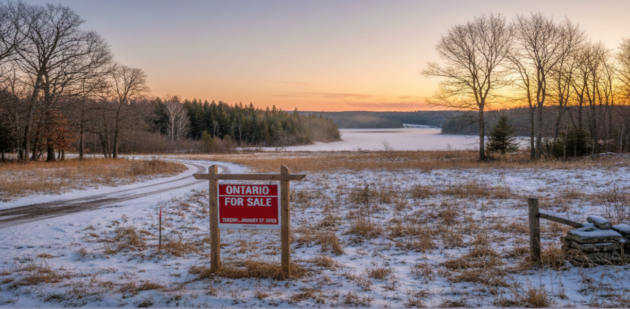
Is This Lot Buildable? The Ontario Checklist That Saves You From Buying a “Maybe”
Every vacant lot looks buildable in July. Then April shows up with mud, setbacks, and a driveway that needs a permission slip. This checklist is how you prove a lot is buildable (for your plan) before you spend real money.
Step 0: Decide your “target house” (roughly)
Bungalow or two-storey, bedroom count, and “garage yes/no.” You don’t need a final design—just enough to know what you’re asking the lot to support.
Step 1: Paper proof (the boring stuff that saves fortunes)
Start with documents, not optimism. Get a survey if possible (or at least the legal description), then confirm:
- Zoning & permitted use: Can you build the home you want?
- Frontage/road status: Public road, private road, or an unopened road allowance?
- Extra rules: Special overlays (shoreline/floodplain/environmental/heritage) that can override “normal.”
Builder translation: if the listing says “future development potential,” it might also mean “future paperwork potential.”
Red flags that should slow you down
- No survey and “approximate” boundaries (approximate is fine for pizza sizes, not property lines).
- “Everyone builds here” with no written confirmation for your specific lot.
Step 2: Draw the building envelope (10 minutes, zero drama)
Take your lot dimensions and subtract setbacks: front yard, rear yard, and side yards. What’s left is your building envelope—the zone your house is allowed to sit in. If the envelope is narrow, a wide bungalow may be painful while a two-storey fits nicely.
Step 3: Access/driveway reality (because trucks need to get in)
A lot isn’t buildable if you can’t legally and safely enter it. Confirm who controls the road (municipal/county/provincial) and ask where an entrance can be approved. Don’t ignore curves, hills, ditches, or culverts—those are cost multipliers in disguise.
Step 4: Servicing—municipal or private (where lots “fail” quietly)
If municipal water and sewer are available, your questions are mostly connection locations and costs. If you’re on private servicing, treat it like a mini-engineering exercise:
- Septic feasibility: suitable soils, enough area for the bed, and practical setbacks.
- Room for replacement: plan for the future so you’re not trapped later.
- Well reliability: quality matters, but so does yield and recovery—especially in late summer.
The “septic & well questions” I ask every time
If you can’t answer these yet, keep conditions in place until you can.
Step 5: Walk the lot like water
Low areas, cattails, soft ground, and “mystery wet spots” are nature’s way of saying the site will cost more. Steep slopes can be doable—but they rarely stay cheap. If you want a quick sanity check, visit after a heavy rain or during spring melt.
Turn the checklist into a budget (before you fall in love)
Once you’ve proven “yes, it can work,” the next question is “yes, but can I afford it?” Two quick tools help you rough in costs without pretending every lot is easy:
Quick calculators
They won’t replace proper design, but they’ll stop you from budgeting like the lot has zero surprises. (Because it always has at least one.)
ICF note (quick)
ICF doesn’t change whether a lot is buildable, but it does reward good planning and clean layouts. If you’re exploring ICF options: ICFPRO.ca.
FAQ
Can I rely on “neighbours have septic” as proof my lot can have septic?
It’s encouraging, but not proof. Soil and usable area can change dramatically from lot to lot. Confirm feasibility for your lot and your planned bedroom count before you commit.
What’s the most common reason a “good looking lot” becomes expensive?
Access and drainage. Long driveways, culverts, and seasonal water can turn a simple build into serious site work. It’s fixable—just not free.
Should I buy first and “figure out permits later”?
If you like adrenaline, sure. If you like sleep, keep conditions in place until you’ve confirmed zoning, a workable envelope, access feasibility, and a realistic servicing plan.
What’s the fastest “go/no-go” test?
Can you place a house footprint, driveway, and septic/well concept on the lot without cheating? If you can’t, you don’t have a plan yet—you have hope. And hope is not an approval.
Final builder note
The best lots aren’t the ones with the prettiest view. They’re the ones that pass the boring checks with minimal drama. Do the checklist, keep smart conditions, and you’ll spend your money on the house—not on learning lessons the hard way.