Ontario's Plain-English Guide to Custom Home Building📞 705-533-1633 | ☎️ 1-866-868-6606 | ✉️ info@icfhome.ca

Which Upgrades Actually Add Value vs. Just Cost?
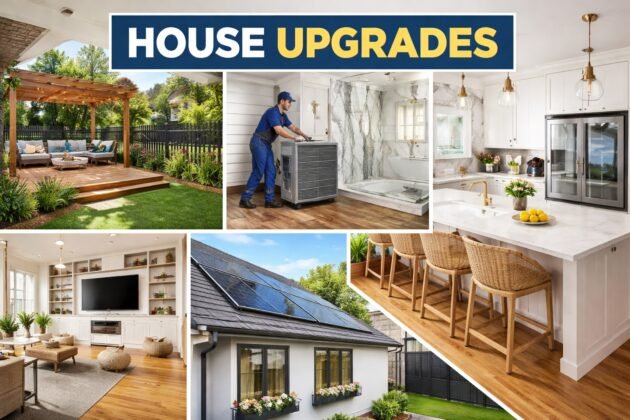
Home Value
Upgrade Analysis
Investment Guide
Which Upgrades Actually Add Value vs. Just Cost?
Every client asks me this, usually with a kitchen brochure in one hand and the budget in the other. I am not going to give you a percentage for what each upgrade returns when you sell. Anybody who does is guessing, because the answer depends on the street, the year and the buyer. What I can give you is the test I use on my own houses, and it has not let me down yet.
The One Test That Sorts Every Upgrade
Ask one question: can this be done later without tearing the house apart?
If the answer is no, spend the money now. It will never be this cheap again, and the next owner cannot add it either, which is exactly why they will pay for it. If the answer is yes, it can wait, and most of the time it should.
Two more questions before you sign for any upgrade: Will I still want this in ten years? And would the next owner choose the same thing? Two yeses is an upgrade. Two noes is a hobby, and hobbies are fine, as long as you know that is what you are paying for.
Spend Here: The Things You Cannot Add Later
These are buried in concrete, hidden in walls or built into the shape of the house. Getting them right on day one is cheap. Getting them later is a renovation.
- The envelope. Walls, attic, air sealing and windows decide what the house costs to heat for as long as it stands. This is the reason I build in ICF. See is an ICF home worth it and what R-value really means.
- Foam under the basement slab. About $2 a square foot the day before the pour, and impossible the day after. See basement slab insulation.
- A bathroom rough-in in the basement. With the drain stubs already in the slab, a 3-piece rough-in is about $4,500. Without them somebody breaks the floor, and that adds $1,500 to $8,000. See bathroom rough-in cost.
- Basement ceiling height. An extra foot of foundation wall is a small line on a new build. No amount of money adds it afterward.
- Radiant tubing in the slab. It goes in before the concrete or it does not go in. See radiant floor heating cost.
- A 200 amp service and empty conduit. The electric car, the heat pump and the hot tub are coming whether you have bought them yet or not. See 100 or 200 amp service.
- A generator inlet. About $700 to $1,200 at rough-in, and on a rural lot with a well it is the difference between water and no water in an outage.
- Good windows. Triple glazing is roughly $180 an opening more on a new window package. Changing windows later means buying them twice.
Worth It If You Will Use It
These add real value to the way you live. Whether a buyer pays you back for them depends on the buyer.
- The kitchen layout. Spend on where things are, not on what they are made of. A sink that is in the right place on day one costs nothing extra. Moving it later costs thousands. Counters can be changed in a day; see countertop costs.
- One more bathroom. Going from one to two, or adding an ensuite, changes how a family lives in the house. The fourth bathroom for three bedrooms does not.
- A finished basement. It is the cheapest square footage in the house, provided it is dry, insulated and has a legal bedroom window. A cheap finish over a damp wall is worth less than bare concrete.
- A deck that suits the house. A simple one that is built properly. See what a deck costs.
- A heated, insulated garage. In Simcoe County this is not a luxury for anyone who owns tools or a snowblower.
Looks Good on the Sales Sheet, Does Little for the House!
None of these are wrong. They are just the first things I would cut when the budget gets tight, because every one of them can be added, changed or ignored later.
- Waterfall counter ends. About $1,200 each, and they add nothing to how the kitchen works.
- Top-brand appliances. A buyer notices that the appliances are clean and work. Very few will pay the difference between a good range and a famous one.
- A swimming pool. You get a short season, a yearly bill and a buyer pool that just got smaller. Build one because you will swim in it, not because of resale.
- Built-ins everywhere. A mudroom bench and a pantry, yes. A custom wall unit sized for the television you own this year, no.
- Wired-in smart everything. Run the conduit and the extra network cable. The gadgets will be out of date before the paint is.
- Elaborate landscaping. Grade it properly, seed it, plant a few trees. The water feature can wait for a year when nothing else needs money.
- Anything very personal. The wine room, the themed basement, the purple kitchen. Enjoy them. Just do not put them in the resale column.
What a Buyer and Their Inspector Actually Look At
When one of my houses changes hands, the inspector does not open the wine fridge. He looks at the things that cost real money to fix:
- Any sign of water in the basement.
- The age of the roof, the furnace and the water heater.
- The electrical panel and whether it has room.
- The windows: fogged glass, soft sills, drafts.
- The attic: insulation depth, staining, ventilation.
- Cracks, slopes and doors that do not close.
A house that passes that list sells. A house that fails it gets a lower offer no matter what the counters are made of. That is the real answer to which upgrades hold their value: the boring ones.
Where Homeowners Go Wrong
- Spending the envelope money on the kitchen. You can redo a kitchen in three weeks. You cannot redo the walls.
- Upgrading before the price is fixed. Know what the house costs first. The home pricing calculator gives a range, and allowances explain where upgrades hide in a contract.
- Choosing everything at the top of the showroom. Twenty small upgrades at $2,000 each is $40,000, and no single one felt like a decision.
- Building the biggest house on the street. The neighbours set the ceiling on your price. Build for yourself, but know it.
- Forgetting the tax. Every upgrade carries 13 percent HST. Run the HST rebate calculator before the list gets long.
Rules of Thumb
- If it is buried in concrete or hidden in a wall, do it now.
- If it can be changed in a weekend, it can wait.
- Spend on where things are before you spend on what they are made of.
- The upgrades that hold their value are the ones nobody photographs.
- Build the house you want to live in. Just keep the resale list and the wish list on separate pages.
If you are trying to decide where the money should go on your own plans, send them over. It is a shorter conversation than you would think.
More on costs and financing
Sources and further reading
Questions people ask
Which upgrades hold their value in an Ontario custom home?
The ones buyers cannot add later without a renovation: a better building envelope (ICF, triple-pane windows, insulation above code), a sensible layout with a main-floor bedroom option, a finished walkout basement, and a proper mechanical room. Finishes are replaced; structure is not.
Which upgrades rarely pay back?
Anything the next owner would choose differently: exotic countertops, elaborate trim packages, built-in electronics, pools in a region with short summers. Enjoy them if you want them; just do not call them an investment.
How should I decide on an upgrade?
Ask two questions. Will I still want this in ten years, and would a buyer pay for it? Yes to both is an easy upgrade. No to both is an expensive opinion.
Reviewed and updated October 2026. Costs on this site are Ontario ranges, not quotes; code references are to the Ontario Building Code in force at the date above.
Latest posts
Fresh guides, calculators, and “don’t-do-that” tips
Scroll sideways to see more. Cards stay the same height (no messy uneven rows).
Loading latest posts…
Tip: shift + mousewheel works great

Good breakdown of what actually adds value. From an electrical POV, one thing people overlook is electrical capacity and safety — an old panel or not enough circuits can actually hurt resale, especially with EV chargers, big appliances, or a home office. Swapping to LEDs, modern outlets, and dedicated circuits where it matters is cheap but makes the whole house feel updated and future-ready.
Great comment.