
Zoning Rules for New Homes in Ontario: The First Thing That Kills Bad Projects
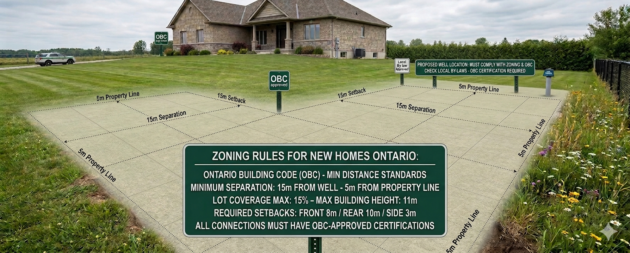
Zoning Rules for New Homes in Ontario: The First Thing That Kills Bad Projects
Keyword focus: zoning rules for new homes Ontario — permitted uses, setbacks, frontage, lot coverage, height, environmental overlays, conservation restrictions, and the deal-killing surprises that show up when people design the house before they really understand the lot.
- 📍 Permitted use first
- 📏 Setbacks + frontage
- 🏠 Lot coverage + height
- 🌿 Overlays + restrictions
A lot of people think zoning is a boring municipal side issue. It isn’t. Zoning is usually the first honest answer to whether your project has any real chance. It tells you what the lot can be used for, how close the house can sit to the lot lines, how much of the lot can be covered, how high the house can go, and whether extra approvals are waiting quietly behind the shrubs.
This page is meant to be the plain-English Ontario zoning explainer. We’ll separate zoning from Building Code rules, cover the standards that actually matter, explain environmental overlays and conservation restrictions, and show you why drawing the house before checking the lot properly is one of the most expensive bad habits in custom home planning.
If you are still at the early planning stage, keep BuildersOntario.com open while you work through the property. Zoning is much easier to deal with before the design gets emotionally expensive.
Biggest myth
“If the lot is residential, I can build what I want.” Residential is the start of the conversation, not the end.
Most common killer
Not the floor plan — the lot standards and overlays nobody checked early enough.
Best first move
Read the zoning before you draw the house, not after you’ve named the bonus room.
Zoning and the Building Code are not the same thing
This confusion causes a ridiculous amount of trouble. Zoning tells you what the land can be used for and how a building can sit on the lot. The Building Code tells you how that building must be designed and constructed safely.
Put another way:
- Zoning asks: can you put this type of house here, in this size, in this position?
- The Building Code asks: if you are allowed to build it, how must it actually be built?
You need both answers. But zoning usually gets the first swing, because if the lot cannot support the proposed use or building envelope, the Code barely gets a chance to become the problem.
That is why it helps to think of zoning as the land’s rules and the Ontario Building Code as the building’s rules. One deals with what is allowed on the site. The other deals with how to construct what is allowed.
Builder truth: a code-compliant house on a non-compliant lot is still a bad project.
What zoning actually controls on a new-home lot
People hear “zoning” and imagine one simple yes-or-no answer. Real zoning is more like a bundle of tests. A municipality’s zoning by-law typically controls the use of the land and a whole list of performance standards around that use.
| Zoning issue | What it means in plain English | Why it causes trouble |
|---|---|---|
| Permitted use | Whether a detached home, second unit, garden suite, or other use is allowed on that parcel. | You can have a beautiful lot in a category that does not allow what you are planning. |
| Setbacks | Minimum distance from front, rear, and side lot lines. | The house may fit in theory but not after required yards are measured honestly. |
| Lot frontage | The minimum width of the lot at the street or required line. | Narrow or oddly shaped lots often fail here before anything else gets interesting. |
| Lot coverage | How much of the lot can be covered by buildings. | Garages, porches, decks, and accessory structures add up faster than homeowners expect. |
| Height | The maximum building height the by-law allows. | Roof pitch, walkouts, grading, and “just one more storey-ish idea” can break the limit. |
| Other standards | Parking, access, landscaped area, building depth, driveway geometry, or special local rules. | These are the quiet details that turn a “close enough” plan into a variance application. |
Permitted use is the first question, and people skip it constantly
The first thing to check is not the house size. It is whether the lot actually permits the type of residential use you want. A parcel may be “residential” and still have rules that affect whether it can support:
- a detached house,
- a bigger custom home footprint,
- a second unit,
- a garden suite,
- or a legal basement apartment setup tied to the main dwelling.
This is why people get surprised. They think zoning is mainly about commercial versus residential land. In real life, the arguments often happen inside the residential category itself. One lot may support a detached home and a future additional unit. The next lot may only support the main dwelling, or support it only with much tighter restrictions.
If you are already thinking ahead to rental income or multi-generational use, read legal basement apartment requirements in Ontario and garden suite Ontario before assuming the lot will cooperate.
Setbacks are where good-looking plans go to die quietly
Setbacks sound dull until they erase half your house plan. Front yard. Rear yard. Side yards. Sometimes corner side yards. Sometimes daylight triangle limitations. Sometimes weird local rules around garage placement or porches. It adds up fast.
The problem is not usually one dramatic rule. It is the accumulation of several ordinary ones. A homeowner sees a deep lot and assumes the house can be moved around freely. The municipality sees required yards, driveway access, septic location, grading constraints, easements, and maybe a tree or conservation issue too.
That is why setbacks are not just measuring tape issues. They affect:
- how wide the house can be,
- whether the attached garage works at all,
- where porches or decks can go,
- where the septic area fits on private services,
- and whether there is any room left for later additions.
If you are comparing detached secondary structures, the same logic shows up again on garden suite setbacks in Ontario. Different building. Same cruel measuring tape.
Builder truth: “It fits on the lot” and “it fits after the setbacks” are two different sentences.
Lot frontage is the sneaky rule that makes narrow lots expensive
People think frontage is just about whether the lot touches the road. It is more than that. Zoning often requires a minimum lot frontage, and that number can quickly become a problem on narrow, wedge-shaped, or oddly severed properties.
Frontage matters because it affects:
- whether the lot qualifies for the intended use at all,
- whether the driveway layout works,
- how side-yard setbacks squeeze the house width,
- and whether any future garage or accessory building still has somewhere sensible to live.
A lot can look big enough on acreage and still behave badly because the frontage is weak or the buildable area narrows where the house actually needs to go. This is especially common on older severances, estate-lot style parcels, and some shoreline properties where the lot shape is more romantic than practical.
Lot coverage and building height are where “custom” starts costing you
Lot coverage sounds like dry planner language, but it is one of the reasons custom homes get in trouble fast. It controls how much of the lot can be covered by the house and, depending on the by-law wording, related structures. That means your footprint matters a lot.
The wider and more sprawling the house becomes, the more likely you are to run into:
- lot coverage limits,
- rear-yard shrinkage,
- setback pressure,
- driveway and access issues,
- and less remaining room for pools, garages, sheds, or future additions.
Height creates its own problems. Roof pitch, bonus rooms, walkout grading, tall main floors, decorative rooflines, and plans that quietly drift toward “not-quite-three-storeys” all raise height questions. Many owners think only of the storey count. Municipalities often care about how the building height is actually measured.
In other words, a custom home that looks elegant in rendering form can easily become over-wide, over-tall, or over-covered for the lot. Bigger is not always better. Sometimes it is just more non-compliant.
Environmental overlays and conservation restrictions are where optimism meets geography
This is the part people skip because it feels less exciting than choosing windows. A lot may be zoned for residential use and still be affected by environmental or regulatory overlays that change the approval path. Common examples include:
- floodplain or flood-hazard constraints,
- shoreline setbacks,
- wetland adjacency,
- erosion-hazard areas,
- regulated slopes,
- Niagara Escarpment or other special planning areas,
- or site plan control requirements.
Conservation-authority regulated areas are one of the biggest sources of surprise because homeowners often think, “The lot exists, so of course I can build on it.” Maybe. Maybe not without another permit, more studies, or a tighter building envelope than expected.
This is also where site preparation becomes part of the zoning conversation. Access routes, grading, drainage, tree clearing, and fill placement can all trigger practical or regulatory problems before the foundation even starts. That is why site preparation before building is not just a construction topic. It is a planning one too.
A lot can be legally “residential” and still be physically or environmentally miserable to develop.
Private services make zoning feel much tighter than the survey suggests
If the lot is on municipal water and sewer, zoning is already plenty to think about. If the lot is on private services, the conversation gets tighter fast. Now the house location has to work not only with setbacks and coverage, but also with the well, septic tank, leaching bed, replacement area, driveway, and whatever future ideas you thought might happen later.
This is one of the biggest reasons rural and semi-rural Ontario lots go sideways. The zoning may technically allow the house. The site may still become awkward or unworkable because the septic system and all required clearances eat the remaining envelope.
That is why septic systems in Ontario belong in this zoning conversation. On private-service lots, zoning and septic planning are not separate topics. They are roommates who argue constantly.
Why people often design before checking the lot properly
Because house plans are fun and zoning tables are not. That is the honest answer.
Homeowners naturally start with lifestyle questions: how many bedrooms, one storey or two, attached garage or not, maybe a walkout, maybe a basement apartment later, maybe a garden suite one day. Those are understandable questions. They are just not the first questions the lot cares about.
The lot cares about:
- what is allowed,
- where it can sit,
- how much room it takes,
- how tall it becomes,
- what overlays apply,
- and whether services and access can actually work.
That is why designing before checking the lot properly is one of the most expensive planning mistakes. The design starts feeling real. People get attached. Then the zoning review says the house must shrink, move, lose a garage bay, lose a walkout, lose a storey element, or go to committee. That is not just a technical problem. It is an emotional and financial one.
What usually kills new-home projects before the permit application even starts
| Problem | What homeowners think | What actually happens |
|---|---|---|
| Wrong use assumption | “It’s residential, so it’s fine.” | The lot may not support the type or intensity of residential use being planned. |
| Setback squeeze | “We can slide the house around later.” | The required yards leave a much smaller buildable envelope than expected. |
| Coverage and height creep | “It’s only a slightly bigger version of the plan.” | The wider footprint and roof geometry push the design over local limits. |
| Overlay or conservation issue | “No one mentioned that when we bought it.” | Another approval path, tighter setbacks, or more studies suddenly appear. |
| Private services conflict | “The septic will go somewhere.” | The lot may not have enough compliant area once everything is mapped honestly. |
| Bad sequencing | “Let’s get drawings first and sort the lot later.” | You pay to fall in love with a house the lot never agreed to. |
When zoning problems turn into other approval problems
Not every zoning problem means the project is dead. Sometimes it means the approval path gets longer. That can include:
- a minor variance application,
- a zoning by-law amendment,
- site plan control approval,
- conservation-authority permissions,
- or deeper site and servicing work before the permit is even ready.
That is why a lot that “almost works” can still become a poor candidate. The project may not be impossible. It may just be slower, more expensive, and much less fun than it looked when you were admiring the trees.
If you want to understand the permit stage that comes after the zoning work, see how to obtain a building permit in Ontario. That is the next lane after the lot says yes.
The best way to check a lot before you waste design money
The smartest sequence usually looks like this:
- Confirm the permitted use in the zoning by-law.
- Check setbacks, frontage, height, and lot coverage.
- Look for environmental overlays, shoreline issues, and conservation constraints.
- On private services, map out well and septic implications early.
- Only then start shaping the house around the lot.
That sequence may feel less romantic than browsing house plans. It is also much cheaper.
If you are trying to understand the bigger financial picture of custom building while you do this homework, see cost to build a house in Ontario. Zoning and cost planning should happen together, not in separate universes.
Common homeowner mistakes
- Confusing zoning with Building Code rules. Both matter, but they are not the same test.
- Designing first, checking the lot second. This is the big one.
- Ignoring frontage and lot shape. Acreage does not cancel bad geometry.
- Forgetting about accessory ideas. A house that barely fits leaves very little room for future garages, suites, or additions.
- Underestimating overlays. Floodplain, shoreline, and conservation issues are not decorative footnotes.
- Treating septic as somebody else’s problem. On rural lots, septic is part of zoning reality.
- Assuming the lot being for sale means the approvals are easy. Real estate listings are optimistic by design.
A homeowner we worked with loved a plan right up until the lot told us it wanted a smaller footprint, a different garage position, and a whole lot less confidence.
Next steps: how to keep zoning from wrecking the project later
If you want to save time, money, and one very unnecessary identity crisis over the house plan, do these things first:
- Check permitted use before you do anything else.
- Confirm setbacks, frontage, lot coverage, and height before choosing the house footprint.
- Look for overlays, conservation issues, and service constraints early.
- Then shape the house around the lot — not the other way around.
For the construction side after zoning, the provincial framework is the Ontario Building Code. Zoning decides what the lot allows. The Code decides how you build it.
Ontario FAQ: zoning rules for new homes in Ontario
What is the difference between zoning and the Ontario Building Code?
Zoning controls how land can be used and where buildings can sit on the lot. The Building Code controls how buildings must be designed and constructed safely. Zoning answers whether the house is allowed there in that form. The Building Code answers how to build the allowed house properly.
What zoning rules matter most for a new home in Ontario?
The biggest ones are permitted use, setbacks, lot frontage, lot coverage, height, and any local performance standards such as parking, access, or landscaped area. On more constrained lots, these rules decide the real building envelope long before the permit drawings are finalized.
What does “permitted use” mean in plain English?
It means whether the zoning allows the type of residential use you want on that lot. A parcel can be residential and still not allow every housing idea equally. Detached homes, second units, garden suites, and other uses may be treated differently depending on the by-law and the site conditions.
Why are setbacks such a big deal for custom homes?
Because setbacks shrink the buildable envelope. A lot that looks wide and deep can become much smaller once front, rear, and side yard requirements are applied honestly. Setbacks affect house width, garage placement, porches, decks, and even future additions.
What is lot coverage?
Lot coverage is the portion of the lot that can be occupied by buildings. A bigger footprint, attached garage, porches, and accessory buildings all affect it. Custom homes get into trouble here when the design spreads out too wide for the lot rather than building more efficiently within the available envelope.
Do environmental overlays really affect whether I can build?
Yes. Floodplain areas, shoreline setbacks, wetland adjacency, erosion hazards, and conservation-regulated lands can all affect the project. Sometimes the lot is still buildable, but with a tighter envelope or more approvals. Sometimes the added complexity changes whether the project is worth pursuing at all.
Can a septic system affect zoning or lot feasibility?
Absolutely. On private-service lots, septic and well placement can squeeze the usable building envelope dramatically. A house that works on paper may stop working once septic clearances, replacement area, and servicing layout are shown honestly. That is why septic systems are often part of the zoning conversation in practice.
Should I design the house first and then check zoning?
No. That is one of the most expensive planning mistakes homeowners make. It is much smarter to understand the lot first and then shape the house around the real building envelope. Otherwise you risk paying for plans that need to shrink, move, or go through a longer approval path than expected.
How do zoning rules affect future ideas like a basement apartment or garden suite?
They matter a lot. A lot that technically supports a detached home does not automatically support future additional units. That is why homeowners thinking long-term should also review legal basement apartment rules and garden suite Ontario before locking in the house placement and servicing strategy.
What is the smartest first step when evaluating a lot in Ontario?
Start by confirming the permitted use and the key zoning standards for the parcel: setbacks, frontage, lot coverage, and height. Then check for environmental overlays, servicing constraints, septic issues, and anything else that reduces the buildable envelope. After that, start shaping the house. That order saves the most money and disappointment.