Ontario's Plain-English Guide to Custom Home Building📞 705-533-1633 | ☎️ 1-866-868-6606 | ✉️ info@icfhome.ca

Septic Systems Ontario: Costs, Permits, Filter Beds, and Why Lots Fail Before the House Even Starts
Updated septic guide: our septic content now lives on our dedicated septic site, with 2026 costs, permits by township and owner-builder help. Read Types of septic systems in Ontario →
Ontario septic systems hub
2026 costs and permits
New systems and replacements
Septic Systems Ontario: Costs, Permits, Types and Lot Planning
This is the starting point for building, buying, replacing or maintaining a residential septic system in Ontario. It explains what Part 8 regulates, how a lot determines the system, what current installations cost and which detailed guide to read next.
TL;DR: For qualifying on-site systems with a design flow of 10,000 litres per day or less, Ontario’s Building Code governs design, construction, operation and maintenance. Most homes use a Class 4 septic-tank system, but the lot—not the tank catalogue—decides whether the design is conventional, raised, pressure-distributed, filter-bed or advanced.
Choose the septic question you need answered
Each page below focuses on one decision. Use this page to understand the whole subject, then open the guide that matches the property, permit stage or problem you are dealing with.
Permit
How do I obtain a septic permit?
Application requirements, local authority, drawings, costs, inspections and the complete permit sequence.
Septic Permit Ontario
Design
What belongs in a septic design?
Daily flow, soil, T-time, tank and bed calculations, site plans, elevations and construction details.
Septic System Design Ontario
Inspection
What should a septic inspection include?
Inspection scope, pumping, records, buyer conditions, warning signs, costs and report limitations.
Septic Inspection Ontario
Cost
What will a septic system cost?
Current planning ranges, component costs and the site conditions that move a quote.
Septic System Cost Ontario
Calculator
Estimate my project
Answer questions about bedrooms, soil, access, region, well and proximity to water.
Open Septic Calculator
Lot feasibility
Can this lot support septic?
Usable area, soil, T-time, groundwater, bedrock, setbacks and reserve-area planning.
Check Lot Feasibility
Owner-builder
Can I build it myself?
Owner-builder rules, permit-package requirements, inspections and practical risk.
DIY Septic in Ontario
Buying
Buying a house with septic?
Municipal records, inspection, remaining life, approved capacity and negotiation checklist.
Buyer’s Septic Guide
Replacement
Existing system failing?
Repair versus replacement, teardown planning, permit requirements, costs and site-work decisions.
Septic Replacement Planning
Maintenance
How do I maintain it?
Pumping, water use, records, prohibited materials and signs that maintenance is no longer enough.
Septic Maintenance Guide
How it works
How does a septic system treat sewage?
Tank separation, baffles, filters, distribution, leaching beds, soil treatment and system flow.
How Septic Systems Work
Well + septic
Buying rural property?
Why a pump-out receipt and a basic water test do not prove the systems can support your plan.
Septic and Well Check
Additional dwelling
Adding a garden suite?
How another dwelling changes sewage flow, capacity, permitting and replacement risk.
Garden Suite Septic RulesWhat Ontario regulates
The Building Code Act and Ontario Building Code apply to on-site sewage systems with a design capacity of up to 10,000 litres per day. These are the systems that normally serve houses, cottages and many small businesses. Larger sewage works follow a different environmental-approval path.
Provincial framework
Part 8 addresses system classification, site evaluation, daily design flow, tanks, clearance requirements, leaching beds, construction, operation and maintenance.
Local administration
Your principal authority receives the application, reviews the proposal, issues the permit and conducts inspections. Depending on location, that authority may be a municipality, health unit or another delegated body. The complete sequence is explained in Septic Permit Ontario.
Start locally: Before hiring a designer or excavator, call the municipality and ask who administers Part 8 permits for the property and which local schedules, fees and inspection stages are required.
The sewage-system classes homeowners hear about
| Class | General description | Typical homeowner context |
|---|---|---|
| Class 1 | Privies, composting toilets and certain self-contained toilet systems. | Remote or low-service properties; not a complete conventional household septic system. |
| Class 2 | Leaching-pit system for limited greywater-type flows under prescribed conditions. | Restricted applications, not a normal whole-house blackwater system. |
| Class 3 | Cesspool system. | Limited circumstances and not the normal choice for a new full-time dwelling. |
| Class 4 | Septic-tank system with treatment and subsurface disposal. | The normal residential system most owners mean by “septic.” |
| Class 5 | Holding-tank system storing sewage for pump-out and off-site disposal. | Usually used where an approved disposal system cannot be provided or for specific constrained uses. |
This hub focuses mainly on Class 4 residential systems because that is where most new-home, cottage, replacement and addition projects land.
What a Class 4 residential system can look like
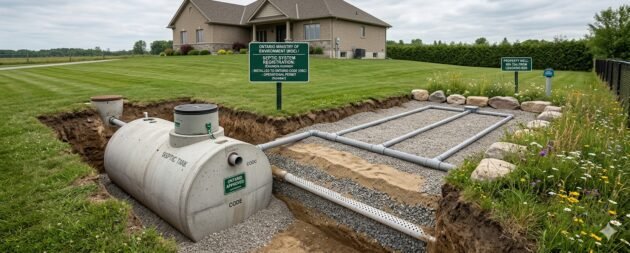
“Class 4” does not mean one identical product. It describes the septic-tank-system class. The approved design may use different distribution and treatment approaches depending on soil, topography, usable area and environmental constraints. For the tank-to-bed treatment sequence, see How Septic Systems Work.
Conventional gravity
Tank effluent moves by gravity to a permitted leaching-bed arrangement. It is generally the simplest outcome where soil, grade and space cooperate.
Pressure distribution
A pump doses the bed to distribute effluent more evenly. Pumps, controls, electrical work and commissioning add complexity.
Raised or filter bed
Imported material and a different bed configuration address site limitations. Material quantities and trucking become major cost drivers.
Advanced treatment
A treatment unit improves effluent quality before dispersal. It can help solve difficult constraints but adds equipment, servicing and operating requirements.
Pumped or lifted flow
A pump may be required where gravity cannot carry sewage or effluent to the necessary location or elevation.
Site-specific combination
Many real projects combine tank, pump, controls, treatment and a tailored bed. The issued permit—not a generic label—defines the system.
2026 septic-system planning costs
| System or scope | Ontario planning range | Typical reason |
|---|---|---|
| Conventional gravity system | $25,000–$40,000 | Suitable soil, workable grade, good access and limited imported material. |
| Raised, pressure or filter bed | $30,000–$50,000 | Pumps, more material, imported sand, larger bed or constrained site. |
| Advanced treatment or difficult site | $35,000–$65,000+ | Special treatment, tight setbacks, waterfront conditions, bedrock, groundwater or extensive site work. |
| Design, testing and application preparation | $2,000–$5,000+ | Varies with complexity, testing, drawings, calculations and professional involvement. |
Do not budget by tank price. The tank is only one component. Bed area, fill, stone, trucking, pumps, controls, access, decommissioning, restoration and inspection-ready construction usually decide the final price. Use the Ontario septic cost guide and septic calculator before setting the budget.
Why septic can decide whether a lot is buildable
A house footprint can often be changed. Soil, bedrock, groundwater and the shape of the property cannot. Septic feasibility is therefore part of the buildability test, not a trade decision made after the plans are finished.
Physical constraints
- Insufficient usable area
- Poor or variable soil
- High seasonal groundwater
- Shallow bedrock
- Steep or unstable grades
- Difficult equipment access
Planning conflicts
- Well and neighbouring-well clearances
- Waterfront or watercourse constraints
- House, garage and driveway placement
- Easements and property boundaries
- Future additions or garden suites
- No practical reserve area
Builder sequence: Lay out the septic, well, house, driveway and grading together. Designing the house first can force a more expensive system or prove that the chosen house does not fit the serviceable part of the lot. Start with Can This Lot Support Septic? before finalizing the house footprint.
New system, replacement or expansion?
New build
Confirm site feasibility and design flow before finalizing the home. Bedroom count, floor area and fixtures can affect the required system.
Replacement
The original location or system may not satisfy present conditions. Current building load, wells, additions and remaining usable area must be considered.
Addition or second dwelling
An added bedroom, suite or garden suite can require capacity review, alteration or complete replacement even when the existing system appears to function.
Failed or aging system: See the dedicated Septic Replacement guide for warning signs, repair-versus-replacement decisions, permit steps, system choices and current costs.
What a septic permit package normally needs
- Application and owner information using the current provincial and local forms.
- Building-use information including bedrooms, floor area, fixtures and any additional dwelling.
- Site plan showing boundaries, buildings, wells, water, driveways, tank, bed and required dimensions.
- Soil and site evaluation including test-hole information, limiting conditions and design T-time.
- Design calculations for daily flow, tank capacity, loading, distribution and applicable treatment.
- Construction details and elevations sufficient for review and inspection.
- Required designer or installer information where applicable to the project.
Choose the paid tool that matches the next decision
Ontario Septic Designer — $99.99
Calculate, check, draw, price and print one Ontario septic project with 90-day access.
Ontario Building Permit Bible — $29.99
Organize consultants, drawings, application costs and inspections for the whole building project.
Ontario Lot-Buying Bible — $29.99
Investigate septic, well, access, zoning, grading and rural site costs before purchasing the property.
Buying the lot and planning the permit? Get both the Ontario Lot-Buying Bible and Ontario Building Permit Bible for $49.99.
Get both guides.
Buying, inspecting or maintaining an existing system
Before buying
Obtain the municipal file, locate the tank and bed, confirm approved capacity and compare the system with the house being sold and your future plans.
During inspection
Confirm the agreed scope, pumping, access, tank components, pumps, alarms, bed observations, report limitations and replacement exposure.
After buying
Keep records, pump based on measured condition and professional advice, protect the bed, manage water use and investigate warning signs early.
A pump-out is maintenance, not a complete inspection. Emptying the tank does not prove the bed is healthy, the system has remaining life or its approved capacity matches your plans.
Septic systems Ontario: frequently asked questions
What regulates residential septic systems in Ontario?
Ontario’s Building Code Act and Building Code regulate qualifying on-site sewage systems with a design capacity of up to 10,000 litres per day. Part 8 covers classification, site evaluation, flow, tanks, clearances, leaching beds, construction, operation and maintenance.
What type of septic system do most Ontario houses use?
Most houses on private sewage service use a Class 4 septic-tank system. The Class 4 design can still vary substantially: conventional gravity, pressure distribution, raised or filter bed, advanced treatment or a combination selected for the site.
How much does a septic system cost in Ontario in 2026?
Use approximately $25,000–$40,000 for a conventional gravity system, $30,000–$50,000 for a raised, pressure or filter bed, and $35,000–$65,000 or more for advanced treatment or a difficult site. These are planning ranges, not quotes.
Who issues the septic permit?
The local principal authority administers the permit and inspection process. Depending on location, that may be the municipality, health unit or another delegated authority. Call the municipality first to identify the correct office.
Can an Ontario homeowner build their own septic system?
A property owner may be able to take an owner-builder role, but the permit, accepted design, inspections and compliance requirements remain. The owner exemption should be confirmed with the local authority and cannot be used as a way for someone else to operate an unregistered septic-installation business.
Can a large lot still fail septic feasibility?
Yes. Total acreage is less important than suitable, usable area. Soil, groundwater, bedrock, slope, wells, water, boundaries, easements and the house and driveway can reduce the compliant area dramatically.
Does replacing an old system require a permit?
Replacement, alteration and significant repair commonly require review, a permit and inspections. The authority may assess the present building load and current site conditions instead of allowing the old design to be copied.
Can adding a bedroom or garden suite affect the septic system?
Yes. Added bedrooms, fixtures or another dwelling can increase design flow and trigger a capacity review, alteration or replacement. Confirm septic capacity before finalizing the addition or garden-suite plan.
Is a septic pump-out the same as an inspection?
No. A pump-out empties the tank and allows some observations. A proper inspection also considers tank condition, distribution, bed performance, records, capacity and visible signs of failure.
What should I do first on a new lot?
Identify the approval authority, obtain its requirements, investigate the site and prepare a preliminary septic and well layout before committing to the final house footprint.
Important: General Ontario planning information only. The current Building Code, issued permit and written direction from the local approval authority govern each project.
Planning a rural home in Simcoe County or Georgian Bay?
We have designed and built 300+ custom homes over 45 years, with our own site-work capability for excavation, septic systems, wells, driveways and grading. Choose the next step that fits your project.
Latest posts
Fresh guides, calculators & real-world advice
More from BuildersOntario – scroll to explore.
Loading latest posts…
Tip: shift + mousewheel works great