Ontario's Plain-English Guide to Custom Home Building📞 705-533-1633 | ☎️ 1-866-868-6606 | ✉️ info@icfhome.ca

Deck Railing Kits Ontario (2026): Aluminum, Glass, Cable, Wood
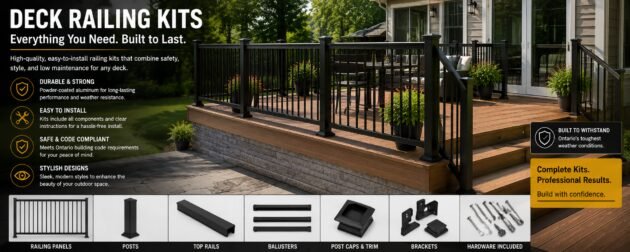
Builder Guide · Railing Kits
Deck Railing Kits Ontario (2026): Aluminum, Glass, Cable & Wood
Deck railing kits in Ontario let you put up a clean, code-compliant railing fast — once you know the rules, it’s all about look, view, budget, and upkeep. Use the picker for a recommendation, compare cost per foot across systems, and check the two rules that trip people up: cable climbability and glass safety glazing.
Once you’ve got the guard code straight, choosing a railing is the fun part — it’s where the deck gets its look. Pre-made kits make a compliant railing quick to install, but the systems differ a lot on price, upkeep, view, and the code hoops. Below we help you pick, compare the costs, and flag the rules to watch. This page is part of our complete guide to building a deck in Ontario.
Find your deck railing kit
Answer three quick questions and we’ll suggest a system and flag any code points to confirm with your inspector.
Railing system picker
A planning starting point — always confirm your final choice against the Ontario railing & guard code.
1. What matters most?
Lowest cost
Low maintenance
The view
2. Where’s the deck?
Standard backyard
Lakefront / cottage
Kids & pets
3. What look?
Classic wood
Clean & modern
Frameless view
Some “Shop” links are affiliate links — if you buy through them we may earn a small commission, at no extra cost to you.
Deck railing systems compared (Ontario, 2026)
| System | Installed cost | Maintenance | Look / view | Code watch-out | |
|---|---|---|---|---|---|
| Wood (PT / cedar) | $30–$75/ft | Stain / seal | Traditional, blocks view | Vertical pickets, 4″ sphere | Shop → |
| Composite | $60–$110/ft | Wash only | Clean, matches composite deck | 4″ sphere | Shop → |
| Aluminum | $70–$130/ft | None | Slim, modern, powder-coated | Vertical pickets — easy pass | Shop → |
| Cable | $60–$150/ft | Low (tension checks) | Thin lines, good view | Climbability — get approval | Shop → |
| Glass | $150–$300+/ft | Cleaning | Unobstructed view | Tempered safety glazing | Shop → |
Costs are installed, per linear foot of railing. Confirm every system against the OBC railing & guard rules, and match the railing to your boards with the composite vs wood decking guide.
Two ways to handle the permit (we’ll do the heavy part)
DIY with an instant PDF, or hand us the drawings. Either way, you skip the guesswork.
Best value
$1,500 designer value
The Ontario Deck Bible
Your deck permit, filed by Sunday.
No specialist, no waiting room — just follow the steps.
$1,500$29.99 one-timeSave $1,470
Everything a designer does — for the price of a coffee run.
- File your own permit in a weekend — no specialist
- Guard heights, spacing & the cable/glass rules explained
- Whether it’s your first deck or your fiftieth — you need this
- One coffee-run price vs a $1,500 designer
30-day money-back guarantee
Get instant access — $29.99 →
Secure checkout · download in 2 minutes · yours forever
Done-for-you
Permit-Ready Deck Plans
Still need to sort the permit? We’ll do the paperwork.
Skip the building-department runaround. Grab the DIY report, or let us draw the plans.
$399 flat, up to 500 sq ftFraction of a designer
+ $0.75/sq ft over 500 sq ft
- The full set your city wants: site plan, framing, elevation, section, details
- Guard & railing details drawn to code
- We handle the heavy part — you just submit and build
- Drawn by a BCIN-registered designer with 15 years’ experience
Free quote · no obligation
Get my free plans quote →
Most decks: a fixed price back within 1 business day
Two rules that trip people up
Cable & horizontal railings — climbability. Ontario guards must not be easily climbable by young children, which means no footholds between roughly 140 and 900 mm. Horizontal cable runs can read as a “ladder,” so some inspectors accept them only with conditions and others not at all. If you love the look, get your building official’s sign-off in writing before you build.
Glass — safety glazing. Glass guards must use approved tempered (safety) glass and compliant hardware; building departments may ask for product specs and structural details.
Full heights, spacing, and the 4-inch sphere test are on the deck railing height & guard code page.
The systems, one by one
Aluminum railing
The easy default for a modern, no-maintenance railing — powder-coated aluminum is light, won’t rot or rust, installs fast from kits, and its vertical pickets pass the climbability and 4-inch sphere rules without drama.
Mid-priced and the most popular upgrade from wood. Shop aluminum kits →
Glass & cable for the view
On a lakefront or cottage deck you’re paying for the view — and glass or cable preserve it. Glass (framed or frameless) is the premium, unobstructed choice but the priciest and needs tempered glazing. Cable is cheaper and very modern, but the climbability question makes it the one to clear with your inspector first.
Wood & composite
Wood pickets are the cheapest and easiest to build, but you’re back to staining. Composite railing matches a composite deck and skips the upkeep for a mid-range price. Both stay code-compliant easily with vertical balusters.
How far can a railing span between posts?
Most kit systems are built for 6 ft sections (some aluminum and glass go to 8 ft). Longer spans need stronger posts or mid-supports to stay rigid and pass the structural load test. Plan your post spacing around the kit you choose.
Your guard posts tie into the deck frame, so size them with the framing & spans guide, and remember the matching stair handrail has its own graspable-profile rule.
First 2 questions free
Will your railing choice pass inspection?
Cable, glass, and horizontal designs have extra Ontario rules. Ask the OBC Code Navigator any railing question and get the exact Code Article before you buy a kit.
Check your railing free →Want it installed? For glass and cable especially, the install details matter — compare a couple of quotes from Ontario deck builders, and see how the railing fits the overall budget in our cost to build a deck guide.
Frequently asked questions
Is cable railing legal in Ontario?
It can be, but horizontal cable raises climbability concerns under the Ontario Building Code. Some municipalities accept it with conditions; others don’t. Confirm with your building official in writing before building, since the guard must not be easily climbable by young children.
Can I use glass panels for a deck guard?
Yes, with approved tempered (safety) glazing and compliant hardware. Your building department may request product specs and structural details. Glass gives an unobstructed view but is the priciest railing system, typically $150-$300+ per linear foot installed.
What’s the lowest-maintenance deck railing?
Aluminum – powder-coated and essentially maintenance-free, it won’t rot or rust and just needs an occasional wash. Glass and composite are also low-upkeep; wood needs regular staining or sealing to hold up in Ontario’s freeze-thaw climate.
Can I install a deck railing kit myself?
Yes – aluminum, composite, cable, and glass all come as DIY-friendly kits. Match your post spacing to the kit (commonly 6 ft sections), follow the code for height and spacing, and through-bolt the posts so the guard passes the structural load test.
How wide can a railing section be between posts?
Commonly 6 ft per section, with some aluminum and glass systems rated to 8 ft. Wider spans need stronger posts or mid-supports to stay rigid and pass the load test. Plan post spacing around the kit you choose before you frame.
How much does a deck railing cost per foot in Ontario?
Installed in 2026: wood about $30-$75/ft, composite $60-$110/ft, aluminum $70-$130/ft, cable $60-$150/ft, and glass $150-$300+/ft. Cost depends on height, length of run, and install complexity – glass and cable cost more to install.
Disclaimer: General guidance for Ontario homeowners; railing costs are approximate and vary by product, height, run, and installer, and code acceptance of cable and glass systems varies by municipality. Always confirm any system against the Ontario Building Code and your local building department before you buy or build. This is not engineering advice.
Related reading
More deck guides, calculators & advice
More from BuildersOntario — scroll to explore.
Loading latest posts…
Tip: shift + mousewheel works great