
Garage Suite Ontario: Smart Extra Living Space or a Permit Headache Waiting to Happen?
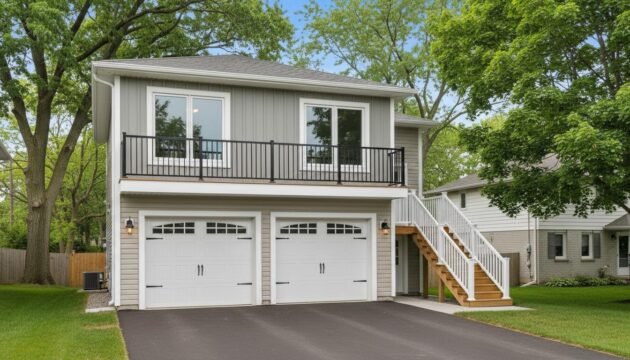
Garage Suite Ontario: Smart Extra Living Space or a Permit Headache Waiting to Happen?
A garage suite sounds clever because it is clever. You get parking or storage below and living space above. On the right property, it can be a smart way to add usable housing without sacrificing the whole yard. On the wrong property, or with the wrong assumptions, it becomes a permit headache wearing shingles.
The biggest mistake people make is treating a garage suite like a normal detached garage with a bonus room on top. It is not. The moment someone is supposed to live up there, the whole project changes. The structure changes. The stairs matter more. Fire separation becomes serious. Servicing gets more complicated. Parking questions show up. Zoning gets a louder voice. And the cute little garage project starts behaving like a real additional residential unit, because that is exactly what it is. :contentReference[oaicite:1]{index=1}
Why garage suites get complicated
- They are a dwelling unit, not just storage space
- Structure below and living space above must work together
- Fire, stairs, and servicing matter more than people expect
- Parking and zoning can still affect the layout
Where homeowners underestimate the job
- They assume a normal garage structure is enough
- They leave servicing questions too late
- They design the suite before checking setbacks
- They forget stairs and access eat space fast
What this article does
It explains why garage suites are a different animal than normal garages, what the main permit and design pressure points are, and where people create their own expensive messes.
The first mistake is thinking “garage first, suite second”
That sounds sensible, but it often leads people in the wrong direction. A garage suite should not be designed as a basic garage that happens to get an apartment later. It should be designed from the beginning as a building with two jobs: one below and one above. Once the upper space is intended for living, the lower level is no longer just a simple box holding vehicles. It is now the base of a residential structure.
That changes the whole conversation. The framing and spans may change. The slab and foundations may need to be considered differently. Openings for garage doors become part of a larger structural problem. Stairs have to fit somewhere sensible. The access sequence matters. The servicing route matters. The height of the garage and the roof form matter. All of that should be solved early, not discovered after someone falls in love with a floor plan copied from the internet.
Builder truth: a garage suite is not a detached garage with a cute idea on top. It is a small multi-purpose building with a lot more responsibility.
Zoning, setbacks, and local rules can decide the project before the drawings are fun
Ontario has made it easier to create additional residential units, including in separate buildings on the same property, but the actual project still lives inside municipal zoning, local site conditions, and the permit system. The province’s second-unit guidance says you need a building permit to add a second unit in your house, and Ontario’s additional residential unit framework continues to shape what municipalities allow and how they review those projects. :contentReference[oaicite:3]{index=3}
In plain English, that means this: you may have a province that supports additional units, but you still have a specific lot, a specific municipality, and a specific building department. That is why I tell people to separate the question into three parts:
- Can a garage suite be allowed in principle on this type of property?
- Can this actual lot fit it properly?
- Can the building be designed and serviced in a way that gets through permit review cleanly?
Start with zoning rules for new homes Ontario and compare that with the broader second-unit reality. For many homeowners, a garden suite is the obvious alternative comparison. Garage suites and garden suites are related ideas, but they are not the same problem. A garden suite usually fights site placement. A garage suite fights site placement and vertical building complexity at the same time.
Structure is where above-garage suites stop being casual
Once you put living space over a garage, the building stops being simple. A typical detached garage budget assumes a certain kind of structure, a certain kind of slab, and a certain kind of loading expectation. A garage suite changes that because now the building is supporting occupancy above and wide vehicle-door openings below.
That combination matters. Large garage doors reduce the wall area that would otherwise help carry the structure. The upper suite wants floor stiffness, comfort, and proper support. The stair system wants space. The roof wants to fit the height and appearance goals. If you are planning storage, parking, workshop use, or heating below, the lower level may also carry different demands than a basic cold garage.
This is why a garage suite should usually be budgeted and designed separately from an ordinary detached garage. If you want the plain garage side of the money conversation first, read detached garage cost Ontario. If you are thinking about the garage shell itself, also review ICF garage builder Ontario because wall system choices and long-term performance can change the whole feel of the project.
| Normal detached garage issue | Garage suite version | Why it gets harder |
|---|---|---|
| Garage doors | Garage doors under occupied space | Openings below living space add structural pressure |
| Simple roof and trusses | Roof, height, and usable upper floor all interact | Headroom, layout, and exterior massing matter more |
| Basic slab and shell | Building supports parking plus residential use above | The whole structure becomes more serious |
| Storage space | Dwelling unit | Comfort, safety, servicing, and code expectations rise fast |
Fire separation is not a footnote when people live over a garage
This is one of the fastest ways homeowners underestimate the project. When a garage suite is designed properly, the separation between the garage below and the living space above is not decorative. It is part of the whole reason the suite can safely exist there at all. The moment a car, tools, fuel, workshop use, or storage all live beneath a dwelling unit, the details above and below matter more.
That means you should stop thinking in terms of “a finished ceiling” and start thinking in terms of an assembly. Penetrations, service runs, openings, door arrangements, and transitions all deserve attention. This is also why above-garage suites get more complicated fast. Every cute design idea still has to pass through the boring reality of building safely and getting inspected properly.
Simple rule: once there is living space above the garage, the garage ceiling stops being a cosmetic surface and becomes part of a serious system.
Stairs are where floor plans start lying to people
On paper, stairs never look that bad. In real buildings, they eat more room than people expect and demand a more sensible access plan than early sketches usually allow for. A garage suite needs a staircase that works legally and practically, and that stair has to live somewhere. It may take space from the garage. It may shape the suite layout. It may influence exterior appearance, entry sequence, snow management, and where the building can actually sit on the lot.
This is one reason I tell people not to get attached to a favourite plan too early. A garage suite is not just a suite plus a garage. It is a suite, a garage, and a stair problem, all stacked together. And if the stair has to be awkward to make the plan work, the plan usually does not work as well as the brochure thinks it does.
Servicing is where many “smart extra living space” ideas become expensive
A garage suite still needs to be serviced like a real residential unit. That means water, wastewater handling, heating, ventilation, and electrical all need to make sense. People sometimes price the shell and then act surprised when the servicing side shows up like an actual building. That is because it is an actual building.
The farther the structure sits from the house, the more that servicing question matters. The more ambitious the lower garage use becomes — heated shop, radiant slab, heavier power demand, EV charging, or other upgrades — the more the building begins to behave like two layered projects instead of one. If the garage below is meant to be comfortable too, then the mechanical and electrical budget goes up again.
That is why related pieces like radiant heated garage slab Ontario and detached garage builder Simcoe County matter. Below-garage expectations affect above-garage cost more than people expect.
Parking and site layout still matter, even when the suite is above the garage
One of the subtle misunderstandings with garage suites is that people assume parking solves itself because, well, there is already a garage. Not always. Site layout still matters. Driveway approach matters. Snow storage matters. Vehicle movement matters. Access to the suite entry matters. And depending on the property and municipality, how parking is counted and arranged can still influence the design conversation. Ontario’s additional residential unit framework has historically included parking-related rules in this space, including the way tandem parking may be permitted in some circumstances. :contentReference[oaicite:4]{index=4}
In plain English, just because the building contains a garage does not mean the parking side of the project should be ignored. The site still has to work like a real place and not just a rendering with no February weather in it.
Permit sequence matters more on garage suites than on plain garages
Ontario says you need a building permit for a second unit, and a garage suite should be treated accordingly. That means the drawings, permit review, and construction sequence matter from day one. :contentReference[oaicite:5]{index=5}
A normal garage already deserves drawings and a permit path. A garage suite deserves more respect because there are more opportunities to build the wrong thing beautifully. If the structure, stair, separation, servicing, or access plan is weak, you want that exposed on paper and during permit review, not after the shell is up and the invoices have developed confidence.
This is why the best starting points are detached garage permit Ontario and how to obtain a building permit in Ontario. Garage suites are not the place for casual sequencing.
The most common garage suite design mistakes
- Designing the suite like the garage below does not matter. It matters a lot.
- Treating stairs like leftover space. Stairs shape the building more than people expect.
- Ignoring structure until too late. Wide door openings and living space above are not a casual combination.
- Leaving servicing as a later problem. Water, drainage, electrical, heating, and wastewater still need answers.
- Assuming permit review will be basically the same as a plain detached garage. It is not.
- Forgetting that the site still has to function for parking, access, and winter use.
Garage suite or garden suite: which headache is yours?
This is a useful comparison because many homeowners are really deciding between the two. A garden suite is often more straightforward structurally because it is not stacked over a garage, but it can be harder on lot placement and servicing. A garage suite may use space more efficiently, but it often becomes harder structurally and in overall building design because one part of the building is supporting another while doing a different job underneath.
Neither option is universally better. The smarter one is the one your lot, budget, servicing, and intended use can support without forcing the project into a ridiculous shape.
| Option | Usually easier part | Usually harder part |
|---|---|---|
| Garage suite | Efficient land use | Structure, stairs, separation, stacked design complexity |
| Garden suite | Simpler standalone building logic | Site placement, servicing distance, yard use impact |
When a garage suite makes the most sense
A garage suite usually makes the most sense when the property can support the building properly, the zoning path is workable, the servicing route is sensible, and the owner genuinely wants both functions: parking or workshop/storage below, living space above. It also makes more sense when the design team treats it like a real mixed-use building from the beginning instead of a garage that got talked into growing a second personality.
If you want the builder-side local version of the project, see garage with apartment builder Simcoe County. That is useful when you are past the article phase and into the “does this lot actually deserve a plan?” phase.
FAQ: Garage Suite Ontario
Is a garage suite treated like a normal detached garage in Ontario?
No. The moment you add living space above, it stops being a simple detached garage project. Structure, separation, stairs, servicing, zoning, and permit review all become more serious because you are creating a dwelling unit as part of the building. :contentReference[oaicite:6]{index=6}
Do I need a permit for a garage suite?
Yes, you should treat it as a full permit project. Ontario’s own second-unit guidance says you need a building permit to add a second unit in your house, and a garage suite belongs firmly in that world of formal review and approval. :contentReference[oaicite:7]{index=7}
Why do above-garage suites get complicated so fast?
Because they combine two very different jobs in one building. The lower level wants big door openings and garage function. The upper level wants the support, comfort, and safety of residential space. Add stairs, servicing, and layout pressure, and complexity rises quickly.
What is the biggest design mistake people make?
Designing the upper suite first and hoping the garage and stairs below will simply behave. In reality, the whole building should be designed as one system from the beginning, with the garage, the suite, the stair, and the site all working together.
Can a garage suite solve parking and housing at the same time?
Yes, that is one of the main attractions. But the site still has to function properly for vehicle movement, winter use, suite access, and whatever local parking rules apply. Having a garage in the building does not automatically make the site layout smart.
How is a garage suite different from a garden suite?
A garage suite stacks living space over garage space, which usually makes the building structurally and spatially more complicated. A garden suite is typically simpler as a standalone building but can be harder on yard placement, servicing runs, and backyard usability. Neither one is automatically easier; the lot decides a lot of that.
Does fire separation matter more with a garage suite?
Yes. Once a dwelling unit is above a garage, the separation between the two matters a lot. That is not a decorative detail. It is one of the reasons the whole project has to be treated like a proper building from the start.
What should I check before I get serious about a garage suite?
Check zoning and lot fit, the likely servicing path, whether the structure can be designed sensibly, where the stairs can go, and whether the site can still function well for parking and access. If those answers are weak, the project will feel weak later too.
When does a garage suite make the most sense?
It makes the most sense when you genuinely need both functions, the lot supports the concept, and the building is being designed from day one as a real additional residential unit over a garage, not as a regular garage with wishful thinking glued on top.