
Garden Suite Setbacks Ontario
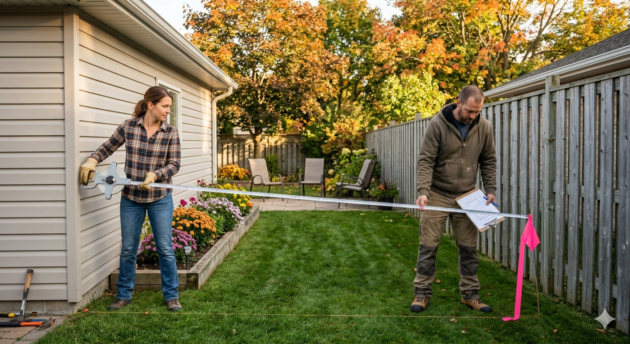
A Backyard Can Look Huge Until the Tape Measure Shows Up
This is where a lot of garden suite dreams get mugged. The sketch looks charming. Everyone starts talking about aging parents, grown kids, rental income, or that magical “little place out back.” Then the tape measure comes out, the lot lines get real, and suddenly the backyard that felt generous starts behaving like it has trust issues.
If you are trying to understand garden suite setbacks in Ontario, this is the part that matters most: setbacks are not some picky zoning side note. They are one of the first things that decide whether your lot can legally and practically handle another dwelling at all. Side yards, rear yards, lot coverage, servicing routes, drainage, septic conflicts, and access all pile into the same conversation. Ignore them, and a nice sketch turns into expensive wallpaper.
Ontario has made it easier to add additional residential units in many situations, and garden suites are part of that broader push. But easier does not mean automatic. You still need a building permit, and the suite still has to satisfy municipal zoning, servicing, and building requirements. In plain English, the province may open the door, but your actual lot still gets the final word.
What setbacks really control
- How wide the suite can be
- How deep it can sit in the yard
- How much room remains for access and maintenance
- Whether the whole site still functions like a property
What usually kills the idea
- Rear yard space that only looked big
- Side yards too tight for a sensible layout
- Lot coverage already used up by existing structures
- Servicing or septic conflicts nobody priced in
What smart owners do first
They check lot fit before they pay for full plans. That sounds less romantic, but it is a lot cheaper than falling in love with a backyard suite that never had a legal place to stand.
Why setbacks are not boring paperwork but the shape of the whole project
A setback is simply the required distance between the building and a lot line. That sounds dry. It is not dry when it chops a big piece out of the only place your suite could go.
For a garden suite, setbacks define the actual buildable envelope. They tell you where the suite can sit, how close it can get to side and rear lot lines, and how much air has to remain around it. Once those distances are applied, your roomy backyard can become surprisingly small. Not because the municipality is being dramatic, but because a second dwelling is a real building with real consequences.
This is one reason pages like Garden Suite Ontario are helpful as a starting point. People often think the big question is whether they are allowed to build a suite at all. In practice, the harder question is whether this specific lot can carry one without turning the site into an awkward puzzle.
Builder truth: “We have lots of backyard” usually means “We have not measured the legal part yet.”
Side yards quietly shrink the width until the plan stops making sense
Side yard setbacks are sneaky because they attack width, and width controls the whole layout. Bedrooms, bathrooms, kitchen wall space, stairs, entry sequence, windows, furniture, and even how cramped the building feels all start with width.
A lot may seem wide enough when you are standing in it. But once you pull in from both side lot lines, work around fences, existing sheds, decks, trees, and maybe a servicing trench route, that “small but comfortable one-bedroom suite” can get skinny in a hurry.
- Narrow buildings create awkward rooms. Nobody wants a living room shaped like a bowling lane.
- Tight side yards make construction harder. Materials, excavation, and repairs all get more annoying.
- Maintenance still matters later. You need room to live with the building, not just squeeze it in once.
That is why an early lot review matters so much. A homeowner we worked with had a property that seemed perfect from the street. Once side yard realities were applied, the plan that looked sensible on paper started feeling like a clever mistake.
Rear yard setbacks are where the “big backyard” story often falls apart
Rear yard space fools people. Open grass always feels more generous than it really is. But rear yard setbacks take their share first, and then the suite itself needs real footprint, circulation, grading, drainage, and enough practical breathing room that the whole property still works.
The problem is not just whether the building physically fits. The problem is whether it fits in a way that feels intentional instead of desperate. A garden suite should not look like the property lost a bet.
| What owners see | What the lot actually offers | Why the plan gets into trouble |
|---|---|---|
| A deep backyard | A reduced buildable area after setbacks | The legal envelope is much smaller than the visual yard |
| Open lawn | Space interrupted by drainage, slopes, trees, or decks | Open space is not the same thing as buildable space |
| A spot for a small unit | A spot for a unit plus access and services | The building itself is only part of the footprint problem |
This is where Can My Lot Support a Garden Suite Ontario? becomes such an important question. It moves you away from the fantasy phase and into the useful phase.
Lot coverage can kill the project even when the setbacks look okay
Sometimes the setbacks are not the obvious villain. Sometimes the property simply already has too much going on. Main house, attached garage, detached garage, sheds, decks, hardscape, covered porches, and now a proposed suite — it all adds up.
This is where people get tripped up. They focus on the empty spot where the suite could sit and forget that the municipality may also care how much of the lot is already occupied by buildings and structures.
Even with recent provincial changes removing some zoning barriers for additional residential units, you still need to look at the site like a whole system. If the lot is already crowded, the suite may be technically imaginable but practically wrong. That is a costly distinction.
And this is also why there is no point diving into Garden Suite Cost Ontario until the lot has passed the basic smell test. Pricing a project that does not fit is a bit like getting upholstery samples for a truck you do not own yet.
Servicing routes are where many “simple backyard units” become expensive
A garden suite is not a decorative shed with better branding. It needs water, wastewater handling, power, heating, ventilation, and often more coordination than people expect. That servicing route from the main house or service point to the suite matters a lot.
If the cleanest building location creates an ugly, expensive, or nearly impossible servicing path, it is not actually the cleanest building location. A suite that looks perfect in the backyard can become the wrong answer once you have to trench around roots, under patios, beside foundations, or through the only sensible access corridor.
That is one reason it helps to think about the mechanical side early, especially if you want a proper year-round unit. Pages like Mechanical Drawings Ontario and HRV / ERV Design Ontario matter because comfort, ventilation, and permit readiness do not magically sort themselves out after the sketch is done.
Septic conflicts can ruin a “perfect location” in one conversation
If the property is on septic, the garden suite conversation gets serious very quickly. You are no longer just fitting a building into a yard. You are negotiating with the septic tank, septic bed, reserve area, grading, and future replacement logic. The ground starts having opinions.
This is where a lot of otherwise promising concepts die. Not because the suite is a bad idea, but because the lot was already committed to doing other important jobs underground.
On rural or semi-rural properties, that is why Garden Suite Septic Requirements Ontario matters so much. And if you are working in Georgian Bay conditions where rock, access, drainage, and septic all like to complicate each other, Septic Systems Georgian Bay is part of the real-world conversation too.
Ontario reality check: the nicest-looking backyard location is sometimes the worst technical location. The lot does not care how good the rendering looked.
Why a nice sketch still means nothing if the lot cannot build it cleanly
This is the part homeowners underestimate. Even if the suite technically fits on a site plan, it still has to be built. Equipment needs access. Workers need room. Materials need a path. Grading still has to move water properly. Snow still needs somewhere to go. The property still has to feel livable after the suite exists.
A good garden suite does not just pass on paper. It feels right on the lot. It leaves enough room to breathe, enough access to maintain, and enough sense that nobody wonders who approved a tiny house wedged into a legal argument.
| Check this first | Why it matters | What happens if you skip it |
|---|---|---|
| Setbacks and lot shape | Defines the true buildable envelope | You draw a suite that never really fit |
| Lot coverage and existing structures | Shows how crowded the property already is | The design works only in denial |
| Servicing path | Reveals trenching and utility complexity | The quote gets ugly late in the process |
| Septic and grading conditions | Protects long-term site function | The “best spot” becomes unbuildable |
| Permit strategy | Keeps the project grounded in approval reality | You waste time redesigning avoidable problems |
Once you are into formal planning, it also helps to understand Zoning Rules for New Homes Ontario and How to Obtain a Building Permit in Ontario. Garden suites are part of the additional-unit conversation, but they are still real permit projects, not backyard shortcuts. Ontario’s own guidance on second units makes that very clear, and the same provincial material also notes that garden suites must meet municipal zoning and servicing requirements.
FAQ: Garden Suite Setbacks Ontario
Do setbacks really stop that many garden suite projects?
Yes. A lot of concepts fall apart at the lot-fit stage because the backyard looked bigger than the legal buildable area actually is. Once you apply side and rear setbacks, plus access and servicing needs, the footprint can shrink fast.
Are setbacks the only thing I need to worry about?
No. Setbacks are only one part of feasibility. Lot coverage, servicing routes, drainage, access, parking impacts, and septic conditions can all be just as important. A suite can fit on paper and still be wrong for the lot.
Can Ontario rules override municipal setbacks completely?
No. Recent Ontario ARU changes removed some barriers such as certain lot coverage and floor space index requirements on some urban serviced lands, but applicable maximum height and minimum setback requirements in local bylaws can still matter. That is why municipal review is still so important.
Why do side yards matter so much?
Because width drives the layout. If the building gets too narrow, room planning becomes awkward quickly. Side yards also affect access for construction, maintenance, servicing, and general comfort around the building.
Why do septic properties get harder?
Because the suite has to share the lot with the septic system and all the rules and practical realities that come with it. The nicest location for the building may already be spoken for underground.
What should I do before I pay for full plans?
Confirm the lot envelope, likely servicing route, any septic conflicts, and the municipal permit path first. That early reality check can save a lot of money and a fair bit of heartbreak.
When the lot works, the project gets better fast
A garden suite can be a smart move. It can create family flexibility, extra income, multigenerational living, or just better use of a property. But the best projects are the ones that start with the lot, not with wishful thinking.
If you are in our part of Ontario and want the builder-side conversation after the feasibility stage, pages like Garden Suite Builder Simcoe County and Garden Suite Builder Collingwood are the next logical stop.
The short version is this: setbacks matter because they tell the truth early. They reveal whether the backyard can actually carry the building, the services, and the life around it. That truth may be annoying, but it is a lot better than drawing a pretty mistake.