Ontario's Plain-English Guide to Custom Home Building📞 705-533-1633 | ☎️ 1-866-868-6606 | ✉️ info@icfhome.ca

ICF Foundation Pros and Cons (Ontario 2026): Honest Guide
Ontario | 2026
Strength | warmth | waterproofing | cost
Honest trade-offs
Part of: Insulated Concrete Forms (ICF) in Ontario – the complete guide
ICF Foundation Pros and Cons (Ontario 2026)
If you are searching ICF foundation pros and cons, you are really trying to answer one question: is an ICF foundation actually worth it, or is it just an expensive way to stack white foam blocks? Fair question. The 2026 answer: an ICF foundation can be one of the best upgrades you will ever make – but only if the details are done right. Here are the real advantages, the real drawbacks, and the common mistakes that turn a great wall system into an expensive lesson.
Quick decision helper: choose ICF if you want a warmer basement, better comfort, and fewer moisture headaches. Stick with conventional if your budget is tight and the basement is truly storage-only (and still detail drainage properly). Avoid ICF only if you cannot get an experienced crew.
1The real pros
2The real cons
3ICF vs conventional
4Mistakes to avoid
What is an ICF foundation?
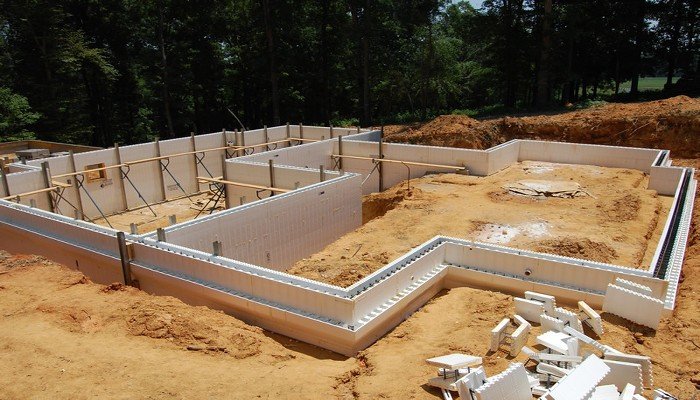
An ICF (insulated concrete form) foundation is a reinforced concrete wall poured inside insulated foam forms that stay in place permanently. Think of it as a concrete wall that comes pre-wrapped in insulation on both sides: you pour once and you are done – structure plus insulation in a single step. That combination matters in Ontario, because our foundations do not just hold the house up. They deal with groundwater, freeze-thaw cycles, humidity swings, and the occasional spring where the lot feels like it is auditioning to be a marsh. For the full picture, start with the ICF complete guide.
The pros of an ICF foundation (what homeowners actually feel)
Most people expect the big “pro” to be insulation. True – but the best benefits show up as comfort, quiet, and fewer basement surprises:
1. Warmth: a warmer basement, better whole-house comfort
A cold basement acts like a giant heat sink. ICF reduces that dramatically. Even if you never finish the basement, you often notice fewer cold floors on the main level and less of that drafty winter feeling.
2. Moisture: far better resilience (when detailed right)
Concrete is not afraid of moisture, but drywall and carpet are. An ICF wall with proper exterior waterproofing and drainage stays more stable – fewer musty smells and fewer “why is this corner wet?” moments.
3. Strength: a stronger wall assembly
This is a reinforced concrete wall. It handles backfill loads well, resists racking, and gives a very solid base for the rest of the home. On tougher soils, that strength is peace of mind, not theory.
4. Quiet: a quieter interior
Basements can be echo chambers. ICF reduces sound transmission and the hollow-wall effect. If you are finishing the basement as living space, this is a bigger win than most people expect.
The short version: ICF gives you a foundation that feels like a conditioned part of the home, not a cold utility zone you tolerate. In Ontario’s climate, a well-insulated ICF foundation typically contributes to 30 to 60% lower heating and cooling energy across the whole envelope. Dig into whether it pays off in our is an ICF home worth it guide.
Ontario reality check: foundations fail for boring reasons – bad drainage, rushed waterproofing, sloppy grading. ICF helps, but it does not replace good site work.
The cons of an ICF foundation (the stuff that bites people)
ICF is not magic – it is a system. The downsides show up when expectations are wrong or details get skipped:
1. Higher upfront cost (usually)
You pay for forms, concrete, steel, bracing, and skilled labour. Versus a basic poured wall with interior framing and batt insulation, ICF often costs more at the foundation stage – typically about $8,000 to $18,000 more for the wall. See ICF foundation cost for the full breakdown.
2. You need the right crew
A great ICF crew makes it look easy. An inexperienced one can make it a foam-sculpture contest. Alignment, bracing, rebar, consolidation, and pour strategy all matter. This is not where you want someone learning on your house.
3. Finishing details take planning
Ledgers, service runs, exterior cladding transitions, and window wells need forethought. Totally doable – just plan it early. “We’ll figure it out later” is the most expensive sentence in construction.
4. Waterproofing mistakes are harder to fix later
Any foundation leaks if waterproofing and drainage are wrong. With ICF, get the exterior strategy dialled in from day one – fixing it later usually means excavation, and excavation is never a fun surprise.
Builder advice: most ICF “cons” are actually planning issues. The system works – people skip steps.
Building new with ICF? Don’t leave the HST rebate on the table
A new ICF home – foundation included – qualifies for Ontario’s enhanced HST rebate, up to $130,000. It rarely gets mentioned next to a foundation quote, and the window is closing.
Ontario HST Rebate | Deadline April 1, 2027
You Could Lose Up To $106,000 If You Don’t Start Before April 2027
Ontario’s enhanced HST rebate puts up to $130,000 back in a new-home builder’s pocket – but only if your build contract is signed before April 1, 2027. Miss that window and you fall back to the standard $24,000 rebate. On a typical ICF build, that’s a six-figure swing – so it belongs in your budget from day one.
$0
Contract signed before Apr 1, 2027
$24,000
Signed after the deadline
$900,000
Miss the deadline and you forfeit
$0
Estimate based on Ontario’s 2026 enhanced HST rebate (Bill 114). Final eligibility for a custom / owner-built home is confirmed by a licensed rebate specialist – that’s what the free check is for. Full HST rebate details
The enhanced HST rebate applies to new home construction. Final eligibility is confirmed by a licensed rebate specialist - use the HST rebate calculator to check your number.
ICF vs conventional foundation: the honest comparison
If someone pitches ICF as "the only acceptable foundation," ignore the sales tone and look at your goals. A properly built conventional foundation can perform well. The real question is how you plan to insulate it, keep it dry, and keep it from becoming the cold, damp zone nobody wants to use.
| Category | ICF foundation | Conventional poured wall |
|---|---|---|
| Thermal performance | High - continuous insulation, fewer cold spots | Depends on the interior/exterior insulation strategy |
| Comfort | Basement feels conditioned sooner | Often colder unless insulation is done well |
| Moisture resilience | Very good with proper waterproofing and drainage | Also good if waterproofing and drainage are done right |
| Speed | Fast with an experienced crew | Fast, common, widely available trades |
| Cost | Often higher up front (about $8K-$18K for the wall) | Often lower up front, but may add cost in insulation and finishing |
If you are still deciding between a basement and other approaches, read foundation types in Ontario. A great foundation is the one that matches the site, the budget, and how you will actually use the space - weigh the full cost picture in our ICF vs wood frame comparison.
The hidden pro nobody tells you: fewer future fixes
A lot of homeowners judge foundations like shoes: "Why pay more? They both keep the house off the ground." But foundations are not fashion - they are risk management. Here is where ICF quietly wins in Ontario: done right, it reduces the odds of the most annoying long-term issues - cold basements, condensation, musty smells, and the "we finished the basement and now we fight humidity forever" saga. When you start with a better thermal and moisture foundation, everything above it behaves better. (For the government's plain-English take on envelope heat loss, see Natural Resources Canada: Keeping the heat.)
What makes an ICF foundation succeed (the 2026 checklist)
The best ICF foundations are not lucky - they are planned. Make sure these are on the plan and on someone's checklist, not just in someone's head:
- 1. Correct footing size and bearing. Footings are where the load meets the soil. Get the bearing and width right - do not treat it as an afterthought. Quick tool: concrete footings cost calculator.
- 2. A waterproofing and drainage plan. Waterproofing, dimple membrane, drain tile, stone, filter fabric, sump strategy, and final grading must work together. Most foundation problems are drainage problems wearing a trench coat.
- 3. A pour plan. Lift heights, vibrator use, consolidation, and how the crew keeps walls straight. This is where "experienced" stops being a buzzword.
- 4. Code compliance and inspection coordination. The foundation still meets the Ontario Building Code and local inspections - check specifics in the 2026 OBC guide and Code Navigator.
Common mistakes with ICF foundations (and how to avoid them)
- Skipping soil and drainage planning. ICF does not stop water from wanting to be where it should not be. Drainage wins.
- Under-bracing or rushing the pour. "It'll be fine" is not a pour strategy. Straight walls require a plan.
- Bad transitions. Sill plates, rim areas, window wells, and walkouts are where leaks love to start.
- Assuming finishing is automatic. Plan attachment points, ledger details, and service routes early.
- Cheap waterproofing decisions. Saving a few hundred dollars below grade can cost thousands later.
Simple rule: the cheapest foundation is the one you never have to dig up again.
Want a straight answer on whether ICF makes sense for your build?
We have built ICF homes since 1995 - long enough to tell you honestly when it pays back and when conventional is smarter. Tarion-backed. Send your plans or book a call. Call 705-533-1633.
Related ICF guides
- Insulated Concrete Forms (ICF): the complete guide - the hub for everything ICF.
- ICF foundation cost in Ontario - the full pricing breakdown.
- Is an ICF home worth it? - the payback math.
- ICF vs wood / stick frame - the wall-system comparison.
- ICF cost calculator - estimate your project.
Frequently asked questions
Is an ICF foundation worth the extra cost in Ontario?
Often, yes - especially if you plan to finish the basement, want better comfort, or have a site where moisture management matters. The "worth it" calculation is not only the foundation invoice; it is how much you spend later warming a cold basement, fixing humidity, or correcting insulation shortcuts. Compare total performance (comfort plus durability plus fewer future fixes) and ICF usually looks better than it first appears.
What are the biggest pros of an ICF foundation?
Warmer basement temperatures, better main-floor comfort, a stronger wall assembly, and improved moisture resilience when waterproofing and drainage are done right. Many homeowners also notice a quieter basement and fewer condensation issues. ICF gives you structure and insulation together, so the wall behaves like part of the conditioned home.
What are the biggest cons of an ICF foundation?
Higher upfront cost (about $8,000 to $18,000 more for the wall), the need for an experienced ICF crew, and the importance of planning finishing details early. Waterproofing and drainage still must be done properly - ICF does not auto-solve water problems. None are dealbreakers, but ICF is not the place to experiment with low-bid labour.
Does ICF eliminate the need for exterior waterproofing?
No. ICF is a great wall system, but water management is still water management. Your foundation needs a complete strategy: waterproofing or dampproofing appropriate for the site, drainage membrane if used, weeping tile, clean stone, filter fabric, a sump strategy, and final grading that moves water away from the house.
Is an ICF foundation warmer than a conventional basement?
Almost always, yes - the insulation is integrated and continuous, reducing cold spots and heat loss through the wall. A conventional basement can be insulated well too, but it depends more on follow-through: interior framing, batt quality, air sealing, condensation control, and avoiding thermal bridges. ICF makes "good" easier to achieve consistently.
How much can an ICF foundation save on heating?
As part of the whole envelope, a well-insulated ICF home in Ontario typically uses 30 to 60% less heating and cooling energy than comparable wood frame, and a warmer basement reduces whole-house heat loss. The exact saving depends on the rest of the build - above-grade walls, windows, air sealing, and mechanicals.
How long does an ICF foundation take to build?
With an experienced crew and a ready site, ICF foundations move quickly - form stacking, bracing, steel, and pour happen efficiently. The schedule is usually driven by excavation readiness, weather windows, inspections, and the pour plan. The biggest timeline killers are site conditions (water, rock), late design changes, and waiting on approvals or trades.
Can you finish the inside of an ICF basement easily?
Yes. Finishing is straightforward, but plan for electrical and plumbing routes and attachment points. Many systems have fastening strips built in, making drywall easy. The key is the overall basement system - ventilation, humidity control, and slab insulation or vapour control. Done properly, an ICF basement feels like main-floor living space.
Is ICF worth it if I am not going to finish the basement?
It can still be, because the comfort and energy benefits show up even with an unfinished basement - warmer floors above, less whole-house heat loss, and a drier, more stable space. If the basement is truly storage-only and the budget is very tight, a well-insulated conventional wall with excellent drainage may be the more economical call.
What is the best foundation if I am debating slab-on-grade vs basement?
It depends on how you will use the space, the lot, and your budget priorities. Basements offer storage and potential living space but need good drainage and waterproofing. Slab-on-grade can simplify some moisture risks and remove stairs but needs proper frost and insulation detailing. Compare both honestly and factor in your site and lifestyle.
Disclaimer: This is an educational overview for 2026 and not engineering advice. ICF performance and cost depend on your design, site, soil, and builder. Always confirm waterproofing, drainage, and structural details with your builder and the Ontario Building Code.
Latest posts
Fresh guides, calculators & real-world advice
More from BuildersOntario - scroll to explore.
Loading latest posts...
Tip: shift + mousewheel works great

Very informative! To start a project in the construction of buildings and houses, it is very important to consider the type and bearing capacity of the soil to where it is built including the frost, settling of soil and water. It was perfect for me what I started my project with the experts.
Excellent article on ICF pros/con of using ICF block. It’s pretty much a no brainer to use ICF block even with the initial material cost. The benefits outway the extra cost.
Does insulated concrete forms move in the winter months due to frost
No.
What about thermal bridging with icf
Only ICFs with metal webs.
This statement is false. PolycreteUSA has steel. There is zero I repeat zero thermal bridging and we have steel fastener strips and steel ties. Our fasteners are 1 1/4″ inside the EPS. The hinged system is welded to the fasting strip that is every foot in the ICF.then the steel ties loop the hinge creating a foldable ICF and the strongest ICF in the industry. With zero infiltration, 4 hour fire rating, pre cut to your plans making it 4 times faster to install.
Homework is always best done prior to making something up.
VP PolycreteUSA
All statements here are backed up with test results that can be found on our website.
ICF Foundation Pros and Cons
a more appropriate title would be:
“Why you should do ICF”
or
“ICF Foundation Pros”
Can the polystyrene be made out of recycled material, polystyrene or another plastic?
How do you attach stone to the exterior of an ICF home? Also, how do the floor joists for the first floor get attached to the concrete when the forms extend up to the second floor?
Best to fix joists to ledger boards attached with cast-in bolts / screwed rod. Plenty of examples on Youtube.
The problem with wood-frame homes is that they have insulation gaps and thermal bridging, resulting in energy loss. ICFs are so airtight that leaks simply don’t occur. In fact, this groundbreaking study (which we like to cite quite a bit on this blog!) found that an ICF wall had 60% less energy loss than a wood-framed wall.. this is a great relief for us!! This Earthmovingandcivil.co.nz is very useful and its related to what you have actually mentioned here
I loved how you mentioned that they are faster to build. My husband and I were wondering if we should have ICF for our home. I really appreciate you helping me learn more about the benefits of ICF!
I built an ICF home in 2005. I did have a professional team install it and they also installed the floor joist and Plywood. This cut time and yes it may have cost a little more but the savings were quite apparent.
I would recommend anyone at least look into this as it is very energy efficient and quiet. Last thing when you had any kind of storm high winds etc you could barely notice what was happening.
How does using ICF foundation affect an architects plans/drawings if they designed foundation using poured concrete? My architect wants to charge me more money to redesign plans using ICF in my foundation. My foundation is only a crawl space.
I would love to know the answer to that because architect shouldn’t charge more for ICF. Are they doing it because you already had a plan and now you are changing it because ICF walls are thicker so the math is all off. So essentially your architect has to redo the drawings if one day you told them that you are changing foundation from poured concrete to ICF
i’m in the same boat and i don’t see any answer here 4 this question BUT i get it that the icf method makes a much thicker wall. so the fndn has to be made a bit smaller (or the typical wood frame superstructure somehow larger) if the perimeter wall frame wants to end up flush OR close to flush w/ the outside of the icf. it willbe alot cheaper to shrink the fndn than grow the upper cuz the whole floorplan needs 2 B redrawn if the area gets bigger
I will also have to pay for new foundation drawings using this shallow foundation system based on soil test and load bearings. Just at the beginning of this project. Hopefully it won’t take long for drawings and materials
Can you tell me how yours worked out and if you’re happy you went this route rather than a traditional dig and pour
I have been trying to find a way to attach to an ICF wall. It seems to me one of the first on the cons list for this product would be the difficulty of hanging or securing something to this type of wall.
Can an ICf Foundation be used for addition to an existing building?
Yes.
Do you have information or a how-to on installing on bedrock, Scribing.
Is the insulation exposed above ground for a walkout basement when using ICF foundations
we are building an addition along with a large garage and would like pricing for this type of foundation. i can provide you architectual drawings of the reno but would need an email address to send them . Can you please contact me as soon as possible as we are in the stages of the permits right now and would like to get a few quotes on the foundation
thanks
Buying a home with an ICF basement, partial walk-out.
1. How should it have been finished on the exterior prior to pushing the earth up against it on the below-grade side? Does it need a finish to keep critters or moisture from messing with it underground?
2. On the portion that is exposed (the walk-out side) how do I add stone or stone facing to this? How do I attach cement board? Is adhesive OK or does it need fasteners through the styrofoam into the concrete?
3. On the interior, how do you attach drywall or other sheet materials? As above, is adhesive sufficient or does it require fasteners through the foam into the concrete?
Thanks!
My ICF home in Ontario, is about 18 years old. I’m currently experiencing some issues with heat loss and moisture in one outside corner of the walls. Anyone have any tips or have experience with this? I’d love to bounce some thoughts before I start tearing into things.
Which area are you in? Pictures? More info?
While ICFs come at a higher initial cost, they offer long-term advantages like improved energy efficiency, fire resistance, and reduced risk of leaks and cracks. Click here – https://www.augustafencingcontractors.com/
ICF foundations represent a significant upgrade for homeowners prioritizing energy savings and structural resilience. The system effectively transforms a basement into a high-performance “lower level” that is as comfortable as the rest of the home. See more here at https://www.cedarcityfencing.com/