Ontario's Plain-English Guide to Custom Home Building📞 705-533-1633 | ☎️ 1-866-868-6606 | ✉️ info@icfhome.ca
Paying For A Renovation With A Line Of Credit: Read This Before You Sign!

Renovation money
Ontario, November 2026
A builder’s view, not a banker’s
Paying For A Renovation With A Line Of Credit: Read This Before You Sign!
A line of credit is the handiest tool there is for paying for a renovation, and the easiest one to hurt yourself with. Here is how it works, what it costs right now, and the mistakes I have watched homeowners make with one.
The short version: borrow against the house if you can, because it is cheaper. Size the line for the quote plus a cushion, not the quote alone. Draw money only when work is finished, hold back your 10%, and pay down principal from the first month. If you only ever make the minimum payment, you will still owe the full amount when the new kitchen is ready for its second renovation.
Let Me Lower Your Expectations First
I have been building and renovating houses since 1979, and in all that time I have met very few people who paid for a big renovation out of a savings account. Most borrow. There is no shame in it. I just want you to borrow with your eyes open.
So here is the honest part up front. Your renovation will cost more than the first number you hear. The interest rate on your line of credit will not sit still. And the bank will cheerfully let you carry the balance for the rest of your natural life, because that is how the bank eats.
None of that makes a line of credit a bad idea. It is a good tool. So is a table saw, and I still count my fingers every night.
One more thing. I build houses. I am not a banker or a financial advisor, so take this as a builder telling you what he has seen on real jobs, and talk to your own lender about your own numbers.
Two Kinds Of Line, Two Very Different Prices
A line of credit lets you borrow up to a limit, pay it back and borrow again. You pay interest only on what you have actually taken out. That suits a renovation, because nobody pays for a renovation in one cheque. You pay in stages, as the work gets done.
There are two kinds, and the difference is what the lender can take from you if it all goes sideways.
| Home equity line (HELOC) | Unsecured personal line | |
|---|---|---|
| What backs it | Your house | Your good name and your pay stub |
| Rate | Lower. Often prime plus a small margin | Higher, sometimes by several points |
| Limit | Large. Up to 65% of the home’s value | Smaller. Set by income, debts and credit score |
| Setup | Slower. Appraisal and legal fees are common | Fast. Mostly paperwork |
| Suits | Kitchens, additions, whole-house jobs | The furnace that quit in January, a leaking roof |
The federal consumer agency spells out the limits. A HELOC on its own can go up to 65% of what your home is worth. Add it to your mortgage and the two together generally cannot pass 80%. The Financial Consumer Agency of Canada’s HELOC guide walks through the arithmetic, and it is worth ten minutes before you sit down with a lender.
Most lenders sell both kinds, and it costs nothing to compare. Innovation Federal Credit Union, for one, sets out its secured and unsecured lines side by side, and you can find more details on its line of credit page. Read two or three lenders the same way. They are not all the same, whatever the brochures say.
The Rate Is Not Nailed Down
Nearly every line of credit in Canada has a variable rate tied to the lender’s prime rate. When the Bank of Canada moves, prime follows, usually by the next morning. Bankers are slow about many things. This is not one of them.
And it just moved. On October 28, 2026 the Bank of Canada raised its policy rate to 2.5%, the first increase since July 2023. The big banks raised prime to 4.70% the next day. The Bank also said it may need to go higher, and its next announcement is December 9.
Here is what that means in lumber money. Every quarter point adds about $125 a year in interest on a $50,000 balance. A full point is $500 a year. That will not sink you, but a renovation can run four or six months and the paying-off part runs for years, so the rate you start with is not the rate you finish with.
Rule of thumb
Before you borrow, work out the payment at one full point higher than today’s rate. If that number makes you wince, borrow less.
The Interest-Only Trap!
Many HELOCs let you pay only the interest each month. While the kitchen is torn apart and you are eating toast over the laundry sink, that feels like a kindness. It is, for a while.
The catch is simple. Pay only the interest and the balance never goes down. Not slowly. Never.
Take $50,000 at 5.70%, which is today’s prime plus one point. Your lender’s margin will differ, but it makes a fair example.
| What you pay each month | When it is paid off | Interest you pay along the way |
|---|---|---|
| $237.50 (interest only) | Never | $2,850 a year, every year |
| $500 | About 11 years, 4 months | About $18,000 |
| $1,000 | About 4 years, 9 months | About $7,200 |
Assumes the rate stays at 5.70% the whole time, which it will not. Treat these as rough figures.
I have seen people still paying for a bathroom after the grout went grey. Pick a payoff date before the first draw and set the automatic payment to match. Some lenders will also let you lock part of the balance into a fixed rate with a set payment, which is worth asking about once the work is finished.
The Quote Is Not The Number You Borrow
This is where homeowners go wrong most often. They get a quote for $60,000, arrange a $60,000 line, and feel organized. Then we open the wall.
Old houses keep secrets. Behind the plaster there is wiring from another century, a joist somebody notched for a drain pipe in 1962, or a bit of rot that has been quietly enjoying itself for years. None of it was in the quote, because nobody could see it.
So carry a cushion. On a renovation I tell people 10% to 20% on top of the contract price, and more for an older house. On that $60,000 job, that is $6,000 to $12,000 you hope not to spend. I have a full page on how much contingency to hold and when to spend it.
Then add the costs that are not in a contractor’s price at all. If the job needs a permit, there are permit fees and usually drawings, and you can read how the Ontario building permit process works before you budget for it. Add the appraisal and legal fees for setting up the HELOC itself.
If the line covers the quote but not the cushion, cut the scope before you start. It is far cheaper to drop the heated towel bar on paper than to run out of money with the tub sitting in the driveway.
Draw The Money When The Work Is Done, Not Before
A line of credit charges interest from the day you take the money out. So take it out as late as you honestly can.
That means a written contract with payments tied to finished stages: deposit, rough-in complete, drywall done, final. Not dates on a calendar. Stages you can walk through and look at. Here is what a good construction contract should include, payment schedule and all.
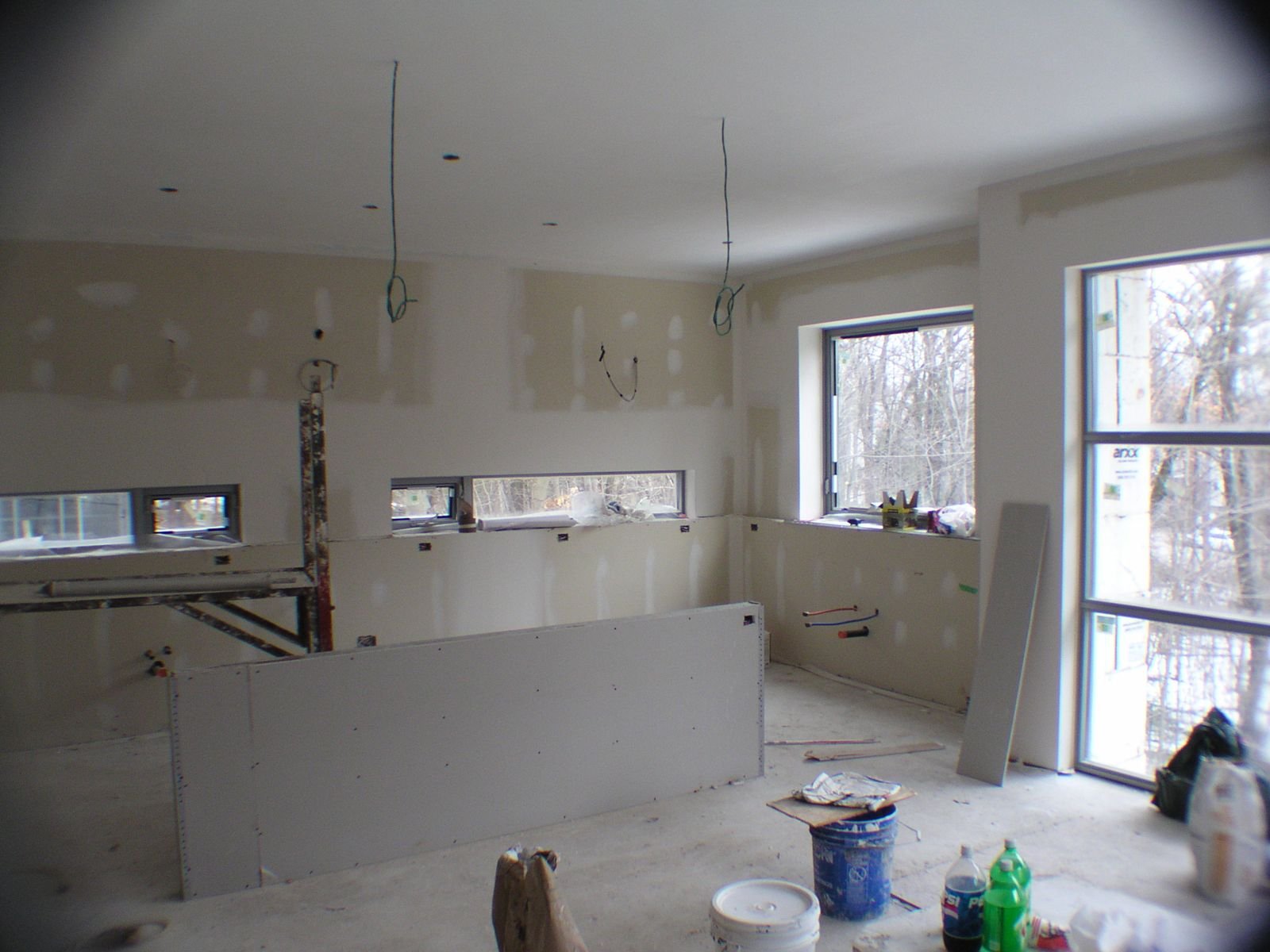
On a $50,000 job spread over four months, drawing in four stages instead of taking it all on day one saves you roughly $350 in interest. Not a fortune, but it pays for the nice faucet.
Ontario law also gives you a second reason to hang on to some of the money. Under the Construction Act you are expected to hold back 10% of every payment until the lien period has run out. It protects you if your contractor does not pay his trades or suppliers, because they can lien your house, not his. My page on the Construction Act and the 10% holdback explains how long to hold it and when to release it.
And if a contractor wants half the job in cash before a single tool comes off the truck, you do not have a financing problem. You have a contractor problem. Have a look at these contractor red flags before you hand over a dime.
Six Rules Of Thumb
- Borrow for the quote plus the cushion. If the cushion does not fit, shrink the job.
- Test the payment at one point higher. Rates are going up at the moment, not down.
- Never pay for work that is not done. Draw at each finished stage and keep the 10% holdback.
- Pay principal from month one. Even $200 over the minimum means the balance is moving in the right direction.
- Finish the job, then close the tap. The room left on the line after the renovation is not a furniture budget. Ask the lender to lower the limit if you do not trust yourself. I would not trust myself.
- Keep every invoice. You will want them for warranty claims, for rebates, and for the day you sell.
When A Line Of Credit Is The Wrong Tool
If the job is one fixed price and one short stretch of work, like a new roof at $18,000, a fixed-rate personal loan can be the better fit. You get a set payment and a date when it ends. No temptation, no surprises.
If you have the savings, use the savings. Nothing beats an interest rate of zero.
And if the renovation only works on paper when you assume rates stay low and nothing goes wrong, it is too big. Rates are rising and something always goes wrong. That is not pessimism. That is 47 years of opening walls.
Questions I Get Asked
Can I deduct the interest at tax time?
Generally no, not on your own home. The Canada Revenue Agency allows an interest deduction when the borrowed money is used to earn income, such as fixing up a rental unit. If you rent out part of your house, ask an accountant how the rules apply to your share.
How much can I borrow on a HELOC?
Up to 65% of your home’s value on the HELOC itself, and generally no more than 80% once you add your mortgage. On a $700,000 house with $350,000 left on the mortgage, 80% is $560,000, which leaves room for a line of up to $210,000. Whether you should borrow that much is another question entirely.
Should I arrange the line before I get quotes or after?
Get rough quotes first so you know the size of the job, then arrange the line, then sign the contract. A HELOC can take a few weeks because of the appraisal and the lawyer. Do not book the demolition crew for Monday and visit the bank on Friday.
Does the contractor need to know how I am paying?
He needs to know the money is arranged and when each payment will come. A good contractor will ask. Nobody wants to be halfway through a kitchen when the financing falls apart, least of all the fellow who bought the cabinets.
Know What The Job Should Cost Before You Borrow For It
The best protection against borrowing too much is knowing the real price of the work. Run your project through our calculators first, and read the cost guide for your kind of renovation. Then walk into the lender’s office with a number you can defend. Measure twice, borrow once.
General information only, written from a builder’s side of the table. Rates and lending rules change, so confirm the details with your own lender before you borrow.
Building in Georgian Bay or Simcoe County?
Talk to a builder who has done it 250+ times.
BuildersOntario.com is run by ICFHome.ca — ICF custom-home specialists since 1995. Straight answers on budget, permits, and ICF. No pressure.
Get a Ballpark Estimate →Book a 30-Min Call