Ontario's Plain-English Guide to Custom Home Building📞 705-533-1633 | ☎️ 1-866-868-6606 | ✉️ info@icfhome.ca

Environmental Red Flags When Buying Land in Ontario: Oil Tanks & Contamination
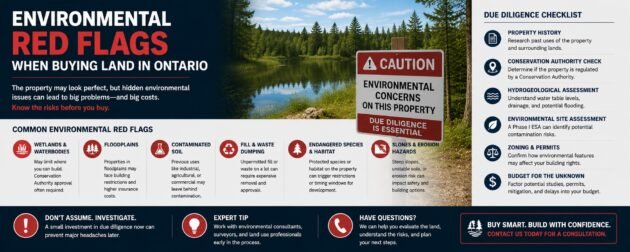
Environmental red flags
Ontario 2026
Oil tanks & contamination
Environmental Red Flags When Buying Land in Ontario: Oil Tanks & Contamination
Here’s a rule that catches buyers off guard: when you buy a property, the contamination comes with it. A buried oil tank, an old farm fuel depot, a former junkyard or gas station, or a quiet dump can leave soil and groundwater polluted – and once you own it, the cleanup is your bill, often five or six figures. The good news: these risks are usually spottable, and there’s a standard tool to confirm them before you commit. Here’s how to read the red flags, what a Phase 1 ESA is, the buried-oil-tank rules, and the conditions that protect you. From 45 years building across Simcoe County and Georgian Bay.
Why this matters: the cleanup is the buyer’s problem
Contamination doesn’t stay with the seller. In general, when a property is purchased, any contamination present becomes the new owner’s responsibility, and the associated cleanup costs are usually borne by the buyer. That’s why environmental due diligence isn’t paranoia on a rural lot – it’s basic protection. A problem you spot before closing is a negotiation chip or a reason to walk. The same problem found after closing is a bill with your name on it.
The red flags to look for on a walk-around
Signs of a buried oil tank
- Vent or fill pipes sticking out of the ground or a wall, heading down
- Copper feeder lines coming out of the foundation
- A sunken patch of lawn, or a strip where the grass is dead or oddly green
- An old oil furnace in the house, or a disconnected one
Other contamination tells
- A former gas station, auto shop, or junkyard on or next to the lot
- Farm fuel storage – bulk diesel/gas tanks, a fuel shed
- An old dump or fill area, buried debris, or rusting drums
- Stained soil, an oily sheen, or chemical smells
If you see any of these, don’t talk yourself out of it because the view is nice. Treat it as a serious due-diligence item: ask the seller for history, get an environmental opinion, and put a protective condition in the offer before you commit.
The two books that take you from lot to keys
Buy a clean, buildable lot – then pull the permit yourself. Each $29.99, or get both below and save.
Before you buy – start here
The Ontario Lot-Buying Bible
Prove a lot is buildable – before you spend a dollar.
$200+ of pro advice$29.99one-time
The 28-page step-by-step: the environmental red flags, legal-lot and zoning, the invisible site-cost budget, septic and well feasibility, easements, financing and the HST rebate – plus printable worksheets and offer-condition clauses.
- The Phase 1 environmental red flags chapter and what to ask
- Offer-condition clauses, including an environmental condition
- The 10-minute go/no-go test and printable scorecard
- Bonus chapters: DIY trades, wells, easements, negotiation
30-day money-back guarantee.
Get the Lot Bible – $29.99 →
Secure checkout – download in 2 minutes – yours forever
After you buy
The Ontario Building Permit Bible
Pull your permit yourself – without the guesswork.
$10,000$29.99one-time
Everything a builder does to coordinate a permit – the order of operations, the complete-application checklist that keeps it from bouncing, real fees, who to hire, and how to never fail an inspection.
- The complete-application checklist, so the file doesn’t bounce
- Real 2026 permit fees and development charges
- Who to hire to draw it, in what order, and what to pay
- How to never fail an inspection – and the costliest mistakes
30-day money-back guarantee.
Get the Permit Bible – $29.99 →
Secure checkout – download in 2 minutes – yours forever
Buying a lot and building on it? Get both Bibles.
The complete journey – prove the lot is buildable, then pull the permit without the guesswork.
Before you buy
The Ontario Lot-Buying Bible
Prove a lot is buildable – and what it will really cost – before you spend a dollar.
$29.99 on its own
+
After you buy
The Ontario Building Permit Bible
Pull your Ontario building permit yourself – the order of operations, the checklist, and how to never fail an inspection.
$29.99 on its own
$59.98 Both for $49.99
Get both Bibles →
Buried oil tanks: the rules and the costs
Old fuel-oil tanks are the most common rural environmental surprise, partly because so many are undocumented – the TSSA generally did not register private underground fuel tanks before 1990, or fuel-oil tanks before May 2002, so “there’s no record of a tank” does not mean there isn’t one.
- Removal is a TSSA job. An underground oil tank must be removed by a TSSA-registered fuel-oil contractor – ask for their registration number. And when a tank comes out, the surrounding soil must be assessed and any contamination cleaned.
- Old tanks can’t be filled. Ontario rules require removal of unused underground tanks, and a fuel supplier generally won’t fill a tank that’s over 25 years old or of unknown age – so an old tank can leave a home unable to get heating oil.
- The leak is the real cost. Removing an empty, intact tank is one thing; remediating contaminated soil and groundwater under and around a leaking one is where the five- and six-figure bills come from.
| Item | Rough 2026 cost | Notes |
|---|---|---|
| Remove an aboveground tank | ~$450 – $1,500 | Simpler; still use a registered contractor. |
| Remove a buried (underground) tank | ~$2,500 – $5,000 | Typical intact steel tank, plus soil assessment. |
| Soil/groundwater remediation (if it leaked) | Can run to tens of thousands+ | The unknown that makes a buried tank dangerous to inherit. |
Something looks off on a lot? Send it to us before you sign.
We’ve walked a lot of rural properties. We’ll flag the environmental tells – a likely buried tank, a former fuel or industrial use, a suspect dump – tell you what to have checked and conditioned, and whether it’s a chip, a Phase 1, or a walk. Quick paid consult: we scope it on a call and send a secure payment link, so you only pay once you know what you are getting. (We’re builders, not environmental engineers – we’ll tell you when to bring one in.)
What a Phase 1 ESA actually is
A Phase 1 Environmental Site Assessment is the standard first step to confirm whether a property is likely contaminated. Importantly, a Phase 1 involves no digging or sampling – it’s a records-and-eyes review:
- A records review of past uses of the site and neighbouring properties
- A site visit to look for visual evidence (a buried tank, staining, drums, fill)
- Interviews where useful, then a report with conclusions
If the Phase 1 flags a real concern, a Phase 2 (which does involve soil/groundwater sampling) confirms whether contamination is actually present and how bad.
| Step | Rough 2026 cost | What it does |
|---|---|---|
| Phase 1 ESA | ~$3,000 – $5,000 | Records + site visit; identifies likely concerns. No sampling. |
| Phase 2 ESA | ~$7,000 – $60,000+ | Soil/groundwater sampling to confirm contamination and extent. |
When to get one: a Phase 1 is worth it whenever there’s any history of fuel, industrial, agricultural, or waste use on or near the lot – or whenever a red flag turns up on your walk-around. Lenders sometimes require one too.
Don’t forget the well water
On a rural lot your drinking water comes from a well, and contamination doesn’t have to be on your own land to reach it. Point sources to ask about include nearby landfills, leaking fuel tanks, leaking septic systems, and past spills. Make water-quality testing a condition of any offer on a well lot, and look up the area’s groundwater and well history. More in our septic & well checks guide.
Lot comes back clean? We’ll design and build it.
Once the environmental side checks out, we design the permit-ready set, sort the approvals and servicing, and build the home – with our own site-work crew getting the lot ready first.
Your environmental due-diligence checklist
- Walk the lot for buried-tank tells and signs of past fuel, industrial, or dump use
- Ask the seller about any tanks, fuel storage, or past uses – get it in writing
- If anything is suspect, get a Phase 1 ESA (and a Phase 2 if it flags a concern)
- Any tank work goes to a TSSA-registered fuel-oil contractor, with soil assessed after removal
- Make well water-quality testing a condition on a well lot
- Put an environmental condition in your offer protecting you from contamination
- Have your lawyer handle disclosure and liability before you waive conditions
Related guides on this site
Land contamination & oil tanks in Ontario: frequently asked questions
Who pays to clean up contamination on land I buy?
Generally the new owner. When a property is purchased, any contamination present typically becomes the buyer’s responsibility, and the cleanup costs are usually borne by the new owner rather than the seller. That is exactly why environmental due diligence matters before you close – a problem you identify in advance is a reason to renegotiate, require the seller to remediate, or walk away, while the same problem discovered after closing becomes your bill, which for soil and groundwater remediation can run well into five or six figures. Put an environmental condition in your offer and have your lawyer handle disclosure and liability before you waive conditions.
How do I tell if a property has a buried oil tank?
Look for the tells on a walk-around. Vent or fill pipes sticking out of the ground or a wall and heading downward, copper feeder lines coming out of the foundation, and a sunken patch of lawn or a strip where the grass is dead or unusually green can all point to a buried tank and possible leakage. An old or disconnected oil furnace in the house is another clue. Records are not reliable here, because the TSSA generally did not register private underground fuel tanks before 1990 or fuel-oil tanks before May 2002, so the absence of a record does not mean there is no tank. If you suspect one, get a professional opinion and a Phase 1 assessment before you commit.
What is a Phase 1 Environmental Site Assessment?
A Phase 1 ESA is the standard first step to determine whether a property is likely contaminated, and it involves no digging or sampling. It consists of a records review of past uses of the site and neighbouring properties, a site visit to look for visual evidence such as a buried tank, staining, or buried debris, interviews where useful, and a report with conclusions. If the Phase 1 identifies a real concern, a Phase 2 ESA follows, and that one does involve soil and groundwater sampling to confirm whether contamination is present and how extensive it is. A Phase 1 is worth getting whenever there is any history of fuel, industrial, agricultural, or waste use on or near the lot.
How much does a Phase 1 ESA cost in Ontario?
A Phase 1 Environmental Site Assessment commonly costs roughly $3,000 to $5,000, since it is a records-and-site-visit review without any sampling. If it flags a concern and you proceed to a Phase 2, which involves drilling and laboratory testing of soil and groundwater, the cost rises substantially and can range from about $7,000 to $60,000 or more depending on the size of the site and the seriousness of the issues. These are planning ranges that vary by property and consultant. Compared to inheriting a contaminated site, a Phase 1 is inexpensive insurance, and lenders sometimes require one as a condition of financing.
Do I have to remove an old buried oil tank?
Often yes. Ontario rules require the removal of unused underground storage tanks, and a fuel supplier generally will not fill a tank that is over 25 years old or of unknown age, which can leave a home unable to get heating oil until the tank situation is resolved. Removal must be done by a TSSA-registered fuel-oil contractor – ask for their registration number – and once the tank is out, the surrounding soil must be assessed for contamination and any contamination cleaned up. Removing an empty, intact tank is relatively affordable, but if the tank has leaked, remediating the soil and groundwater is where the cost can climb steeply.
How much does buried oil tank removal cost?
Removing an aboveground tank is relatively inexpensive, often in the range of a few hundred to about $1,500, while removing a typical buried steel tank commonly runs around $2,500 to $5,000 including the required soil assessment. The figure that matters most, though, is what happens if the tank has leaked: remediating contaminated soil and groundwater can run into the tens of thousands or more, depending on how far the contamination has spread. That uncertainty is why a buried tank is risky to inherit, and why you want it identified, removed, and the soil cleared before you take on the property, ideally as a seller obligation negotiated into the deal.
Should I get a Phase 1 ESA before buying rural land?
It is strongly worth it whenever there is any sign or history of fuel, industrial, agricultural, or waste activity on or near the lot, or whenever a red flag turns up on your walk-around such as a possible buried tank, an old gas station or junkyard nearby, farm fuel storage, or a suspected dump. For a clean parcel with no history and no visible concerns, you may decide it is not necessary, but the cost of a Phase 1 is small next to the cost of inheriting contamination you did not know about. At minimum, ask the seller for the property’s history in writing, condition the offer on no evidence of contamination, and bring in an environmental professional if anything looks off.
Note: general guidance, not legal, environmental, or engineering advice. Contamination, liability, and tank rules turn on the specific property and current regulations – confirm with a qualified environmental professional, a TSSA-registered contractor, and your lawyer before you rely on anything here or waive a condition.
More on land and site
Reviewed and updated October 2026. Costs on this site are Ontario ranges, not quotes; code references are to the Ontario Building Code in force at the date above.
Latest posts
Fresh guides, calculators & real-world advice
More from BuildersOntario – scroll to explore.
Loading latest posts…
Tip: shift + mousewheel works great