Ontario's Plain-English Guide to Custom Home Building📞 705-533-1633 | ☎️ 1-866-868-6606 | ✉️ info@icfhome.ca

Ontario’s 10 Most Surprising Building Rules (And What They Cost You If You Miss Them)
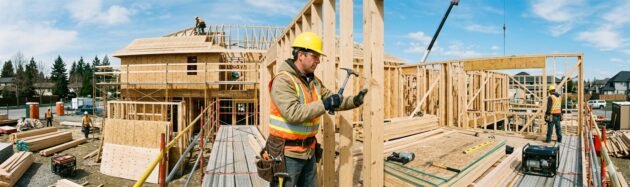
Ontario Building Code
Conservation Authority
Zoning rules
Radon rough-in
Septic setbacks
Ontario’s 10 Most Surprising Building Rules (And What They Cost You If You Miss Them)
Most people planning a custom home in Ontario think the tricky part is picking the floor plan. Then Ontario’s layered web of provincial codes, municipal bylaws, conservation authority regulations, and site-specific requirements shows up — often after money has already been spent on drawings. The rules below are not obscure fine print. They are the things builders, designers, and building officials deal with every week. They’re also the things that most homeowners genuinely did not see coming.
This is not a scare list. It is a preparation list. Every one of these surprises is manageable when you know about it early. The same surprise that costs weeks and thousands of dollars during framing costs almost nothing when it is caught at the planning stage.
The pattern across all ten rules: the surprise is almost never the rule itself. It is the timing. Discovering a conservation authority setback after the house is staked, finding out the lot cannot support septic after drawings are done, or missing the radon rough-in before the slab is poured — these are timing problems dressed up as code problems. Know them early.
Jump to a rule
- Conservation authority permits — you may need two approvals, not one
- Septic drives the site plan, not the house
- Radon rough-in is now mandatory in most new Ontario homes
- Zoning and the Ontario Building Code are entirely separate systems
- Development charges are not in the permit fee
- Inspections are mandatory milestones, not optional check-ins
- Engineering can be required even on “simple” builds
- Mechanical and energy compliance are now tied together by the OBC
- Guardrail and stair rules are stricter — and more inspected — than most assume
- What’s “included” in a quote and what the code requires are often two different things
Who feels these most
- First-time custom home builders
- Buyers of rural or waterfront lots
- Anyone designing before confirming zoning
- Owner-builders managing trades directly
When they hurt worst
- After drawings are already paid for
- After a lot has been purchased
- Mid-construction, during inspections
- At permit submission, when it’s too late to redesign cheaply
The common fix
Treat zoning, conservation, septic, and site constraints as due diligence items — confirmed before drawings start, not after the purchase agreement is signed.
1
Conservation authority permits — you may need two approvals, not one
Timeline risk
When most people think about getting a building permit, they picture a single trip to town hall. What surprises many Ontario homeowners is that a municipal building permit and a conservation authority permit are entirely separate approvals — and you may need both before a shovel goes in the ground.
Conservation authorities regulate development in and around natural hazard areas: floodplains, wetlands, steep slopes, shorelines, valleylands, and watercourses. Under Ontario Regulation 41/24 (which replaced dozens of individual conservation authority regulations as of April 1, 2024), if your property or the area where you want to build is within a regulated area, you need a permit from your local conservation authority in addition to the municipal building permit.
What counts as “regulated”? Floodplains, lands within 15 metres of a floodplain boundary, wetlands and a 30-metre buffer around them, unstable slopes, and Great Lakes and inland lake shorelines — among other features. You may be in a regulated area without realizing it, especially on rural, cottage-country, or waterfront lots.
What surprises people: the conservation authority permit must usually be obtained before the municipal building permit is issued. Delays at the conservation authority level can push an entire project schedule by months. Pre-application meetings with the conservation authority before drawings are complete can avoid most of this.
2
Septic drives the site plan, not the house
Cost risk
In urban areas, sewage goes into a municipal pipe and nobody thinks about it. On rural lots in Ontario — which make up a huge share of custom home builds — the septic system is not an afterthought. It is often the most constraining element on the entire property.
Under Part 8 of the Ontario Building Code, on-site sewage systems are regulated based on design flow (bedroom count), soil conditions, groundwater depth, slope, and required setbacks to wells, water bodies, and property lines. The system type — conventional trench, raised bed, tertiary treatment — depends on what the site can support, not what the owner prefers.
The surprise is not the system itself. It is that the septic layout often determines where the house can go, how the driveway runs, and how the grading works. A lot that looks generous on paper can become very constrained once setbacks, leaching bed area, well placement, and house footprint are all mapped together.
What surprises people: buyers who fell in love with a lot and signed a purchase agreement before confirming septic feasibility. Shallow bedrock, high water tables, poor percolation, and tight setbacks to shorelines can mean a dramatically more expensive system — or a site that cannot support the home size originally planned.
3
Radon rough-in is now mandatory for most new Ontario homes
Design + build impact
Radon is a naturally occurring radioactive gas that forms from uranium breakdown in rock and soil. It is colourless, odourless, and tasteless — and it is the second leading cause of lung cancer in Canada. Parts of Ontario, particularly Eastern Ontario (Lanark, Leeds, Grenville) and other areas with granite or metamorphic geology, have significantly elevated radon levels.
The 2024 Ontario Building Code — in effect since January 1, 2025 — now requires that all new houses include a rough-in for a sub-floor depressurization system. This means at minimum: a granular sub-slab material or collection layer, sealed slab penetrations, and a vent pipe pathway that can later be connected to a fan if testing shows elevated radon levels after occupancy.
The rough-in itself is inexpensive — typically a few hundred dollars when the foundation is open. Installing mitigation retroactively in a finished home can cost several thousand dollars and may involve cutting through finished floors and walls.
What surprises people: many builders and homeowners still treat radon as optional. It is not, under the current OBC. And even where the code requires only a rough-in, actual radon testing after occupancy is strongly recommended — because a rough-in does not tell you whether your site has elevated levels.
4
Zoning and the Ontario Building Code are entirely separate systems
Design impact
This is one of the most common sources of confusion in the permit process. The Ontario Building Code governs how a building is constructed — structural requirements, fire safety, insulation, ventilation, plumbing, energy performance. Municipal zoning bylaws govern what can be built on a given lot and where — permitted uses, building height, setbacks from property lines, lot coverage maximums, parking requirements.
A permit application that is perfectly compliant with the OBC can still be refused at the zoning stage because the house is too close to the side yard, too tall, or covers too much of the lot. These are not the same test. Both must be passed independently.
Setbacks alone — the minimum distance from property lines, road allowances, and features like waterbodies — can significantly affect where a house can be placed and how large it can be. Some zones also have maximum building heights, which can constrain roof pitch choices on lots where the owners expected more freedom.
What surprises people: buying a floor plan online before confirming that it fits on the lot under the applicable zoning rules. This leads to expensive redesigns — not because the design was bad, but because the lot constraints were not checked first.
5
Development charges are not in the permit fee
Cost risk
Ontario municipalities are permitted under the Development Charges Act to levy charges on new development to fund the infrastructure needed to service it — roads, water, sewer, parks, libraries, transit, and more. These charges are set by each municipality and can vary dramatically from one area to the next.
The budget shock is real. In some Ontario municipalities, development charges on a new single-family home can range from under $10,000 to well over $60,000 — entirely separate from the building permit fee, land cost, and construction cost. They are typically due before or at permit issuance, which means they appear in the budget at a moment when cash flow is already under pressure.
What makes this worse is that development charges are not always listed prominently in builder quotes or project estimates. They may appear as a single line item (“municipal fees”) or, in the worst cases, not appear at all until the permit application is filed.
What surprises people: the phrase “permit fee” sounds like it covers what it takes to get the permit. In Ontario, the permit fee is only part of what you owe when you apply. Development charges, utility connection fees, and sometimes parkland dedication fees are all separate invoices that arrive around the same time.
6
Inspections are mandatory milestones, not optional check-ins
Timeline risk
Ontario’s building inspection regime under the Building Code Act requires inspections at defined stages of construction. These are not courtesy visits — they are legislated points at which work must be held until an inspector approves it. Common mandatory inspection stages for residential builds include excavation, foundation/footings, concrete before pour, framing, insulation and vapour barrier, and final occupancy.
The key operating rule: certain work cannot be covered or concealed until the relevant inspection has been completed and passed. If you close in insulation before the framing inspection, or pour a slab before a required inspection, you may be ordered to uncover completed work. This is not a theoretical risk — it happens, and the cost is real.
Inspection scheduling also affects timeline. Inspectors are often busy, especially in peak season. If a required inspection cannot be booked for a week and you cannot proceed until it is done, the construction schedule absorbs that delay whether or not the crew is standing by.
What surprises people: the inspection sequence is part of the project schedule, not a separate administrative process. A builder who has not built inspections into the schedule — as actual milestones, not assumptions — will eventually get caught by one.
7
Engineering can be required even on “simple” builds
Cost risk
The Ontario Building Code provides prescriptive “cookbook” rules for residential construction — standard spans, loads, lumber sizing, connection details — that most straightforward houses can follow without a structural engineer. But a surprising number of projects hit conditions where prescriptive rules do not apply and a stamped engineering drawing is required.
Common triggers include: large beams or openings (LVLs supporting heavy loads above), retaining walls over a certain height, modified or non-standard roof trusses, ICF construction details, sloped or challenging sites with unusual structural demands, large cantilevers, connection details at unusual intersections, and geotechnical conditions that affect foundation design.
Engineering fees themselves are often modest relative to the cost of a custom home — but the timing of engineering requests is the real problem. A framing inspection that flags a structural question can pause construction while drawings are prepared, reviewed, and responded to. If the engineer is busy, that pause can stretch.
What surprises people: “we already have drawings” is not the same as “we have engineered drawings.” A building official reviewing a permit set may require engineering on features that the designer did not anticipate needing it. The earlier this is identified, the cheaper it is to handle.
8
Mechanical and energy compliance are now tied together by the OBC
Design impact
The 2024 Ontario Building Code introduced stricter and more integrated energy compliance requirements under a tiered performance system. The practical impact for homeowners: envelope choices (insulation, windows, airtightness) and mechanical choices (heating system, HRV/ERV, duct design) are now linked. You cannot fully design one without understanding the implications for the other.
Tighter homes are now required to breathe on purpose. As the OBC pushes airtightness standards up, the code simultaneously requires designed ventilation to maintain indoor air quality. That means an HRV or ERV is not optional on a properly built modern home — it is part of the mechanical system that makes a tight envelope liveable.
For ICF homes, this is generally good news: ICF walls start with a strong thermal and airtightness advantage that often satisfies Tier 3 or Tier 4 requirements without additional measures. The challenge is making sure the mechanical design keeps up with the envelope performance.
What surprises people: “we’ll decide the HVAC later” is an expensive phrase under the current OBC. If the energy compliance path chosen during design does not match the HVAC system specified later, one or both may need to change — and changing HVAC late often means redesigning duct routes, electrical capacity, and exterior penetrations.
9
Guardrail and stair rules are stricter — and more inspected — than most assume
Inspection risk
Stairs and guardrails are among the most inspected elements in a residential build, and the 2024 OBC brought increased scrutiny to guard details — particularly at openings, balconies, landings, decks, and anywhere there is a change in level. The code governs rise and run geometry, uniformity of riser height across a flight, headroom clearance, landing sizes, handrail dimensions, guard heights, and the maximum opening size through which a small child could pass.
The opening size rule — guards must be designed so that a 100 mm sphere cannot pass through — catches many people off guard on decorative or open-riser stair designs. A beautiful cable railing or wide-spaced baluster pattern that looks fine in a design rendering may fail inspection if the geometry does not meet code.
The uniformity rule is also one that trips up renovations specifically: changing flooring thickness or adding stair nosings at the end of a project can throw off the rise calculation enough to fail inspection, even when the underlying framing was correct.
What surprises people: stairs are often one of the last things designed in detail — and one of the last things framed. A stair design that does not account for finished flooring thickness, landing dimensions, and guard geometry from the start can require costly rework at the end of a project.
10
What’s “included” in a quote and what the code requires are often two different things
Cost risk
This one is not a code rule in the technical sense — but it is a rule in the real-world sense, and it catches more Ontario homeowners than any single OBC section. Builder quotes and the Ontario Building Code exist in parallel worlds that do not automatically align. What the code requires your home to have, and what a specific quote actually includes, are not the same list unless you verify them against each other.
Common gaps: HRV/ERV systems may be code-required but not included in the HVAC line item. Radon rough-in may be legally required but absent from the concrete scope. Backwater valves may be mandated by the municipality but not explicitly quoted. Engineered drawings may be needed but assumed to be “someone else’s problem.” Energy compliance documentation for permit may have a cost that is not reflected in the design fee.
Allowances are a related issue. Two quotes for the same house can show similar total prices while being wildly different in what they actually include. Low allowances for kitchen, flooring, tile, plumbing fixtures, and lighting can make a price look competitive — until the homeowner goes to make real selections and the gap between the allowance and the actual cost becomes a long, painful conversation.
What surprises people: the moment they ask for a complete inclusions and exclusions list alongside allowance amounts — and realize the quote they were comparing is missing several items that the code, the municipality, or basic occupancy requires. Ask for this list before you compare bids, not after you have picked a builder.
Quick reference: the 10 surprises and when to check them
| # | The surprise | When to check it | Primary risk if missed |
|---|---|---|---|
| 1 | Conservation authority permit required | Before buying the lot | Months of schedule delay |
| 2 | Septic layout controls the site plan | Before signing purchase agreement | Forced redesign or lot unsuitability |
| 3 | Radon rough-in is now mandatory | Before foundation/slab pour | Expensive retroactive installation |
| 4 | Zoning and OBC are separate systems | Before drawing design begins | Paid-for drawings that don’t fit the lot |
| 5 | Development charges not in permit fee | Before project budget is set | Cash-flow shock at permit issuance |
| 6 | Inspections are mandatory milestones | In the project schedule from day one | Work stoppage and possible exposure order |
| 7 | Engineering may be required unexpectedly | During drawing preparation | Mid-construction schedule pause |
| 8 | Mechanical and energy compliance are linked | At design stage, not HVAC selection | Late-stage system redesign and added cost |
| 9 | Stair and guard rules are strictly inspected | During detailed design, before framing | End-of-project rework on expensive finishes |
| 10 | Quote inclusions ≠ what the code requires | Before selecting a builder | Budget overruns from missing scope |
The pattern behind all ten
Look at that table again. Every single “when to check it” answer is either before you buy, before you design, or before you build. None of them is “after the permit is submitted” or “when the inspector shows up.” That is not a coincidence. These surprises have one thing in common: they are all much cheaper to discover early than to fix late.
Builder truth: the homeowners who end up frustrated at the end of a project are rarely the ones who asked too many questions at the start. They are almost always the ones who assumed “the builder handles all that” or “we’ll sort it out as we go.” Ontario’s building system has a lot of moving parts. A plan that coordinates them is not optional — it is the difference between a project that runs and one that stalls.
The good news is that none of these surprises is unusual enough to be unmanageable. Experienced builders, designers, and building officials deal with all ten of them regularly. The issue is not that they are hard to navigate — it is that homeowners often encounter them for the first time during their own project, at the worst possible moment.
- Lot stage: confirm zoning, conservation authority status, and septic feasibility before signing anything.
- Design stage: size the house to fit the lot’s actual constraints, not the lot’s theoretical maximum.
- Budget stage: include development charges, utility connections, engineering allowances, and permit fees as separate line items.
- Builder selection: compare quotes on inclusions and allowances, not just totals.
- Pre-construction: build inspection hold-points into the schedule as real milestones.
- Construction: do not cover work that requires inspection — no exceptions.
Tools to help you avoid these surprises
The best time to learn about these rules is before you have paid for drawings, signed a purchase agreement, or scheduled a first pour. The calculators and guides below are built to help Ontario homeowners plan with real numbers before the real commitments start.
FAQ: Ontario Building Rules That Surprise Homeowners
Do I always need a conservation authority permit if my lot is near water?
Not always, but often. Under Ontario Regulation 41/24, you need a conservation authority permit if your proposed development is within a regulated area — which includes floodplains, lands within 15 metres of a floodplain boundary, wetlands and a 30-metre buffer, steep slopes, and Great Lakes or inland lake shorelines. “Near water” is a good reason to check, not a guarantee that a permit is required. Contact your local conservation authority for a property inquiry before assuming either way.
What happens if I skip a mandatory building inspection?
Skipping a mandatory inspection — or covering work before an inspection is done — is a violation of the Building Code Act. A building inspector can issue an order requiring you to expose the concealed work so it can be inspected, which in practice means opening finished walls, floors, or ceilings at significant cost. In serious cases, stop-work orders can halt the entire project. The inspection sequence is not optional.
Is the radon rough-in actually required everywhere in Ontario?
Under the 2024 Ontario Building Code (in effect since January 1, 2025), all new houses must include a rough-in for a sub-floor depressurization system. This is a province-wide requirement, not limited to known high-radon areas. Some municipalities may have additional requirements on top of the provincial baseline. The rough-in does not guarantee radon levels will be safe — testing after occupancy is still necessary to know whether the fan needs to be activated.
How much are development charges in Ontario?
Development charges vary significantly by municipality and are set by each local government. They can range from under $10,000 in smaller or rural municipalities to over $60,000 or more in high-growth areas. They are separate from the building permit fee and are typically payable at or before permit issuance. Always confirm the current development charge schedule with your specific municipality before finalizing a project budget.
Can I design my home before confirming zoning rules?
Technically yes — but practically, it is a costly mistake. Zoning bylaws set the rules for where and how large a building can be on your specific lot: setbacks from property lines, maximum building height, lot coverage, permitted uses. If the home you design does not conform to these rules, you will need to either redesign or apply for a minor variance, which takes time and money. Confirming zoning constraints before design begins costs nothing and prevents expensive rework.
What is the difference between an OBC prescriptive path and a performance path for energy compliance?
The Ontario Building Code’s energy compliance section allows builders to follow either a prescriptive path (choosing specific packages of insulation values, window performance, and mechanical specs from a table) or a performance path (modeling the home’s overall energy use and showing it meets a benchmark). The prescriptive path is simpler but less flexible; the performance path allows trade-offs between components. The key point is that whichever path is chosen must be committed to before detailed design — and mechanical choices must align with envelope choices under both paths.
What is an “allowance” in a builder quote, and why does it matter?
An allowance is a placeholder dollar amount in a construction quote for items where the final selection has not been made yet — typically kitchens, flooring, tile, plumbing fixtures, and lighting. The allowance amount is the builder’s assumption for that category. If your actual selections cost more than the allowance, you pay the difference. Low allowances can make a quote look competitive while building in significant hidden cost. Ask for a full allowance schedule and compare it against real-world Ontario prices before accepting a quote.
When does a residential project need a structural engineer in Ontario?
Not every residential build requires a structural engineer — the OBC provides prescriptive rules that cover most standard construction. Engineering is typically required when projects go beyond those prescriptive parameters: large beams or unusual spans, significant modifications to engineered roof trusses, retaining walls above standard height, ICF construction in some configurations, sloped or challenging sites with unusual foundation demands, and large openings or cantilevers. A qualified designer reviewing your drawings early will usually flag where engineering is needed before it becomes a mid-construction problem.