
Apartment Ceiling Height Ontario: The Basement Rule That Ruins a Lot of “Easy” Plans
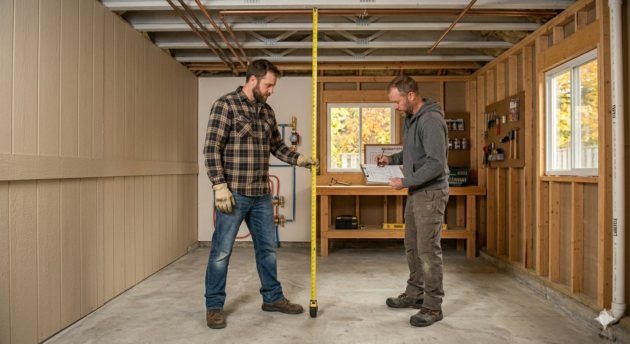
The Basement Can Look “Almost Fine” Until the Tape Measure Says Otherwise
This is one of the biggest myths in basement-suite planning: “We’ll just finish the basement and legalize it later.” That sentence has wrecked a lot of easy-looking plans. The problem is usually not paint, flooring, or even the kitchen layout. The problem is height. More specifically, the lack of it.
If you are looking up basement apartment ceiling height Ontario, you are already asking one of the smartest questions in the whole process. Ceiling height is often the first real deal-breaker in a basement suite because it is hard to fake, expensive to fix, and affected by everything hanging below the floor joists. Ducts, beams, plumbing, dropped bulkheads, and badly planned mechanical runs all start stealing headroom from a space that was usually short to begin with.
In Ontario, basement second units are allowed in many homes, but they still need to meet building code and permit requirements. And one of the most common points of trouble is the minimum clear height over the required floor area. That is why ceiling height deserves attention before you get excited about the apartment income or tell your relatives they can move in by Christmas.
What usually causes trouble
- Low floor-to-joist measurement
- Deep bulkheads and beam drops
- Ducts crossing the wrong rooms
- Basements that were never designed for living space
What owners assume
- Drywall won’t make much difference
- Bulkheads can go anywhere
- Inspectors will “be reasonable”
- It will sort itself out later
What actually matters
Clear finished height where it counts, not just the highest part of the basement. One proud spot in the middle does not rescue a suite with ducts and bulkheads chopping up the usable area.
Why ceiling height ruins so many “easy” basement apartment plans
Basement apartments look deceptively simple from upstairs. The basement already exists, so people assume they are just adding finishes and a kitchen. But the minute you start treating the space like a legal dwelling unit instead of a rec room with opinions, the rules get more serious.
Height is one of the biggest reasons otherwise decent basements stall out. It affects comfort, safety, design, and code compliance. A space can feel generous on square footage and still fail the “would any sane person want to live down here?” test because the ceiling height is pinched in all the wrong places.
That is why the first smart read is often Legal Basement Apartment Requirements Ontario. It helps put ceiling height in its proper place: not as a small detail, but as one of the structural truths of the project.
Builder truth: when a basement is “almost high enough,” that usually means it is not high enough once the real work starts.
What “ceiling height” really means in a basement suite
This is where homeowners get tripped up. They measure the tallest spot in the basement, feel encouraged, and move on. But that is not how real feasibility works. What matters is the clear finished height over the required floor area, including the areas people actually need to use to live in the suite. That means flooring build-up, drywall, resilient channel if used, bulkheads, ducts, plumbing, and beams all matter.
Ontario guidance for second units specifically notes that a basement second unit can have a lower ceiling height standard than some other new living spaces, but the key word there is can. It still needs to be met properly, across the required area, and not defeated by badly located ductwork or ugly bulkheads slicing through the space.
In plain English, the basement does not get judged by its best corner. It gets judged by how the finished apartment actually works.
| What owners measure | What really counts | Why it goes wrong |
|---|---|---|
| Concrete floor to joists | Finished floor to finished ceiling | Flooring, drywall, and framing all eat height |
| Main open area | Required floor area including route through the suite | Bulkheads often land in the worst possible place |
| Highest point in the room | Clear height where people actually live and move | One tall area does not rescue a choppy layout |
Bulkheads are where a decent basement starts losing the argument
Most marginal basements do not fail because the entire space is low. They fail because the main height is only borderline, and then the bulkheads arrive like a crew determined to finish the job.
Bulkheads matter because they usually land exactly where you do not want them: over the kitchen run, across the middle of the living space, through the hallway, or at the path to the bedroom. That is not just a cosmetic problem. Once the route through the apartment gets pinched by mechanicals, the whole unit starts feeling short and awkward even if the tape measure says the open area was once hopeful.
A homeowner we worked with had a basement that looked promising before layout. Once the supply trunks, drain lines, and beam locations were mapped honestly, the “easy suite” turned into a much more careful design exercise. Still possible, but only by respecting the low spots early instead of pretending they would disappear behind paint.
Ducts and HVAC layout can quietly kill a basement suite
A lot of basements lose headroom because the HVAC system was never designed with a future apartment in mind. Big trunk ducts cross the wrong rooms. Branch runs wander wherever they like. Returns get stuffed into the lowest route possible. Then someone decides years later that the basement should become an income suite, and suddenly the mechanical system is in a custody battle with the ceiling height.
This is why basement apartment planning should never ignore the HVAC side. If you are moving ducts, dropping ceilings, or trying to create a legal second unit, the mechanical work and permit requirements need to be coordinated, not guessed at. Pages like Building Permit HVAC Requirements Ontario matter because air distribution and ceiling height are not separate conversations in a basement suite. They are roommates.
And no, hoping the ducts can “just be boxed in somewhere” is not a strategy. That is a confession.
Why ceiling height is harder to fix later than people think
If the basement is short, there are only so many ways to make it taller. And none of them are magical. You can try to reduce bulkhead depth, reroute ducts, tighten mechanical planning, or use the layout to keep low areas in less sensitive spaces. But if the fundamental floor-to-structure height is weak, you eventually run out of tricks.
Lowering the basement floor is possible in some houses, but it is not some casual little upgrade. It can mean underpinning, structural design, excavation inside the house, new drainage planning, deeper stairs, and a budget that suddenly remembers it has teeth. That is why people often move from “we’ll just fix it” to “maybe this shouldn’t be a legal apartment” once real numbers show up.
If you are trying to understand the bigger financial picture, see Basement Apartment Cost Ontario. Ceiling height problems can turn an affordable-looking conversion into a very different project.
Plain-English version: a basement that is a little too low now usually becomes a lot too low after flooring, drywall, bulkheads, and reality all move in.
What options exist when the basement is marginal
Not every borderline basement is doomed. Some can be improved with smarter design. The key is to stop thinking about the basement as one open blank space and start thinking like someone arranging a problem carefully.
- Move the lowest areas into less critical spaces. Storage, laundry, and utility zones can absorb uglier bulkheads better than the living room can.
- Reroute ducts where practical. Sometimes a better HVAC layout rescues enough height to make the suite feel normal.
- Minimize floor build-up. On a marginal basement, every layer matters.
- Use layout strategically. Hallways, doors, and furniture planning should work with the height, not against it.
- Reconsider the program. Sometimes an in-law suite or non-rental finished basement makes more sense than forcing a legal apartment.
That last point matters. If the basement will never comfortably support a legal rental suite, it may still work well as a family suite, guest area, or part of a larger multi-generational plan. That is where pages like In-Law Suite Builder Simcoe County can be useful.
Where homeowners usually get fooled by basement height
They measure before finishes. They ignore the route through the suite. They assume inspectors will focus only on the main room. They forget stair framing, beam drops, bathrooms, and kitchen bulkheads. Or they look at a finished basement next door and assume theirs will pass because “it feels about the same.”
None of that is reliable. The right approach is to evaluate the basement honestly on drawings and on site before the renovation gets emotionally expensive. That includes ceiling height, egress, fire separation, ventilation, and permit path — not just the parts that are fun to post online.
Helpful related reads here are How to Legalize a Basement Apartment Ontario, Basement Apartment Fire Separation Ontario, and How to Obtain a Building Permit in Ontario. Ceiling height is a major issue, but it is part of a bigger legal-suite picture.
When the basement is not really a basement apartment candidate
Sometimes the most honest answer is no. Not because the homeowner lacks ambition. Not because the contractor lacks creativity. But because the basement was built in an era, or to a standard, where future apartment use was never realistically in the cards.
If the height is weak, the beam and duct pattern is bad, the stairs are awkward, and the rest of the code requirements are already piling up, it may be smarter to stop calling it a future legal suite and start calling it what it really is: a finished basement with limits.
That is not failure. That is just good judgment. For the homes that do make sense, builder-side help from Basement Apartment Contractor Simcoe County or Legal Basement Apartment Builder Barrie can be the next move once the basic height question has been answered honestly.
Ontario second-unit rules make ceiling height worth checking first, not last
Ontario supports second units in many homes, and the province’s own guidance makes it clear that basement second units are a normal part of that conversation. But support for second units does not erase the practical reality of the basement you already have. The province can allow the concept while your joists and ductwork quietly veto the layout.
That is why the official guidance on adding a second unit is worth reading early: Add a Second Unit in Your House. It helps ground the project in actual Ontario rules instead of basement folklore.
FAQ: Basement Apartment Ceiling Height Ontario
Why is ceiling height such a big issue for basement apartments?
Because it is one of the hardest things to fake and one of the most expensive things to fix. A basement can look spacious enough in square footage, but if the clear finished height is weak or chopped up by ducts and bulkheads, the suite can fail both comfort and code expectations quickly.
Do bulkheads really matter that much?
Yes. Bulkheads can turn a barely acceptable basement into a frustrating one because they usually land in the routes and rooms people need most. A good open area does not help much if the path through the suite feels like a duck-and-weave exercise.
Can I just move ducts later if the ceiling height is tight?
Sometimes, but not always cheaply. Rerouting ducts can help in certain basements, but it depends on beam locations, trunk sizes, utility paths, and how the whole HVAC system is arranged. Mechanical work is often where a “simple fix” becomes a very real cost item.
Is lowering the basement floor a realistic fix?
It can be done, but it is a major construction move, not a cosmetic adjustment. Underpinning or floor lowering can involve structural work, excavation, drainage changes, new stairs, and a budget that rises fast. It is sometimes justified, but never casual.
What should I check before spending money on plans?
Measure the actual clear height honestly, identify ducts, beams, and bulkheads, look at the route through the suite, and review the broader legal-suite requirements. Ceiling height should be tested early, before the kitchen layout, not after.
Can a marginal basement still work for family use even if it is not ideal for a legal rental suite?
Yes, sometimes that is the smarter outcome. A basement that is awkward for a legal apartment may still serve well as an in-law area, guest space, or upgraded family basement. The right answer depends on what the space can honestly support without forcing it into the wrong role.
The honest conclusion
Ceiling height is one of the basement rules that ruins a lot of easy-looking plans because it is not a decorative issue. It is a structural, mechanical, and livability issue all at once. If the basement is generous enough, great. If it is marginal, the project needs careful planning. And if it is genuinely too low once the real assembly is counted, the cheapest solution is usually accepting that truth early.
A legal basement apartment can be a fantastic upgrade. But only when the basement actually wants to be one. The tape measure is usually more honest than the homeowner’s optimism, and in this case, that is a good thing.