Ontario's Plain-English Guide to Custom Home Building📞 705-533-1633 | ☎️ 1-866-868-6606 | ✉️ info@icfhome.ca

Building a House in Winter in Ontario: What Works, What It Costs and When to Start
Ontario Cottage Guide · Winter Construction · ICF
Building a House in Winter in Ontario: What Works, What It Costs and When to Start
Houses get built all winter in Ontario, and built well. Winter does add rules, care and cost: concrete has to be protected below 5 C, the ground under the footings must not freeze, and the inside needs heat before the finishing trades arrive. Here is how it is done and how to plan your start date around it.
Quick truth: Cold weather rules for concrete start at plus 5 C, not at freezing. If the roof will not be on before the frost, put winter protection in the budget, in writing.
Yes, You Can Build in Winter. You Just Cannot Pretend It Is July!
If builders in Ontario stopped every time it snowed, nobody would get a house. We pour concrete, stack walls and frame roofs right through the winter, and a house built properly in January is every bit as good as one built in June.
The word that matters there is “properly”. Winter does not forgive shortcuts. Concrete that freezes before it cures is ruined. Ground that freezes under a footing lifts it, then drops it in spring. Winter work costs more and takes more care, and the only real question is whether that extra cost beats waiting until April.
Concrete and the 5 Degree Rule
The Ontario Building Code brings in cold weather requirements for concrete when the air temperature is below 5 C. The Canadian concrete standard treats it as cold weather whenever the temperature is likely to fall below 5 C within 24 hours of the pour. Not minus ten. Plus five. That covers a good part of October and April as well as the winter.
Below that line, the concrete has to be kept from freezing until it has gained strength. In practice that means some mix of:
- Concrete delivered warm, mixed with heated water
- No pouring onto frozen ground, ice or snow
- Insulated blankets over the fresh concrete
- A heated enclosure around the work in real cold
- Keeping the protection on for days, not hours
Concrete does not dry. It cures, by a chemical reaction that makes its own heat and needs that heat to finish the job. Let it freeze in the first day or two and you have a foundation-shaped pile of gravel.
Why ICF Is the Easy Way to Pour in the Cold
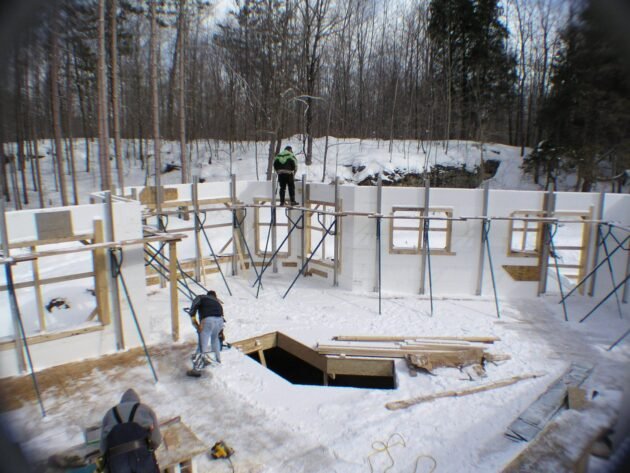
This is where insulated concrete forms earn their keep. An ordinary foundation wall is poured between bare forms, with cold air on both sides, and the whole wall has to be tented and heated. An ICF wall is poured into foam forms that stay in place. The concrete sits between two layers of insulation and keeps its own heat. We cover the top of the wall with a blanket and let it cure.
We have been building with ICF since 1995, and a lot of those walls went up with snow on the ground. It is not a trick. It is just what happens when the form is also the insulation. More on how ICF works and what happens on pour day.
The Ground Is the Other Half
The Building Code also requires an open excavation to be protected from frost. Here is why. Wet soil swells when it freezes. If the bottom of the hole freezes before the footing is poured, or under a footing that has no building on it yet, the ground lifts. In spring it thaws, settles unevenly and takes the foundation with it. That crack shows up a year later, and nobody remembers the cold night in December.
So in winter the hole is dug and the footings poured without delay, the ground is covered with straw or insulated tarps overnight, and the foundation is backfilled and the basement kept above freezing as soon as possible. A basement left open and unheated all winter is asking for trouble. Our page on foundation cracks explains what the damage looks like.
What Winter Adds to the Bill
The extras
- Heated concrete and winter mix charges
- Blankets, tarps, straw and enclosures
- Temporary heat and the fuel to run it
- Snow clearing, on the site and on the lane
- Shorter days and slower work
- Keeping the building warm for drywall, paint and flooring
What winter gives back
- Trades and suppliers are less busy
- Frozen ground carries heavy trucks that would sink in April
- You are framed and closed in when everyone else is just starting
- You miss the spring rush at the permit counter
- You move in a season sooner
I will not put a dollar figure on winter work, because it depends on the month, the size of the house and how far along it is when the cold arrives. Contractors and price guides quote widely different allowances. Ask your builder for a winter line in the estimate, in writing, and ask what it covers.
Inside Work Needs Heat Too
Getting the roof on is not the end of it. Drywall compound, paint, tile adhesive and hardwood flooring all need a warm, dry building. Tape drywall in an unheated house and the joints crack. Lay hardwood before the building has dried out and it cups by summer. Lumber that got snowed on during framing has to dry before it is closed in, or the moisture ends up in your walls.
That means the heating system, or good temporary heat, has to be running before the finishing trades arrive. See lumber moisture and shrinkage and hardwood acclimation. And when you use temporary heaters indoors, ventilate. Carbon monoxide is a real hazard on a winter site.
When to Start
There are two sensible plans and one bad one.
- Start in spring or early summer and be closed in before the snow. Foundation, framing, roof and windows are done in good weather, and the inside work carries on through the winter with the heat on. This is the plan most people want.
- Start in winter on purpose. Dig and pour while the ground will carry trucks, frame through the cold, and be ready for the finishing trades by spring. It works well with ICF. It needs a builder who has done it before.
- The bad plan: start in October and hope. You end up with an open foundation in December, nobody budgeted for winter protection, and the argument about who pays for it starts in January.
On a cottage lot there is one more date to watch. Half-load season shuts posted roads to full concrete and gravel trucks from about early March to the end of April. If your foundation is planned for then, it will wait. For the whole schedule, see how long it takes to build a custom home: we allow 8 to 14 months of construction inside 12 to 24 months overall.
Rule of thumb: count back from the first hard frost. If the roof and windows will not be on by then, either start earlier or put winter in the budget. Do not leave it to luck.
Planning a Build That Will Run Through a Winter?
ICFhome.ca is based in Tiny Township and has built with ICF since 1995, summer and winter. Tell us when you want to move in and we will work the schedule backward with you, including the months nobody likes to think about.
Related guides on this site
Sources and further reading
Questions people ask
Can you build a house in winter in Ontario?
Yes. Foundations, framing and finishing all carry on through the winter, provided concrete is protected from freezing, the ground under the footings is kept from frost and the building is heated for interior work.
Can concrete be poured when it is below freezing?
Yes, with protection. The Building Code's cold weather requirements apply when the air is below 5 C. The concrete is delivered warm, placed on unfrozen ground and kept insulated or heated until it has gained strength.
What does winter construction add to the price?
Heated concrete, blankets and enclosures, temporary heat and fuel, snow clearing and slower work. The amount depends on the stage of the build and the weather, so ask for a written winter allowance.
When should I start so the house is closed in before the snow?
Work back from the first hard frost. The foundation, framing, roof and windows should be finished before then, which usually means starting in spring or early summer.
Is ICF easier to pour in the cold?
Yes. The concrete is poured between two layers of foam that stay in place, so it holds its own heat while curing. Only the top of the wall normally needs covering.
Does frost under the footings cause damage?
It can. Soil that freezes under a footing lifts it, then settles unevenly when it thaws, which can crack the foundation. Open excavations and new foundations have to be protected from frost.
Will lumber that gets snowed on warp or grow mould?
Wet framing lumber needs time to dry before it is closed in with insulation and vapour barrier. Dried properly it is fine; sealed in wet, it causes trouble.
Can drywall, paint and flooring be done in winter?
Yes, in a heated and dry building. These trades need steady warmth, so the heating system or reliable temporary heat has to be running first.
Reviewed and updated November 2026. Zoning rules are set by each municipality and change; confirm with your own township before you spend money. Costs on this site are Ontario ranges, not quotes.