Ontario's Plain-English Guide to Custom Home Building📞 705-533-1633 | ☎️ 1-866-868-6606 | ✉️ info@icfhome.ca

Foundation Cracks in Ontario: Which Ones Matter and What Repair Costs (2027)
Which foundation cracks are normal and which need an engineer, Tarion's crack width limits, and what injection and structural repairs cost in Ontario in 2027.
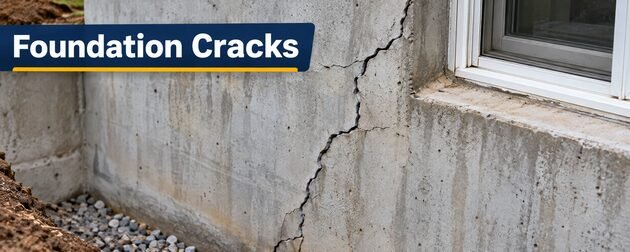
Which cracks matter
2027 repair prices
Tarion limits
Concrete Cracks. The Question Is Which Kind You Have!
Nearly every foundation in Ontario has a crack in it somewhere. Most are harmless. A few are the house telling you something. Here is how to tell them apart, who to call, and what the repairs cost in 2027.
The short version: a thin vertical crack in a poured wall is usually shrinkage and is fixed by injection for about $400 to $1,500. A horizontal crack, a stair-step crack in block, a crack wider than about 6 mm (1/4″), or one where the two sides no longer line up is a job for a structural engineer before anyone sells you a repair.
Let Me Lower Your Expectations First
Concrete shrinks as it cures. It has been doing that since the Romans, and no builder has talked it out of the habit. A wall forty feet long is going to relieve itself somewhere, and that is the hairline crack you found behind the furnace.
So a crack is not automatically a defect. What matters is the direction, the width, whether it is moving, and whether water is coming through it.
I have poured a lot of foundations. I am not an engineer, and I cannot see your basement from here. Use this to decide who to call, not to decide the house is fine.
Read The Crack Before You Call Anyone
| What you see | What it usually means | Who to call |
|---|---|---|
| Thin vertical or slightly angled crack, same width top to bottom | Shrinkage. Common at the middle of long walls and at window corners. | A waterproofing contractor, if it leaks. Nobody, if it is dry and stable. |
| Crack that is wider at the top or the bottom | One part of the footing has moved relative to the rest. | Structural engineer. |
| Horizontal crack along a wall | Soil, frost or water pressure pushing the wall inward. | Structural engineer. Do not wait. |
| Stair-step crack in a block wall | Movement along the mortar joints, from settlement or side pressure. | Structural engineer. |
| The two sides are out of line with each other | The wall has shifted, not just cracked. | Structural engineer. Do not wait. |
| Any crack that is letting water in | The crack goes right through the wall. | Waterproofing contractor, after the cause is understood. |
Rule of thumb
Put a pencil mark across each end of the crack, write the date beside it, and measure the width. Look again in three months and again after a winter. A crack that has not grown is a nuisance. A crack that has grown is evidence.
What Tarion Says Is Too Much
If the house is new and still under warranty, there are published limits. Tarion’s Construction Performance Guidelines say cracks from normal shrinkage are acceptable, with these ceilings:
- Poured concrete foundation wall: a crack wider than 6 mm is not acceptable.
- Concrete block foundation wall: a crack wider than 2 mm is not acceptable.
- Concrete basement floor: a crack wider than 4 mm is not acceptable.
- Any foundation wall: it shall allow no water penetration, whatever the width of the crack.
Those numbers are warranty standards for new homes, not engineering limits for a fifty-year-old house. They are still a useful yardstick. Our plain-English page on what Tarion covers explains the deadlines for making a claim, and they are short.
What Foundation Crack Repair Costs In Ontario, 2027
The contractors and price guides we looked at quote widely different prices for the same repair, sometimes double. Use these as planning ranges.
| Repair | Typical range | What it fixes |
|---|---|---|
| Polyurethane injection, from inside | $400 to $1,500 per crack | A leaking but stable crack in a poured wall. The foam expands and seals the full depth. |
| Epoxy injection | $500 to $1,500 per crack | Bonds a dry, stable crack back together. |
| Exterior dig and waterproof at the crack | $2,000 to $7,000, or about $150 to $250 and up per linear foot | Persistent leaks, several cracks, or a drainage problem. |
| Carbon fibre straps | $900 to $5,000 per strap or crack | A wall that has started to bow. Engineer first. |
| Underpinning a settled section | $500 to $800 per linear foot | A footing that is sinking. Engineer and permit required. |
Ranges gathered from Ontario contractor and price-guide pages published in 2026.
Notice the jump. An injection is a few hundred dollars and an afternoon. Structural work is tens of thousands. That is exactly why you want an engineer, who sells no repairs, to tell you which side of that line you are on. Here is what a structural engineer does on a house and what it costs.
Fix The Water, Not Just The Crack
Most cracks get noticed because they leak. Sealing the crack stops that leak. It does nothing about why water was standing against the wall in the first place.
- Look up. Downspouts that empty beside the wall put a roof’s worth of water against the foundation every storm. Extend them.
- Look at the grade. The ground should slope away from the house. Flower beds that slope toward it are a moat.
- Look at the drain. A blocked or missing weeping tile lets water build up, and water pressure is what turns a hairline into a horizontal crack.
- Look at what the wall is. Block, poured and ICF walls crack and get repaired differently. See foundation types in Ontario.
A reinforced wall still cracks, but the steel holds the crack tight so it stays a hairline. That is the difference between a crack you can ignore and one you can put a pencil in.
Where Homeowners Go Wrong!
- They ask the repair company whether it needs repair. You know what the answer will be. Get the diagnosis from someone who is not selling the cure.
- They inject a crack that is still moving. The injection cracks again beside itself, and now there is nothing left to mark the movement.
- They finish the basement over it. Drywall hides a crack perfectly, until the carpet is wet.
- They blame the crack for the floor. A sloping or bouncy floor upstairs is often a framing problem, not a foundation one. See sagging floor repair.
- They let the warranty run out. On a new home, report it in writing inside the Tarion deadlines even if the builder says it is normal.
Questions I Get Asked
Are hairline cracks in a new foundation normal?
Yes. Concrete shrinks as it cures, and thin vertical cracks are the usual result. They become a problem if they leak, widen or shift.
How wide is too wide?
Tarion’s limit for a poured wall in a new home is 6 mm, about a quarter of an inch. Many repair contractors use the same quarter inch as the point where they want an engineer involved. Direction and movement matter as much as width: a narrow horizontal crack worries me more than a wider vertical one.
Can I inject a crack myself?
Kits exist, and on a clean, stable, accessible crack they can work. The skill is in knowing the crack is stable, and that is the part the kit does not include.
Will a crack affect selling the house?
A repaired, documented crack with an engineer’s letter is a small item. An unexplained one found by the buyer’s inspector is a negotiation.
Sources And Further Reading
- Tarion: cast-in-place concrete foundation wall is cracked, the guideline with the 6 mm limit.
- Tarion Construction Performance Guidelines, the full document.
- Professional Engineers Ontario, to check that an engineer is licensed.
Floor joist and beam span tablesHow far joists and built-up beams can span, with a calculator.Retaining wallsWhen a wall needs a permit and an engineer, and what it costs.Basement underpinningLowering a basement: methods, permits and cost.Lintel and header span tablesWhat size header goes over a window or door.Helical pilesScrew piles for decks and additions: cost and permits.Do I need a structural engineer?When a house job needs a stamp, and what that costs.
Get The Diagnosis Before The Quote
If the crack is horizontal, stepped, wide or moving, pay for an engineer’s visit first. A few hundred dollars for an opinion can save you from buying a repair you did not need, or from skipping one you did.
Information only. Not engineering advice. A crack that is widening, shifting or bowing a wall needs a professional on site.