Ontario's Plain-English Guide to Custom Home Building📞 705-533-1633 | ☎️ 1-866-868-6606 | ✉️ info@icfhome.ca
Bunkie Rules in Ontario: Permits, Size Limits, Bathrooms and Zoning
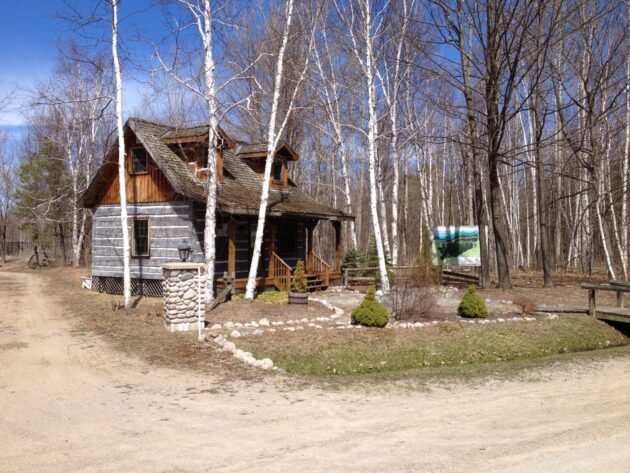
Ontario Cottage Guide · Bunkies · Sleeping Cabins
Bunkie Rules in Ontario: Permits, Size Limits, Bathrooms and Zoning
The “under 160 square feet, no permit” rule is for storage sheds, not for a place people sleep. Here is when a bunkie needs a building permit, why zoning matters more than the permit, what a bathroom or a kitchen does to the project, and how to keep a simple bunkie simple.
Quick truth: The no-permit shed exemption only covers buildings used for storage. A sleeping cabin over about 108 square feet needs a building permit, and any bunkie has to meet the zoning.
The Shed Rule Does Not Cover a Place People Sleep!
Somebody at the lake always knows the rule: “Anything under 160 square feet, you do not need a permit.” They are half right, which is the dangerous kind of right.
Ontario’s Building Code does exempt a small shed from needing a building permit. But read the conditions. The shed has to be no more than 15 square metres (about 161 square feet), one storey, not attached to anything, with no plumbing, and used only for storage. A bunkie is a place to sleep. It is not storage, so the shed exemption does not apply to it, however small it is and whatever the brochure says.
So When Does a Bunkie Need a Building Permit?
| The building | Building permit? |
|---|---|
| Up to 10 square metres (about 108 sq ft), no plumbing | Generally no. A structure that small with no plumbing is not a “building” under the Building Code Act. Zoning still applies. |
| Over 10 and up to 15 square metres, used only for storage, no plumbing | No. This is the shed exemption. |
| Over 10 square metres, used for sleeping | Yes. It is not a storage shed. |
| Any size, with plumbing | Yes. |
That is the general picture across Ontario. Some building departments read the small-structure rules a little differently, so ask yours before you order a kit. And notice the phrase that appears in every row one way or another: zoning still applies. Not needing a building permit has never meant you can put a building wherever you like.
The Permit Is the Easy Part. Zoning Is the Real Test.
Each township’s zoning by-law decides whether you can have a bunkie at all, and on what terms. Many cottage townships call it a sleeping cabin and define it tightly. What to look up, or ask the planning department:
What the by-law usually controls
- Whether a sleeping cabin is permitted in your zone
- How many you may have (often one)
- Maximum floor area and height
- Setbacks from the water, the road and the lot lines
- Whether it counts toward your lot coverage. It nearly always does.
- Whether there must already be a main cottage on the lot
The water setback
A bunkie has to respect the same setback from the water as other buildings, and sometimes exactly the same one as the cottage. Tiny Township’s 2025 shoreline amendment, which is under appeal, names the bunkie right alongside the main building in its 45 metre setback from the 178 metre line.
The spot by the water where everyone wants the bunkie is usually the one place it cannot go.
Bathrooms and Kitchens Change Everything
A bathroom means plumbing, and plumbing means a building permit at any size. It also means the bunkie is connected to your septic system. A sleeping cabin can be counted as extra bedrooms when the septic is sized, and adding a toilet and shower adds fixtures. An older system may not have the capacity, and then the bunkie project turns into a septic project. See septic and water at the cottage.
A kitchen is the bigger line. Sleeping space plus a bathroom plus cooking facilities is a self-contained dwelling. At that point you are no longer asking for a bunkie. You are asking for a second dwelling unit on the lot, which is a different set of rules: Ontario describes a tiny home as a self-contained unit with living, kitchen, bathroom and sleeping areas, built to the Building Code and serviced with water and sewage. If that is what you want, look at garden suites and ask the township what it allows on your lot.
A bunkie is a bedroom in the yard. The moment it can cook its own breakfast, it is a house, and the township will treat it like one.
Can You Rent It Out?
Check before you list it. Many cottage-country municipalities now license short-term rentals. Tiny Township has had a short-term rental licensing by-law since 2022. A bunkie that is legal as family overflow is not automatically legal as a rental unit, and renting can also change your insurance. Ask the township and your insurer first.
Where Owners Go Wrong
- Buying a kit sold as “no permit required” without checking the size, the use or the zoning
- Putting it inside the water setback
- Adding a bathroom later and discovering the septic cannot take it
- Running an extension cord from the cottage in place of proper wiring. Electrical work needs its own ESA permit.
- Building two because one was allowed
- Putting in a kitchenette and calling it a wet bar
Five Rules of Thumb
- Call planning before you call the kit company. Ask: is a sleeping cabin permitted, how big, how many, and how far from the water?
- Then call building. Ask whether your size and use need a permit.
- Keep it dry if you can. No plumbing keeps the bunkie simple and the septic out of it.
- Never add a kitchen unless you are deliberately applying for a second dwelling.
- Count it in your lot coverage before you plan the garage and the addition too.
Our page on shed permits in Ontario covers the storage side of the same rules, and the shed permit checker walks through the size test.
Planning More Than a Bunkie?
We do not sell bunkie kits. ICFhome.ca builds custom homes and lake houses in Tiny Township and across Simcoe County. If the real problem is that the cottage is too small for the family, it may be time to talk about the cottage. Send us the survey and tell us how many people you need to sleep.
Related guides on this site
Sources and further reading
Questions people ask
Do I need a permit to build a bunkie in Ontario?
Usually yes if it is larger than 10 square metres (about 108 square feet) or has any plumbing. The 15 square metre shed exemption applies only to buildings used for storage, not for sleeping. Zoning applies at any size.
How big can a bunkie be without a permit?
As a general rule, up to 10 square metres with no plumbing, because a structure that small is not a building under the Building Code Act. Confirm with your building department, and remember the zoning by-law may set its own limits.
Can a bunkie have a bathroom?
It can where the zoning allows, but plumbing means a building permit at any size and a connection to the septic system, which may need upgrading to handle the extra bedrooms and fixtures.
Can a bunkie have a kitchen?
Adding cooking facilities to sleeping space and a bathroom makes a self-contained dwelling unit, which is regulated as a second dwelling, not as a sleeping cabin. Most sleeping cabin rules do not permit a kitchen.
How close to the water can a bunkie sit?
It has to meet the water setback in the zoning by-law, which is often the same as for the main cottage. In Tiny Township the 2025 shoreline amendment applies the 45 metre setback to bunkies as well.
Does a bunkie count toward my lot coverage?
Almost always. It is an accessory building, and its footprint is added to the cottage, garage and sheds when lot coverage is calculated.
Can I rent out my bunkie?
Check first. Many municipalities license short-term rentals, including Tiny Township, and a bunkie approved for family use is not automatically approved as a rental.
Reviewed and updated November 2026. Zoning rules are set by each municipality and change; confirm with your own township before you spend money. Costs on this site are Ontario ranges, not quotes.