Ontario's Plain-English Guide to Custom Home Building📞 705-533-1633 | ☎️ 1-866-868-6606 | ✉️ info@icfhome.ca
Septic Inspection Ontario
Updated septic guide: our septic content now lives on our dedicated septic site, with 2026 costs, permits by township and owner-builder help. Read Septic inspection in Ontario: cost and what gets checked →
Ontario septic inspection
Buyer due diligence
Inspection versus pump-out
Septic Inspection Ontario: Cost, Process and Buyer Checklist
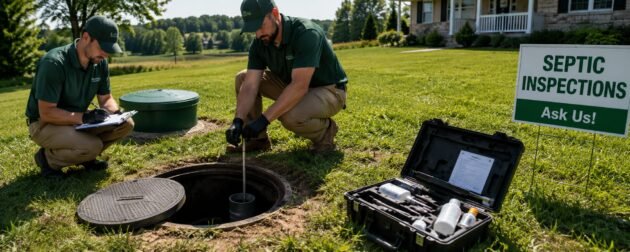
A septic inspection is a risk assessment, not a magic pass-or-fail sticker. The useful inspection combines records, system location, tank access, accessible components, site observations, pumping when appropriate, household information and a written explanation of what was—and was not—examined.
TL;DR: Request the septic permit file first, agree on the inspection scope in writing, coordinate pumping rather than assuming it is included, compare the approved house with the house being sold, and keep the offer condition active until the buyer understands the remaining risk and replacement exposure.
There are three different “septic inspections” people confuse
Private transaction inspection
A buyer, seller, lender or insurer engages a professional to assess risk during a sale or financing decision.
Building-permit inspection
The principal authority inspects regulated construction against the issued permit, approved plans and Building Code.
Maintenance-program inspection
An authority inspects systems in an applicable mandatory or municipal maintenance-inspection area.
Do not use one inspection as proof of another. A private pre-purchase report does not replace a permit inspection, and a municipal maintenance inspection may not provide the transaction scope a buyer expects.
What a thorough pre-purchase inspection should address
| Inspection area | What should be reviewed | Why it matters |
|---|---|---|
| Municipal or authority records | Permit records, the approved septic design and site plan, system type, bedroom count, inspections, alterations and outstanding requirements. | Shows what was approved and whether the property being sold appears to match the file. |
| System location | Tank, bed, distribution, pump chamber, treatment equipment, alarms and service access. | Reveals conflicts with buildings, driveway, pool, landscaping, wells or future plans. |
| Tank access and condition | Lids, risers, visible tank condition, inlet, outlet, baffles or tees, filter and liquid levels where safely accessible. | Damaged or inaccessible components affect safety, maintenance and repair cost. |
| Sludge and scum | Accumulation, pumping history and evidence of neglected maintenance. | Excess solids can leave the tank and accelerate leaching-bed clogging. |
| Pumps, floats and alarms | Operation, access, control condition and service records where included in the scope. | Mechanical failure can stop dosing or create a high-level sewage condition. |
| Leaching-bed area | Wetness, odour, surfacing effluent, settlement, lush growth, erosion, traffic, drainage and construction damage. | The bed is the expensive buried treatment component. Understanding how the septic tank and leaching bed work helps explain why pumping alone cannot prove the bed is healthy. |
| Household observations | Slow drains, backups, plumbing changes, bedrooms, occupancy, water use and unusual restrictions. | Current operation and approved design may not match the marketed house. |
| Written limitations | What was inaccessible, not tested, not located or outside the inspection scope. | A useful report makes uncertainty visible rather than presenting a false guarantee. |
Build the inspection scope before hiring anyone
0 of 10 selected
Select the items you expect. Then ask the inspector to confirm the exact scope, exclusions and additional charges in writing.
How much does a septic inspection cost in Ontario?
| Service | 2026 planning range | What changes the price |
|---|---|---|
| Residential transaction inspection | $400–$900 | Travel, system type, report detail, test scope, accessibility and whether advanced equipment is present. |
| Residential tank pumping | $500–$800 | Tank size, distance, disposal fee, hose run, access, season and emergency scheduling. |
| Tank locating or excavation | Quoted separately | Depth, missing risers, landscaping, equipment needed and time required to expose safe access. |
| Advanced-treatment or pump-system review | Quoted separately | Manufacturer service requirements, controls, alarms, sampling, commissioning and authorized-provider involvement. |
| Municipal file search | Local fee varies | Authority, record age, search type, copies and response time. |
These are planning ranges, not fixed provincial rates. Confirm whether HST, pumping, digging, locating, travel, camera work, laboratory testing and the written report are included.
The cheapest quote may be only a drive-by visual check. Compare scope before price. A $400 inspection and a $900 inspection may be entirely different services.
Protect the purchase—and prepare for what the inspection uncovers
Use the buyer guide before closing, the permit guide for renovations and the septic software when alteration or replacement requires a Part 8 package.
Ontario Lot-Buying Bible
Septic, well, access, zoning and hidden rural costs.
$29.99guide price
A practical rural-property guide covering septic and well due diligence, site constraints, servicing costs, financing, HST, access and the questions ordinary urban checklists miss.
- Septic and well due-diligence questions
- Rural servicing and site-cost planner
- Hard-cost, soft-cost and contingency worksheet
- Printable go/no-go property scorecard
Secure Stripe checkout.
Ontario Building Permit Bible
Additions, conversions and repairs in the right order.
$29.99guide price
A builder’s roadmap for consultants, drawings, complete applications, fees and inspections when the property needs an addition, garden suite, new bedroom or major repair.
- Complete-application checklist
- Who to hire and in what order
- Permit and soft-cost planning
- Inspection preparation and common failures
Secure Stripe checkout.
Ontario Septic Designer
Calculate, check, draw, price and print.
$99.99per project · 90-day access
Prepare the building information, sewage calculations, site details, setbacks, system layout, cross-section, materials and printable documentation for local review.
- Daily design flow and tank calculation
- Soil, T-time and setback checks
- Replacement or alteration planning
- Site-plan overlay and cross-section
Planning tool only. The local approval authority makes the permit decision.
Buying rural property and planning permitted work?
Get both the Ontario Lot-Buying Bible and Ontario Building Permit Bible in one discounted package.
Pumping is not the same as inspecting
What pumping can help reveal
- Tank location and access
- Sludge and scum accumulation
- Visible tank, lid, baffle, tee or filter condition
- Whether routine maintenance was neglected
What pumping cannot prove
- That the leaching bed has years of life remaining
- That the system matches the approved house
- That every buried pipe is intact
- That a future addition or garden suite can be approved
Coordinate the timing. A tank pumped immediately before the inspector arrives may temporarily reduce liquid levels and remove operating clues. The inspector should know when the tank was pumped and what was observed.
What the inspection cannot guarantee
A septic inspection can reduce uncertainty, but it cannot eliminate it. The leaching bed treats effluent below ground, and many components are buried or inaccessible without destructive investigation.
No lifetime prediction
The report cannot promise that an older system will operate for a specific number of years.
No approval of future work
A satisfactory current-use inspection does not approve an addition, extra bedroom, garden suite or replacement house. Those changes can require a new septic permit review.
No substitute for records
Visible operation does not prove the system was permitted for the present building or current use.
A good report states its limitations plainly. Be cautious when an inspector promises a pass, a guaranteed remaining life or approval for changes that have not been reviewed by the principal authority.
Buying a rural property in Simcoe County or Georgian Bay?
Send the listing, deadline and what records or reports you already have. We review the request first, scope any paid due-diligence work and send a secure payment link before billable work begins.
Warning signs that deserve more than a routine inspection
| Warning sign | Possible concern | Next step |
|---|---|---|
| Several slow drains or backups | Building sewer, tank, filter, pump or downstream failure. | Qualified diagnosis before relying on a pump-out. |
| Wet, spongy or unusually lush ground | Hydraulic overload, drainage problem or failing bed. | Restrict access and obtain a site-specific review. |
| Sewage odour or surfacing effluent | Unsafe malfunction or discharge. | Reduce use and contact the authority and a qualified professional. |
| Alarm or repeated pump trouble | High liquid level, float, pump, control or treatment problem. | Service before the condition becomes a backup. |
| No records and unknown location | Unknown size, age, capacity and compliance history. | Locate, inspect and carry full replacement exposure. |
| Bedrooms do not match the file | The approved sewage design may not match the marketed house. | Review building and septic records before waiving conditions. |
Unknown system and future building plans? Use the lot septic feasibility guide and the septic and well reality check before treating the existing system as suitable for an addition, rebuild or larger household.
How to write the inspection into the offer
The buyer’s Ontario real-estate lawyer and representative should prepare or approve the actual condition. The technical scope should then support what the legal condition allows the buyer to investigate. Use the complete Buying a House With Septic guide to organize the records, inspection and negotiation steps.
The condition may need to allow
- Municipal file search
- System location and excavation for access
- Private inspection and written report
- Tank pumping where appropriate
- Additional specialist review
- Time to obtain repair or replacement pricing
Possible buyer responses
- Proceed without adjustment
- Seek a defined seller repair
- Negotiate a price reduction
- Arrange a lawyer-controlled holdback
- Accept replacement responsibility at a revised price
- Terminate under the applicable condition
Negotiate the evidence, not the age alone. A clear report, municipal file and current replacement budget are stronger than demanding an arbitrary credit because the system is old.
What happens when the inspection points toward replacement?
The next question is not simply “How much is a tank?” The property may need a new septic system design based on the current house, soil, well, water, clearances, access and available replacement area. Review the internal septic replacement planning guide before negotiating the scope or price.
| Likely replacement system | 2026 planning range | Typical conditions |
|---|---|---|
| Conventional gravity | $25,000–$40,000 | Suitable soil, usable area, workable grade and straightforward access. |
| Raised, pressure or filter bed | $30,000–$50,000 | Slower soil, pumps, imported fill, groundwater or constrained placement. |
| Advanced treatment or difficult site | $35,000–$65,000+ | Waterfront, bedrock, severe clearances, treatment equipment or difficult access. |
| Design and permit preparation | $2,000–$8,000 | Generally depends on site investigation, system complexity, drawings, revisions and local submission requirements. |
Compare the full ranges in the Ontario septic system cost guide, then test the property assumptions with the septic cost calculator. Owners considering their own permit package should also read the owner-builder septic guide and review the current septic permit application PDF.
Inspection found a serious problem? Review the permit process, warning signs, system options and contractor questions at Septic Replacement.
Did the report identify a failed, undersized or unknown system?
For properties in Simcoe County and Georgian Bay, send the report, address and proposed house plans. We can review the likely replacement, excavation and site-planning implications.
Municipal and mandatory maintenance inspections
Some Ontario properties are within mandatory or municipal maintenance-inspection programs, particularly in environmentally sensitive or source-protection areas. The property may have inspection history, required follow-up or outstanding orders that should be checked during a purchase. After closing, use the Ontario septic maintenance guide to organize pumping, filters, alarms and service records.
Ask the seller
- Has the property been inspected under a maintenance program?
- Were deficiencies or corrective actions identified?
- Are service records or certificates available?
- Is anything outstanding?
Ask the authority
- Is the property in a mandatory or local program?
- Which principal authority administers it?
- What records can a buyer request?
- Are there current orders, deadlines or required inspections?
Continue through the Ontario septic guides
Ontario Septic Systems Hub
Septic Permit Ontario
Septic System Design Ontario
Septic System Cost
Septic Cost Calculator
Owner-Builder Septic
Lot Septic Feasibility
Buying a House With Septic
Septic Replacement Planning
Septic Maintenance
How Septic Systems Work
Garden Suite Septic Requirements
Septic and Well Reality Check
Official and industry references
Ontario identifies the property owner as responsible for septic-system operation. OOWA recommends that buyers request records, drawings, service history and professional assistance. Ontario also recognizes mandatory and municipal maintenance-inspection programs in certain areas.
Ontario septic inspections: frequently asked questions
Is a septic inspection mandatory when buying a house in Ontario?
A private septic inspection is not automatically required in every Ontario real-estate transaction. It may become a condition of the offer or a requirement of the buyer, lender or insurer. Some properties are also subject to separate mandatory or municipal maintenance-inspection programs.
What does a septic inspection include?
The scope should be agreed in writing. A thorough transaction inspection may include records review, system location, tank access, accessible tank components, sludge and scum observations, effluent filter, pumps, floats, alarms, distribution, visible site conditions, household observations and a written report.
Is pumping the tank the same as inspecting the system?
No. Pumping removes sludge and scum and may allow inspection of accessible tank components. It does not by itself prove that the leaching bed is healthy, the system matches the approved house or the system has a guaranteed remaining life.
How much does a septic inspection cost in Ontario?
A residential transaction inspection commonly falls in the range of approximately $400 to $900, depending on scope, travel, system complexity, accessibility and reporting. Pumping, locating, digging, camera work, advanced-treatment service and laboratory testing may be additional.
Should the tank be pumped during a pre-purchase inspection?
Often it is useful, particularly when the agreed scope includes examining accessible tank components and accumulated solids. However, timing and scope should be coordinated with the inspector. A tank pumped immediately before the inspection can temporarily reduce liquid levels and hide useful operating information.
Can an inspector guarantee how long the septic system will last?
No. A septic inspection is a risk assessment based on records, accessible components, site observations and the conditions present during the inspection. Buried soil treatment systems cannot be given a reliable lifetime guarantee from one visit.
What records should be reviewed before the inspection?
Request the septic permit, approved site plan, inspection or completion records, pump-out receipts, repair invoices, treatment-unit service reports and any municipal maintenance-inspection or deficiency documents.
What are the biggest septic warning signs?
Warning signs include several slow drains, backups, sewage odours, activated alarms, repeated pump problems, wet or spongy ground, unusually lush growth, surfacing effluent, damaged lids and records that do not match the house being sold.
What happens if the septic system fails the inspection?
The buyer may seek further investigation, obtain repair or replacement pricing, renegotiate, require defined work before closing or terminate under an applicable condition. The actual legal response depends on the agreement and should be handled through the buyer’s lawyer and real-estate representative.
Can the municipality inspect a septic system even when the property is not being sold?
Yes. Some properties are within mandatory or municipal maintenance-inspection programs, especially in environmentally sensitive or source-protection areas. Building officials employed by the principal authority may conduct inspections and issue orders where authorized.
Important: General Ontario buyer and homeowner information only. Inspection scope, contract conditions, municipal programs, lending requirements and septic approvals are property- and transaction-specific.
Buying, inspecting or replacing septic in Simcoe County or Georgian Bay?
Harvey Juric, Master Builder, brings 45 years of construction experience and more than 300 custom homes to rural-site planning. Our service area includes Simcoe County and Georgian Bay: Collingwood, Wasaga Beach, Blue Mountains, Stayner, Barrie, Springwater, Oro-Medonte, Midland, Penetanguishene, Tiny and Tay.
Latest posts
Fresh guides, calculators & real-world advice
More from BuildersOntario – scroll to explore.
Loading latest posts…
Tip: shift + mousewheel works great